

Every morning, you stare at the drain — and the hair piling up around it feels like a quiet countdown you never signed up for.
You have changed shampoos, switched oils, and cleaned up your diet — yet nobody pointed a finger at the real culprit hiding in plain sight inside every drop of water you use to wash your hair.
This article will show you exactly what hard water hair fall is doing to your scalp right now, the signs you are probably missing, and a proven, step-by-step plan to stop it — starting today.
Table of Contents
What Is Hard Water — And Why Your Tap Is Working Against Your Hair
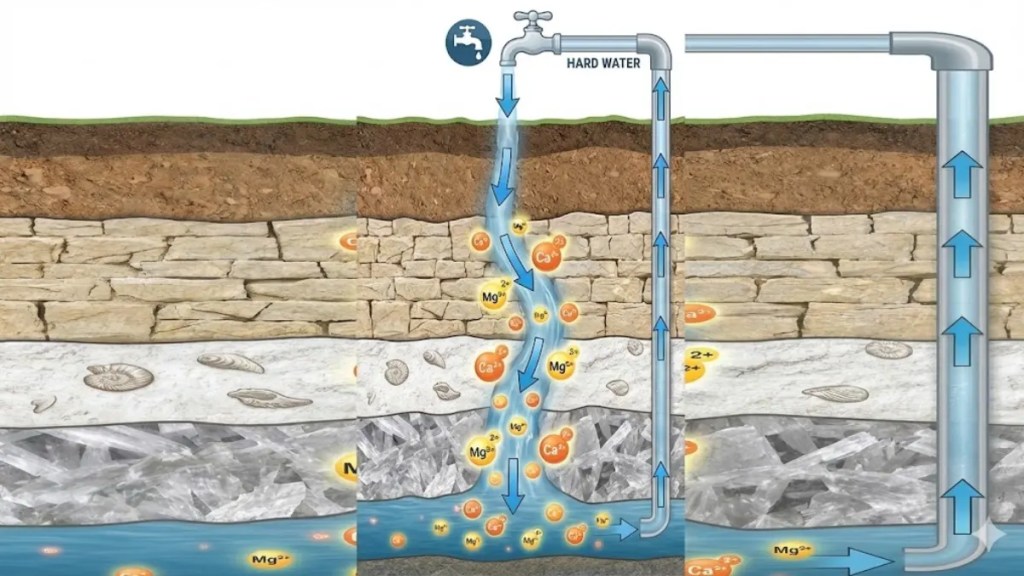
Hard water contains unusually high concentrations of dissolved minerals — primarily calcium and magnesium. These minerals enter the water supply as it passes through underground limestone and chalk rock formations before reaching your home.
In India, cities like Delhi, Gurgaon, Chennai, Pune, and Bangalore have notoriously hard water, with TDS (Total Dissolved Solids) levels often exceeding 400–600 ppm — well above the 300 ppm threshold considered safe for hair health. Globally, research indicates that over 85% of American homes deal with the same problem.
When you wash your hair with hard water, these minerals do not simply rinse away. They bind to the hair shaft and accumulate on your scalp with every single wash — invisible, persistent, and destructive.
The Hidden Chemistry Breaking Down Your Hair
Calcium and magnesium ions carry a positive electrical charge. Your hair’s outer surface carries a negative charge. The result is a magnetic attraction — mineral ions cling stubbornly to every strand and resist removal by regular shampoo. This invisible mineral coating is the foundation on which all hard water hair fall is built.
The Real Science Behind Hard Water Hair Fall

Research published in the International Journal of Dermatology confirms that hard water significantly increases hair breakage and reduces tensile strength compared to soft water. A separate study involving participants across India established a direct link between high mineral content in tap water and accelerated hair thinning — particularly in women aged 18 to 40.
At the follicle level, the process is straightforward and damaging: calcium deposits accumulate on the scalp and physically block hair follicles. Blocked follicles produce weaker roots, slow hair growth, and — over time — dramatically increase hard water hair fall.
Hard water also disrupts your scalp’s natural pH. A healthy scalp sits between pH 4.5 and 5.5 — slightly acidic. Hard water is alkaline, typically ranging from pH 8 to 9. This alkalinity forces the hair cuticle open. The hair cuticle is the protective outer layer of each strand — once open, moisture escapes and minerals, pollutants, and heat penetrate freely.
What Calcium Deposits Actually Do to Your Cuticle
Picture each hair strand as a pine cone. When healthy, those scales lie flat — hair is shiny, smooth, and strong. Hard water forces those scales to permanently lift. Moisture bleeds out. Environmental toxins move in. Each strand becomes dry, brittle, and snaps close to the root — which is the textbook presentation of hard water hair fall. And because the damage is cumulative, most people never connect their water to their hair loss until the damage is already severe.
7 Warning Signs Your Hair Is Being Destroyed by Hard Water Right Now
If you are unsure whether hard water is behind your hair problems, check these signs. The more boxes you tick, the more certain the diagnosis.
- Hair feels rough and dry after washing — not refreshed, but worse than before.
- Excessive hair on the shower floor and in your comb — consistently above 100 strands daily.
- Shampoo refuses to lather properly, no matter how much product you use.
- Scalp is constantly itchy or flaky, and dandruff returns despite repeated treatment.
- Hair color fades unusually fast — within days of dyeing or coloring.
- Hair is perpetually frizzy, tangles constantly, and carries zero natural shine even with conditioner.
- You recently moved to a new city — especially a metro in India — and your hard water hair fall spiked suddenly within weeks of arriving.
That last point is one of the most overlooked signs of hard water hair fall. People relocating from smaller towns to cities like Delhi, Gurgaon, or Hyderabad often report dramatic hair loss within the first month. The new city did not cause your stress. The water did.
Here is a direct, side-by-side breakdown of what hard and soft water do to your hair:
| Factor | Hard Water | Soft Water |
|---|---|---|
| Mineral Content | High — calcium & magnesium | Low / none |
| Hair Cuticle Effect | Lifts and roughens — scales open | Keeps scales flat and smooth |
| Scalp pH Impact | Alkaline (pH 8–9), disrupts balance | Neutral, maintains healthy 4.5–5.5 |
| Shampoo Lather | Poor — soap scum forms | Rich and consistent |
| Hair After Washing | Rough, dry, heavy | Soft, light, manageable |
| Breakage Risk | High | Low |
| Dandruff Risk | Higher — disrupted scalp pH feeds fungal growth | Lower |
This table is not just comparison data — it is a map of the damage happening to your scalp every time you shower. Understanding it is the first step to reversing hard water hair fall permanently.
Does Hard Water Actually Cause Hair Loss — Or Just Breakage?
Both — depending on how long the damage goes untreated.
In the short term, hard water causes hair breakage. The mineral coating weakens the hair shaft until it snaps close to the root — creating the visual impression of thinning and balding when what you are actually seeing is fractured strands, not lost follicles.
In the long term, sustained mineral deposits trigger follicle inflammation, which accelerates telogen effluvium — a condition where follicles prematurely enter the resting phase and shed hair en masse. For anyone with genetic sensitivity, the science of DHT and hair loss explains exactly how follicle inflammation from any source — including mineral blockage — amplifies androgenic hair loss faster than it would otherwise progress.
If you are also supplementing with creatine, the creatine and DHT connection may be magnifying your follicle sensitivity further — making hard water damage even more destructive than it would be on its own.
Treating hard water hair fall early is not optional — it is the difference between reversible breakage and permanent follicle damage. Act before the follicles shut down.
Hard Water Hair Fall Solutions That Actually Work

There is no single silver bullet. The most effective approach combines home remedies that manage existing damage with water solutions that eliminate the source — and the right shampoo that stops making it worse.
Home Remedies That Deliver Real Results
These remedies work because they target the chemistry of the problem directly — restoring scalp pH and dissolving mineral deposits at the strand level.
Apple Cider Vinegar (ACV) Rinse: Mix 2 tablespoons of raw apple cider vinegar in 1 cup of water. After shampooing, pour over the scalp, leave for 2–3 minutes, and rinse with cool water. The acetic acid dissolves calcium deposits and restores scalp pH. Use twice a week for measurable results within 2–3 weeks.

Lemon Water Rinse: One tablespoon of fresh lemon juice per cup of water. Citric acid strips mineral buildup without stripping natural moisture. A gentler alternative for sensitive scalps.
Fenugreek (Methi) Paste: Soak fenugreek seeds overnight, grind into a smooth paste, apply directly to the scalp for 30 minutes. Fenugreek strengthens follicles, reduces scalp inflammation, and creates a protective coating on each strand — one of the most potent Indian home remedies for hard water hair damage.
Coconut Oil Pre-Wash: Apply warm coconut oil to hair and scalp 1–2 hours before washing. The coconut oil acts as a mineral barrier — it physically prevents calcium and magnesium ions from binding to the hair shaft during the wash. This single habit reduces mineral accumulation significantly over time.
Water Solutions — The Smarter Long-Term Fix
Home remedies treat the damage already done. Water solutions stop new damage from forming. Both are necessary — but fixing the water is the more powerful intervention.
Shower Head Filter: A quality shower filter with KDF or activated carbon media removes chlorine, calcium, and magnesium before water touches your hair. In India, options range from Rs. 800 to Rs. 3,000. Most users report a clear reduction in hard water hair fall within 4–6 weeks of installation.

RO Water for Final Rinse: Most Indian households already have RO purifiers installed. Using RO water as a final hair rinse removes the residual mineral content left by tap water. Results are visible in days — hair feels noticeably softer and lighter.
Water Softener: For a whole-home solution, a water softener exchanges calcium and magnesium ions with sodium, converting hard water to soft at the point of entry. More expensive upfront — but the most comprehensive and permanent fix available.
Choosing the Right Shampoo Changes Everything
Most shampoos designed for hair fall make hard water damage worse — not better. Shampoos containing SLS and parabens react with hard water minerals to form soap scum, a film that coats the scalp, clogs hair follicles further, and actively accelerates the hair fall cycle they claim to treat.
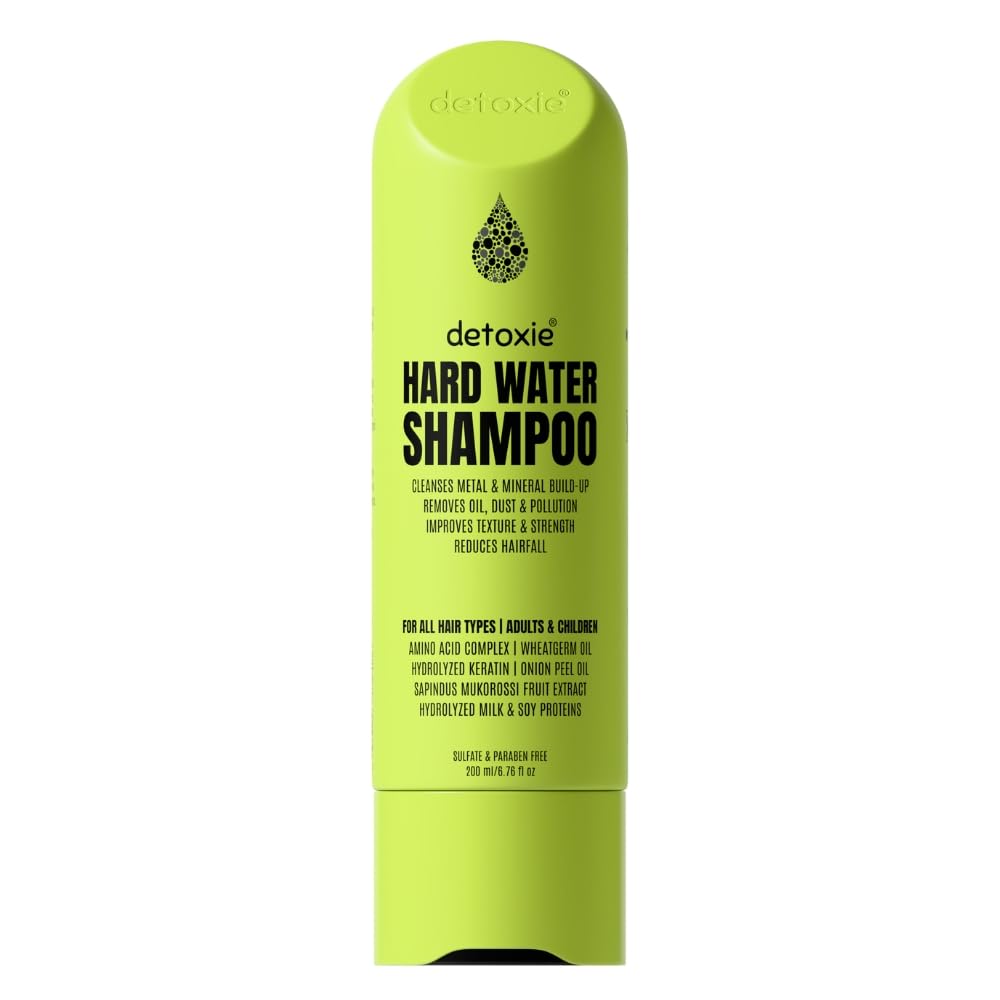
The solution is a chelating shampoo. Chelating shampoos contain EDTA or citric acid that bind directly to mineral deposits and strip them cleanly from the scalp and shaft. Use a chelating shampoo once a week for deep mineral cleansing. Pair it with a sulfate-free, moisture-rich shampoo for your remaining washes, followed by a deep conditioning mask to restore what the chelating treatment strips out.
Quick reference for all hard water hair remedies:
| Remedy | How It Works | Frequency |
|---|---|---|
| ACV Rinse | Dissolves calcium deposits, restores scalp pH | 2x per week |
| Lemon Water Rinse | Citric acid strips mineral buildup gently | 2x per week |
| Fenugreek Paste | Strengthens follicles, reduces inflammation | 1x per week |
| Coconut Oil Pre-Wash | Creates mineral barrier before each wash | Every wash |
| Chelating Shampoo | Deep-cleans mineral deposits from scalp | 1x per week |
| RO Water Final Rinse | Removes residual minerals post-wash | Every wash |
Consistency is the variable that separates results from disappointment. One-time application changes nothing. A disciplined weekly routine changes everything.
Your Complete Weekly Hard Water Hair Care Routine
Weekly Hard Water Hair Care Routine That Works
Follow this proven weekly routine to remove mineral buildup, restore scalp pH, and stop hard water hair fall — starting this week.
Apply warm coconut oil generously to hair and scalp at least 1 hour before washing. Coconut oil creates a physical barrier that prevents calcium and magnesium ions from binding to the hair shaft during the wash — this single step reduces mineral absorption significantly.
Wash with a chelating shampoo containing EDTA or citric acid. It binds directly to mineral deposits on the scalp and strips them cleanly. Use once a week only — overuse dries the hair.
Mix 2 tablespoons of raw ACV in 1 cup of water. After shampooing, pour over scalp, massage gently, leave for 2–3 minutes. Dissolves remaining calcium deposits and restores scalp pH to healthy 4.5–5.5.
Always finish with a cold water rinse — never hot. Cold water seals the hair cuticle flat, locking out mineral penetration. Use RO water or filtered water for best results.
On day 3 or 4, wash with a sulfate-free moisture-rich shampoo. Apply conditioner from mid-lengths to ends only — avoid the scalp. Always finish with RO water rinse.
Once a week apply a fenugreek (methi) paste directly to the scalp. Leave for 30–45 minutes. Strengthens hair follicles, reduces scalp inflammation caused by mineral buildup, and creates a natural protective coating on each strand.
Pro Tip: Fix the water source first — install a shower filter or use RO water for every rinse. No routine works fully if you keep washing with the same mineral-heavy tap water. Stop the source, then treat the damage — in that order.
Weekly schedule at a glance:
| Day | Action | Product / Method |
|---|---|---|
| Day 1 (Pre-Wash) | Mineral barrier treatment | Warm coconut oil — 1 hr before washing |
| Day 1 (Wash) | Deep mineral cleanse | Chelating shampoo + ACV rinse + cold finish |
| Day 3–4 | Gentle mid-week wash | Sulfate-free shampoo + RO water final rinse |
| Day 6–7 | Follicle nourishment | Fenugreek paste or egg-olive oil mask |
| Daily | Upgrade your rinse water | RO or shower-filtered water only |
This routine is not complicated. It is strategic. And hard water hair fall demands strategy, not guesswork.
Can Hard Water Hair Damage Be Reversed?
Yes — completely, if you act before hair follicles are permanently blocked.
Within 1–2 weeks: Chelating shampoo starts to lather properly. Hair feels softer and lighter after washing.
Within 3–4 weeks: Frizz drops noticeably. Scalp itchiness and dandruff reduce significantly.
Within 6–8 weeks: Hard water hair fall decreases sharply. New growth appears at the hairline.
Within 3–6 months: Full texture recovery for most people — natural elasticity, shine, and density return.
The single non-negotiable step: fix the water source first. No conditioning mask or hard water hair treatment undoes hard water hair fall if you continue washing with the same mineral-heavy water every day. Stop the source, then treat the damage — in that order.
If hard water hair fall persists beyond 8–12 weeks despite consistent treatment, the problem extends beyond hard water alone. Iron deficiency and hair fall frequently operates alongside mineral damage without being detected. Similarly, hormonal hair loss in women — driven by PCOS, thyroid dysfunction, or menopause — can intensify hard water damage exponentially. A dermatologist or trichologist evaluation at that point is non-negotiable. To understand the full picture of what drives hair fall, the complete hair fall treatment guide covers every contributing factor in depth.
One more thing worth knowing: if your hair fall worsens specifically during the monsoon, hair fall in the rainy season has its own set of humidity and scalp-environment triggers that compound hard water damage — and they require a slightly different response.
Does hard water cause hair loss?
Hard water does not cause permanent hair loss directly — but it causes significant hair breakage and follicle blockage. Calcium and magnesium deposits coat the hair shaft, weaken it at the root, and clog follicles over time. If left untreated, sustained follicle inflammation can trigger telogen effluvium — a condition where hair enters the shedding phase prematurely. Act early; the damage is reversible only if the follicles are still active.
How do I know if hard water is causing my hair fall?
Seven clear signs point to hard water as the cause: hair feels rough and dry after washing, excessive hair on the shower floor, shampoo refuses to lather properly, persistent scalp itchiness or dandruff, hair color fading unusually fast, constant frizz with zero shine, and — most telling — hair fall that spiked shortly after you moved to a new city. If you tick four or more of these boxes, hard water is almost certainly the culprit.
Is RO water good for washing hair?
Yes — RO water is one of the best options for washing hair. The reverse osmosis process removes dissolved calcium, magnesium, and other minerals, making it functionally equivalent to soft water. Using RO water as a final rinse after your regular wash visibly improves hair texture within days and significantly reduces mineral accumulation on the scalp over weeks. Most Indian households already have an RO purifier — use it.
Can a shower filter stop hard water hair fall?
A quality shower filter with KDF or activated carbon media reduces the mineral load reaching your hair and scalp with every wash. It will not eliminate hardness completely, but it reduces it enough to make a measurable difference. Most users report a clear reduction in hard water hair fall within 4–6 weeks of consistent use. In India, good shower filters are available between Rs. 800 and Rs. 3,000 — a high-return investment for hair health.
Does hard water cause dandruff?
Yes. Hard water shifts the scalp’s natural pH from its healthy acidic range of 4.5–5.5 to an alkaline state of pH 8–9. This alkaline environment disrupts the scalp’s protective barrier and creates ideal conditions for Malassezia — the fungus responsible for dandruff — to thrive. Hard water does not just worsen existing dandruff; it actively creates the environment for it to develop even in people who never had it before.
Does boiling tap water help for hair washing?
Partially. Boiling removes temporary hardness caused by calcium bicarbonate — it precipitates out as a white residue. However, it does not remove permanent hardness from calcium sulphate and magnesium compounds, which remain dissolved in the water. Boiled water is better than unboiled tap water for a final rinse, but it is not a complete solution. RO water or a shower filter delivers far more consistent results.
Which water is best for washing hair?
The best options in order: soft water (lowest mineral content), RO-filtered water, shower-filtered water, and rainwater — which is naturally mineral-free. Rainwater is why traditional Indian hair care practices of collecting and using rainwater to wash hair produced such good results. Hard tap water is the worst option for hair washing, regardless of which shampoo you use on top of it.
Can hard water hair damage be reversed?
Yes — completely, if you act before follicles are permanently blocked. Within 1–2 weeks of switching to filtered or RO water and using a chelating shampoo, hair starts to feel softer. By 6–8 weeks, hard water hair fall decreases sharply. By 3–6 months, most people experience full texture recovery — restored elasticity, natural shine, and visible density improvement. The key step: fix the water source first, then treat the existing damage.
Stop Blaming Your Shampoo. The Answer Was in Your Pipes.
Hard water hair fall is real, it is widespread, and it is entirely reversible. Your tap water has been working against your hair every single day — quietly, invisibly, and without announcing itself. You were not imagining the problem. You were just looking in the wrong place for answers.
Stop experimenting with expensive shampoos that mask damage while the mineral assault continues underneath. Stop blaming genetics for hair fall that a shower filter and an apple cider vinegar rinse can significantly reduce.
Fix the water. Protect the scalp. Build the routine. Give your hair follicles the clean, mineral-free environment they were designed to thrive in — and your hair will grow back.
Your hair is not giving up on you. Do not give up on it.
References & Scientific Sources
This article is based on peer-reviewed research and official guidelines from trusted dermatological and governmental sources.
- 1
Effects of hard water on hair — comparative study on tensile strength and elasticity of hair treated in hard water vs distilled water using INSTRON universal strength tester.
- 2
To evaluate and compare changes in baseline strength of hairs after treating them with deionized water and hard water and its role in hair breakage.
- 3
Hardness in drinking-water — background document for development of WHO guidelines for drinking-water quality, including classification of water hardness in ppm and health implications.
- 4
Technological advances in anti-hair loss and hair regrowth cosmeceuticals — review of androgenetic alopecia, telogen effluvium, environmental and lifestyle triggers, and innovations including gene therapy, stem cell technology, and personalized care.
- 5
IS 10500:2012 — Indian standard for drinking water specification, including permissible and desirable limits for TDS, total hardness, calcium, and magnesium in drinking water.


2 thoughts on “Hard Water Hair Fall: Is Your Tap Water Secretly Making You Go Bald? Truth + How to Stop It”