

Creatine is one of the most popular supplements in the fitness world — used by athletes, bodybuilders, and even regular gym-goers. It’s well-known for improving energy, performance, and muscle gain.
But there’s a question that keeps worrying many: “Does creatine increase DHT and lead to hair loss?”
In this article, we’ll break down the science behind creatine and DHT, discuss what studies actually say, and give you natural tips to continue your creatine use without risking your hair health.
If you’re currently using or planning to use creatine, read this article till the end — it may save both your gains and your hair!
What Exactly Is Creatine?
Creatine is a naturally occurring compound in our body that helps produce energy (ATP) during high-intensity workouts.
It’s found in foods like red meat and fish — but in small amounts. That’s why most athletes use creatine monohydrate supplements for better performance and endurance.
In simple words:
Creatine = More Energy = Better Workout = More Muscle Growth

Understanding DHT (Dihydrotestosterone)
DHT is a hormone derived from testosterone through an enzyme called 5-alpha reductase.
It’s responsible for masculine traits — deeper voice, facial hair, and muscle density.
However, DHT is also the main hormone responsible for male pattern baldness (androgenic alopecia).
When DHT levels rise, they can shrink your hair follicles — leading to thinning hair and receding hairlines.

Does Creatine Increase DHT? What Science Says
This question started gaining attention after a 2009 study conducted on college rugby players in South Africa.
The study showed that after 3 weeks of creatine supplementation:
- Testosterone levels remained the same
- DHT levels increased by nearly 56% after the first week and remained 40% higher after the third week
This created panic among gym enthusiasts — linking creatine = higher DHT = hair loss.
But here’s the truth:
👉 The study had a very small sample size (only 20 people)
👉 It’s never been replicated since then
👉 No long-term study confirms that creatine consistently raises DHT
So while the temporary spike in DHT is possible, there’s no solid scientific proof that creatine directly causes hair loss.
“According to a 2009 study published on PubMed, creatine users showed a temporary spike in DHT levels.”
Can Creatine Cause Hair Loss Indirectly?
While creatine doesn’t directly make your hair fall out, it could increase DHT sensitivity in people who are genetically prone to hair loss.
That means, if baldness runs in your family, creatine might speed up the process slightly — but it’s not the root cause.
In short:
Creatine may act as a “trigger” if you are already predisposed to DHT-related hair loss.
“Experts at Cleveland Clinic explain that DHT is a derivative of testosterone responsible for hair thinning.”
Natural Ways to Protect Hair While Using Creatine
You don’t need to stop using creatine. You just need a smart approach.
Here are a few tips:
| Tip | Description |
|---|---|
| 1. Stay Hydrated | Creatine draws water into your muscles. Dehydration can worsen hair health. |
| 2. Eat Zinc-Rich Foods | Zinc helps balance hormones and reduce DHT conversion. |
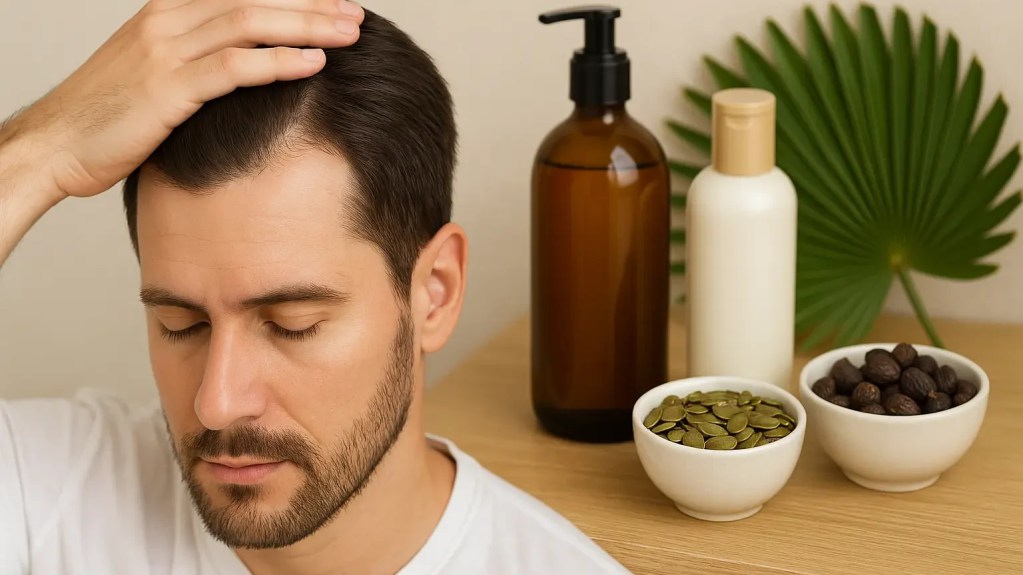
| 3. Use Natural DHT Blockers | Herbs like saw palmetto, pumpkin seed oil, and nettle root can help reduce DHT naturally. |
| 4. Avoid Excess Dosage | Stick to 3–5g daily. Overdosing doesn’t increase results but can increase side effects. |
| 5. Massage Your Scalp | Regular scalp massage improves blood flow and hair follicle strength. |
Best Creatine and DHT Blocker Supplements
If you’re looking for pure and safe creatine, here are some recommended options (affiliate links):
- 👉 Best Creatine Monohydrate – Lab-Tested & Micronized (Buy Here)
- 👉 Best Vegan Creatine Supplement – 100% Natural Formula (Buy Here)
- 👉 DHT Blocker with Biotin Tablets for Hair growth | Biotin Supplement
- 👉 DHT Blocker with Biotin (60 Tablets) | Stinging Nettle and Soya Protein
These supplements are third-party tested, pure, and known for minimal side effects.
Can You Use DHT Blockers with Creatine?
Yes — in fact, that’s a smart choice.
If you’re concerned about hair loss but don’t want to skip creatine, you can use natural DHT blockers (herbal or topical).
Popular choices:
- Saw Palmetto Capsules
- Pumpkin Seed Oil
- Rosemary or Peppermint Oil Scalp Treatment
DHT Blocker with Biotin Tablets for Hair growth | Biotin Supplement
DHT Blocker with Biotin (60 Tablets) | Stinging Nettle and Soya Protein
Conclusion
So, does creatine increase DHT and cause hair loss?
👉 Maybe slightly — but not significantly.
If you are genetically prone to baldness, be cautious.
Otherwise, creatine is a safe and effective supplement for building muscle and improving performance — as long as you maintain good hydration and hair health.
Remember — balance and awareness are key.
Don’t fear creatine. Use it smartly.
FAQs
- Does creatine directly cause hair loss?
No, there’s no solid scientific evidence linking creatine directly to hair loss. - Can creatine increase DHT levels?
Possibly, but only slightly and temporarily. It’s not a permanent hormonal change. - Should I stop creatine if my hair is thinning?
Not necessarily. Consult a dermatologist or try adding a DHT blocker. - Is creatine safe for women?
Yes, creatine is safe for both men and women when taken in recommended doses. - How much creatine should I take daily?
3–5 grams per day is ideal for long-term use. - Can creatine affect testosterone?
Research shows it doesn’t significantly alter testosterone levels. - What are natural DHT blockers?
Saw Palmetto, Pumpkin Seed Oil, and Nettle Root are excellent natural options. - Does creatine cause acne?
Rarely. But it may indirectly affect skin oil production in some users. - Is it safe to use creatine and protein powder together?
Yes, they serve different purposes and are safe to combine. - Which is the best form of creatine?
Creatine Monohydrate — it’s the most researched and effective form.
Disclaimer
This article is for educational purposes only.
It does not replace professional medical or nutritional advice.
Always consult your doctor or certified nutritionist before starting any supplement.
External References
- Healthline – “Does Creatine Cause Hair Loss?”
- PubMed – “Three weeks of creatine monohydrate supplementation affects dihydrotestosterone to testosterone ratio in college-aged rugby players.”
- Cleveland Clinic – “What Is DHT and How Does It Affect Hair Loss?”
- Examine.com – “Creatine Supplementation”
- National Institutes of Health (NIH) – “Creatine: Uses and Safety”


5 thoughts on “Using Creatine: Increased DHT and the Risk of Hair Loss”