
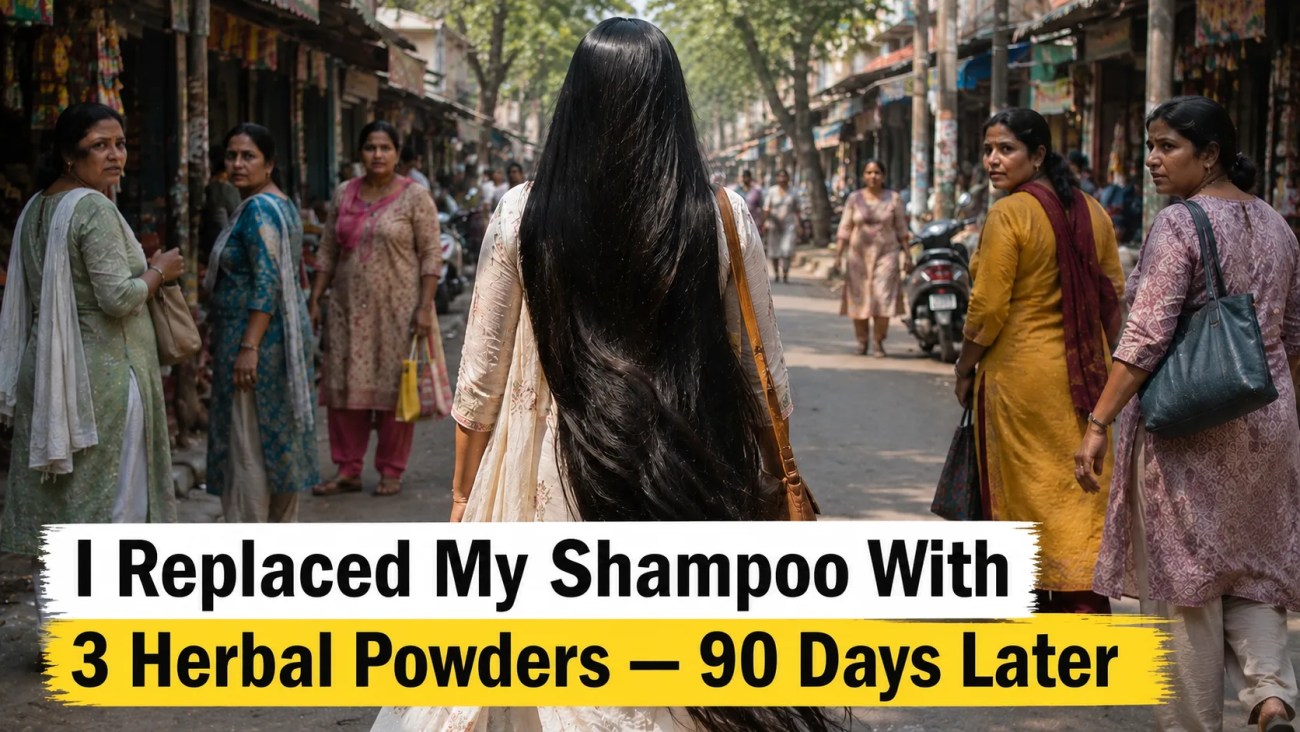
My hair was falling out in clumps, my scalp felt like sandpaper, and every shampoo I tried — no matter how “natural” the label claimed — left my hair drier and more damaged than before.
Then I quit shampoo completely. I switched to a 3-ingredient Ayurvedic routine that costs less than ₹200 — and what happened over the next 90 days genuinely shocked even my dermatologist.
In this article, I’ll show you exactly how to use Reetha Shikakai Amla powder for hair wash, the precise ratios for your specific hair type, and the one mistake that makes most people quit this routine before results even begin.
Table of Contents
Why Your Shampoo Is Quietly Destroying Your Hair
Let’s be direct. Most commercial shampoos contain Sodium Lauryl Sulfate (SLS) — an aggressive detergent that strips your scalp of every drop of natural oil it produces. Your scalp responds by producing even more oil. So you wash again. The cycle never ends. The real damage builds quietly underneath — weakened follicles, inflamed scalp, brittle strands.
This isn’t speculation. It’s chemistry.
The shampoo industry sells you a problem and then sells you the solution. Damage-repair shampoo. Anti-hair fall shampoo. Deep moisture shampoo. All of it Band-Aid fixes for a wound they helped create.
If you’re serious about stopping hair fall from its root cause, start with understanding the complete guide to treating hair fall naturally — because external washing is only one piece of the puzzle.
The real solution? Go back 1,000 years. Before SLS. Before silicones. Before packaging with Sanskrit fonts on chemical bottles.
What Is Reetha Shikakai Amla — And Why This Trio Is Unbeatable
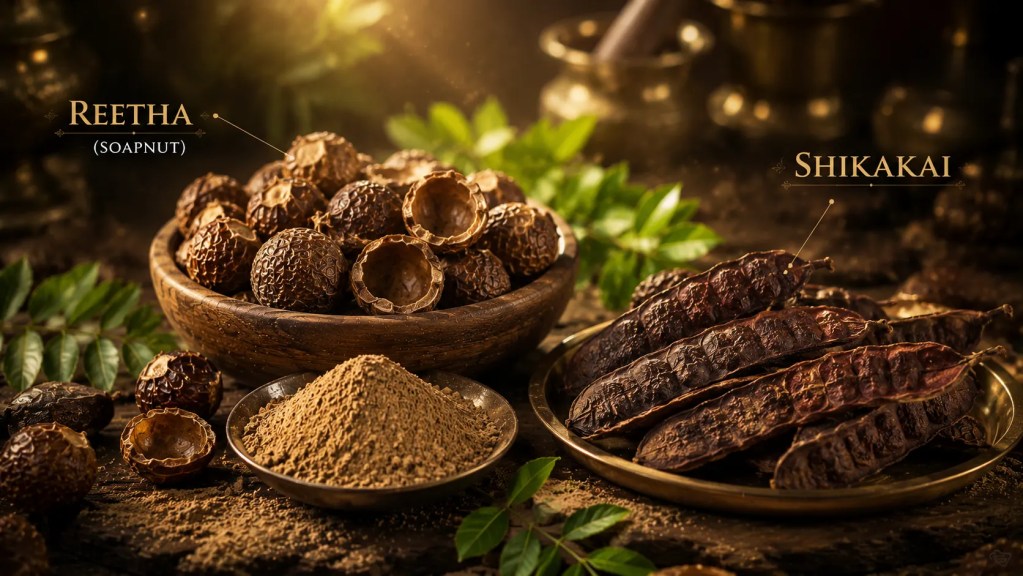
Reetha Shikakai Amla isn’t a trend. It’s the original Indian shampoo — used since the Harappan civilisation. These three herbs work together in a way no single product can replicate.
Reetha — Nature’s Cleanser
Reetha (Sapindus Mukorossi), also called soapnut, contains a natural compound called saponin. Saponin creates a mild lather that lifts dirt, excess oil, and product buildup from your scalp — without stripping the acid mantle that protects your hair. No SLS. No parabens. Just a plant doing what it’s been doing for centuries.
One important point: Reetha is a strong cleanser. For dry hair, use it sparingly. Too much Reetha on already dry strands will increase dryness — not because it’s harmful, but because it’s doing its job too well.
Shikakai — The Conditioner Hidden in a Pod
Shikakai (Acacia Concinna) literally translates to “fruit for hair.” Its naturally low pH maintains your scalp’s balance, conditions the hair shaft, and detangles without chemicals. Where Reetha cleans, Shikakai restores — making this combination complete in a way that shampoo and conditioner can never fully replicate.
For people with dry hair, Shikakai is the hero of this routine. More on exact ratios below.
Amla — The Strength Builder
Amla (Indian Gooseberry) contains 23x more Vitamin C than an orange. That’s not marketing — that’s documented nutrition. Vitamin C is essential for collagen production, which directly impacts the strength of your hair follicles. Amla also slows premature greying by protecting melanocytes at the follicle base from oxidative stress.
Unlike Reetha and Shikakai, Amla works for every single hair type. It strengthens, darkens, and protects — regardless of whether your scalp runs oily or dry.
Together, these three form a complete hair care system: cleanse, condition, strengthen. No bottle of shampoo — at any price — does all three simultaneously.
The Exact Ratio for Your Hair Type (This Is What Everyone Gets Wrong)
Every article online tells you to use “equal parts.” That’s lazy advice — and it’s why most people don’t see results.
Your hair type determines the ratio. Reetha cleanses aggressively. Shikakai conditions gently. The balance between them is everything.
| Hair Type | Reetha | Shikakai | Amla | Key Goal |
|---|---|---|---|---|
| Normal Hair | 1 tsp | 1 tsp | 1 tsp | Balanced cleanse + nourishment |
| Dry Hair | ½ tsp | 1½ tsp | 1 tsp | Deep conditioning, less stripping |
| Oily Hair | 1½ tsp | ½ tsp | 1 tsp | Strong cleanse, sebum control |
Start with this table as your baseline. After your first two washes, adjust based on how your scalp and hair feel when dry — not when wet. Wet hair always feels different. The real feedback comes 2 hours after your wash.
For dry hair users — add ½ tsp of curd, aloe vera gel, or coconut oil to the paste before applying. This isn’t optional. It’s what prevents over-drying.
Two Methods — One Gives 4X Better Results
You can use Reetha Shikakai Amla powder for hair wash in two ways. Both work. But one works significantly better.
Method 1: Liquid Hair Wash

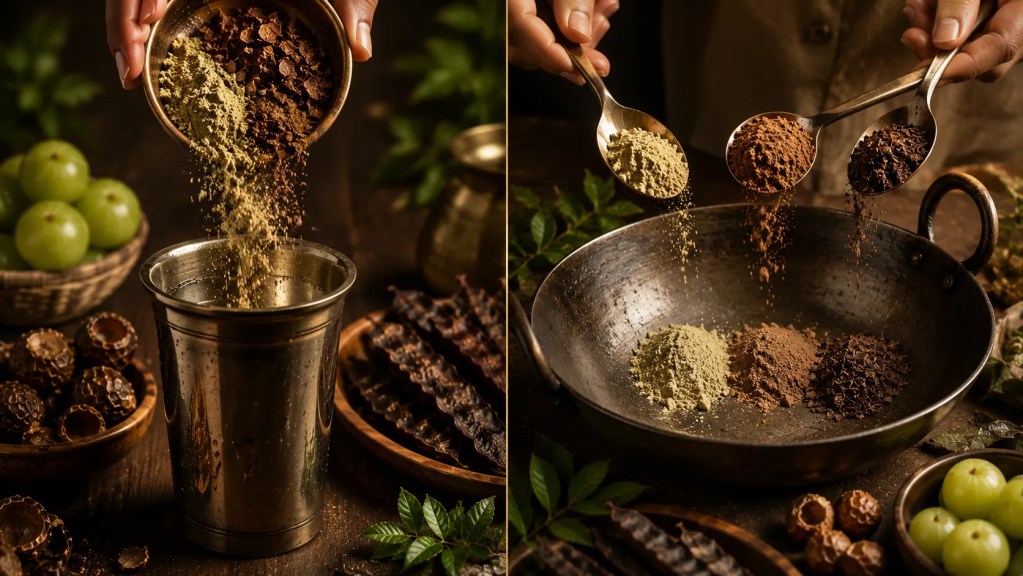
The night before your wash, take a glass of water (one glass for short hair, more for long hair) and add your ratio of powders. Let it soak overnight — ideally in an iron or copper vessel. This isn’t folklore. When these herbal powders steep in iron or copper overnight, trace minerals from the vessel leach into the water, adding an extra layer of nutritional benefit. Dadi’s old iron kadhai wasn’t a coincidence.
The next morning, boil the soaked water. Let it cool to lukewarm. Apply to your hair after wetting it, massage for 2-3 minutes, leave for 15 minutes, rinse.
Why boiling? Because heat extracts the remaining nutrients from the powders that cold soaking leaves behind. The boiled liquid is genuinely more potent than just soaked water.
One more thing worth mentioning here — if your tap water is hard (high in calcium and magnesium), it actively fights against any hair treatment you apply. Boiling reduces this mineral load slightly, but if your hair fall is severe, read about how your tap water could be silently damaging your hair — it’s a real and underdiagnosed problem.
Method 2: Hair Mask (Paste)

The night before, soak your ratio of powders in less water — enough to make a thick paste, like mehendi consistency. In the morning, 30 minutes before your wash, mix in your add-on (curd or aloe for dry hair, plain for oily). Apply directly to your scalp and hair lengths. Leave for 20-30 minutes. Wash off with plain water — no shampoo needed.
Do the liquid wash 2-3 times a week. Do the hair mask once a week. This combination is what produces the results that surprised my dermatologist.
The Transition Period Nobody Warns You About — Read This Before You Quit
This is the section that separates people who get results from people who post “it didn’t work” in comment sections.
When you switch from chemical shampoo to Reetha Shikakai Amla, your scalp needs time to recalibrate. For years, SLS has been stripping your scalp, and your sebaceous glands have been overcompensating by producing excess oil. The moment you stop that cycle, there’s an adjustment period.
Week 1-2: Hair may feel heavy or slightly waxy. Your scalp is rebalancing oil production. This is normal.
Week 3-4: Scalp starts settling. Oil production begins to normalize. Hair feels lighter post-wash.
Week 5-6: First visible changes — less breakage while combing, slightly more shine.
Week 8-12: Texture improves significantly. Scalp feels calmer. Hair fall reduces noticeably.
Month 3 onwards: This is where the real transformation happens.
If you quit at week 2 because your hair felt “weird,” you quit right before the turn. Most people do. Don’t be most people.
During this period, also fine-tune your composition. If your hair feels too dry — reduce Reetha, increase Shikakai. If your hair still feels oily after washing — increase Reetha, reduce Shikakai. Two to three washes will tell you exactly where your ratio needs to land.
Using This Routine With Minoxidil, PRP, or Any Hair Treatment
If you’re currently on Minoxidil or have done PRP, you can absolutely use this routine — without any conflict.
The logic is simple: Reetha Shikakai Amla is applied before your bath and washed off completely. Minoxidil and serums are applied after bathing to a dry scalp. There’s no overlap, no interaction.
In fact, this combination is ideal for people who are trying to transition away from Minoxidil to natural alternatives — because it builds the external foundation (clean, nourished scalp) that makes natural hair growth support possible.
If you’re using a hair oil, apply it before the wash session. The herbal wash will clean the oil and any buildup without harsh chemicals, leaving your scalp clean and ready.
The Internal Game — Why External Wash Alone Has Limits
Here’s the honest truth: no external hair wash routine — Ayurvedic or otherwise — can compensate for internal deficiencies.
Your hair needs Biotin, Zinc, Copper, Iron, and Omega-3 fatty acids to grow strong from the inside. If your body is depleted of any of these, your hair shows it — no matter how perfect your external routine is.
Add a quality multivitamin with Biotin and Zinc to your daily routine. Add an Omega-3 supplement (fish oil, or flaxseed if vegetarian). These work with your Reetha Shikakai Amla routine — not instead of it.
Before randomly buying supplements, it’s smarter to rule out internal deficiencies with a targeted blood test — so you know exactly what your body is missing. Guessing wastes money and time.
External + internal together is where the real results live.
My 90-Day Experience — Honest, Week by Week
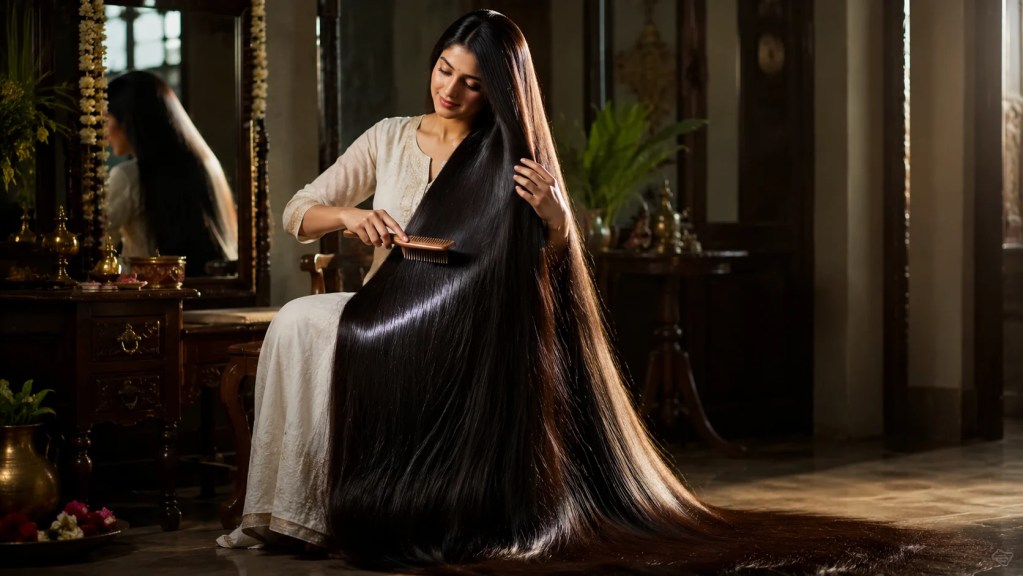
I started this routine with dry, brittle hair, visible hair fall, and an oily scalp (yes, both can coexist). My ratio was ½ tsp Reetha, 1 tsp Amla, 1 tsp Shikakai — with curd added to the paste.
Days 1-14: Hair felt different. Cleaner, but not the “squeaky clean” sensation shampoo gives. I almost reached for the shampoo bottle three times.
Days 15-30: Scalp stopped feeling tight after washing. Hair fall while combing dropped noticeably.
Days 30-60: My hair started feeling softer. The chronic scalp itch I’d had for months — gone.
Days 60-90: My dermatologist, at a routine check-in, asked what I had changed. Scalp inflammation was significantly reduced. She noted visibly improved hair texture and asked me to document the routine.
Frequently Asked Questions
Can I use Reetha Shikakai Amla powder for hair wash every day?
No. Daily use is not recommended — even with natural cleansers. Use the liquid hair wash 2 to 3 times a week and the hair mask once a week. Daily cleansing, even with Reetha Shikakai Amla, disrupts your scalp’s natural oil balance and can cause dryness over time.
Will my hair feel clean without shampoo lather?
Yes — but differently. Reetha creates a mild natural foam from saponin, not the aggressive lather SLS produces in commercial shampoo. Your hair will be clean, just without the artificial squeaky sensation. Give it 3 to 4 washes and your scalp adjusts completely to the new normal.
How long before I see visible results from Reetha Shikakai Amla hair wash?
Scalp health improvements begin in weeks 3 to 4. Visible changes in hair texture and reduced hair fall appear between weeks 6 to 8. Significant transformation — shine, strength, and reduced scalp issues — shows up clearly by month 3. Anyone promising results in one week is not being honest with you.
Can women with long hair use the Reetha Shikakai Amla hair wash routine?
Absolutely. Long hair needs more quantity — scale up your ratios proportionally based on hair volume and length. The hair mask method works especially well for long hair because it allows better root-to-tip coverage and deeper conditioning through Shikakai.
Are there any side effects of using Reetha Shikakai Amla powder?
No major side effects when used correctly. Keep the mixture away from your eyes — saponins in Reetha cause irritation on direct contact. If you have eczema or a highly sensitive scalp, do a patch test behind your ear before full application. Never ingest the mixture — it is for external hair use only.
Does Reetha Shikakai Amla hair wash help with hair regrowth?
This routine creates the optimal scalp conditions for hair growth — reduced inflammation, clean follicles, and improved blood circulation from massage. It is not a DHT blocker or clinical regrowth treatment. For hair regrowth, pair this routine with internal nutritional support and consult a dermatologist for a complete assessment.
Conclusion
You have been cleaning your hair with chemicals that damage it, then buying more products to repair that damage. That cycle ends the moment you understand what Reetha Shikakai Amla actually does — not as a trend, not as a grandma’s tip, but as a scientifically sound, time-tested system that works with your hair’s biology instead of against it.
Use the right ratio. Follow the boiling method. Survive the transition period. Pair it with internal nutrition. Give it 90 days.
Your hair has been waiting for this routine for years. The only question is whether you’ll give it the time it deserves.
Start tonight. Soak the powders. Tomorrow, your scalp gets a reset it hasn’t had in years.
Disclaimer: This article is for informational and educational purposes only. The results described are based on personal experience and may vary from person to person. This content does not constitute medical advice. If you are experiencing severe hair loss, hormonal imbalance, or any scalp condition, please consult a qualified dermatologist or trichologist before changing your hair care routine. Individual results depend on hair type, internal health, consistency, and several other personal factors.
References & Scientific Sources
References & Scientific Sources
This article is based on peer-reviewed research, published clinical studies, and verified scientific sources. All links open in a new tab.
- 1
Emblica (Phyllanthus emblica Linn.) fruit extract promotes proliferation in dermal papilla cells of human hair follicle.
- 2
Functional and nutraceutical significance of Amla (Phyllanthus emblica L.): polyphenols, vitamin C content, antioxidant and anti-inflammatory properties.
- 3
Pharmacological effects of Sapindus mukorossi — triterpenoidal saponins, surfactant properties, and traditional uses including hair cleansing and scalp treatment.
- 4
Human and environmental toxicity of Sodium Lauryl Sulfate (SLS): deposition in hair follicles, scalp irritation, and implications for cosmetic formulation.


