
Dry, tight skin that never feels comfortable can make even your favourite moisturizer seem useless.
But what if the problem is not your moisturizer, but the ingredients inside it? Aloe Vera, Glycerin and Ceramides work in completely different ways.
Understanding Aloe Vera vs Glycerin vs Ceramides will help you choose the right skincare ingredients, improve hydration and support your skin barrier without wasting money on products that do not meet your skin’s needs.
Why Does Your Skin Still Feel Tight Even After Moisturizing?
Applying moisturizer should make your skin feel soft, comfortable and hydrated. Yet many people experience tightness, rough patches or flaking even after following a regular skincare routine.
The reason is simple: dry skin is not always caused by a lack of moisture alone. Your skin also needs a healthy protective barrier to retain water and protect itself from external irritants.
Dry Skin vs Dehydrated Skin
These two terms are often used interchangeably, but they describe different conditions.
Dry skin generally lacks sufficient natural oils (lipids), which help maintain softness and protect the skin’s surface. It often feels rough, flaky, itchy or uncomfortable.
Dehydrated skin lacks adequate water in the outermost skin layer. It can affect any skin type, including oily and combination skin. Common signs include tightness, dullness and temporarily more noticeable fine lines.
You can have dry and dehydrated skin at the same time. This is one reason a lightweight hydrating gel does not always solve persistent dryness.
Understanding Your Skin’s Moisture Barrier
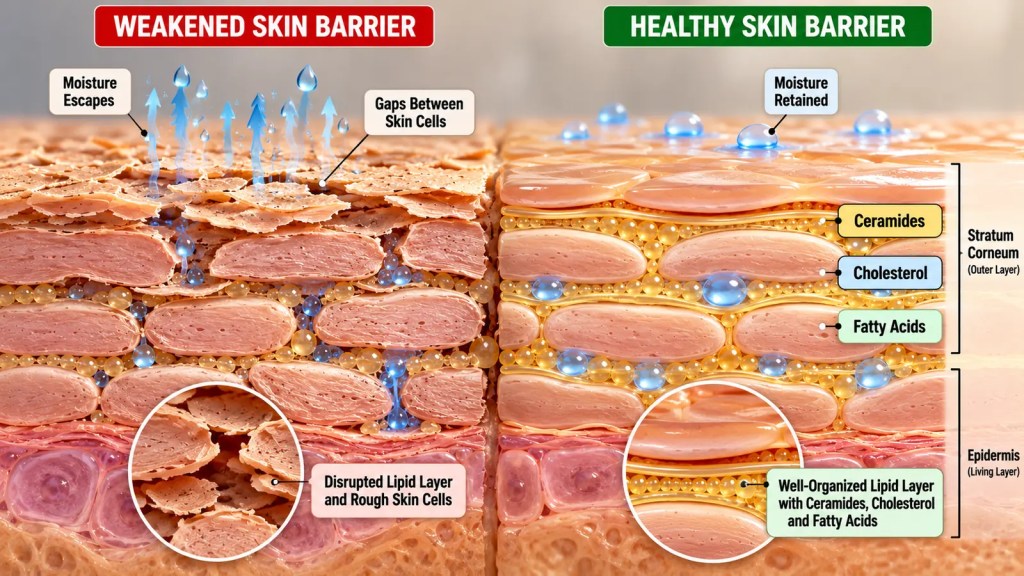
Your skin’s outermost layer, known as the stratum corneum, acts as a protective barrier.
Think of it as a wall. Skin cells form the bricks, while lipids such as ceramides, cholesterol and fatty acids form the mortar holding everything together.
This protective structure helps reduce transepidermal water loss (TEWL), which is the natural movement of water from the deeper skin layers through the epidermis and into the environment.
When this barrier becomes compromised, moisture escapes more easily. The result can be persistent dryness, irritation, roughness and tightness.
Cold weather, low humidity, excessive cleansing and harsh skincare products can make the problem worse. These seasonal changes are also why adjusting your routine during cooler months, as discussed in our seasonal skincare guide for October, matters.
What Does Your Moisturizer Actually Need to Do?
Not every moisturizing ingredient performs the same job. Understanding three basic ingredient categories makes it easier to choose products for dry skin.
1. Humectants – Ingredients That Attract and Bind Water
Humectants attract and hold water in the outermost layer of the skin.
They help increase skin hydration and improve the feeling of dryness and tightness.
Common examples include:
- Glycerin
- Hyaluronic acid
- Urea
- Sodium PCA
Glycerin is one of the most established humectants used in skincare formulations.
2. Emollients – Ingredients That Soften Skin
Emollients help smooth rough skin by filling spaces between skin cells and improving the feel of the skin surface.
Common examples include:
- Shea butter
- Squalane
- Fatty acids
- Certain plant oils
They are particularly useful when dry skin feels rough or flaky.
3. Occlusives – Ingredients That Reduce Water Loss
Occlusives form a protective layer on the skin’s surface that slows moisture evaporation.
Common examples include:
- Petrolatum
- Mineral oil
- Dimethicone
- Certain waxes
Occlusives are especially useful for people experiencing very dry skin.
The DermNet explanation of emollients and moisturizers provides a useful dermatological overview of these ingredient categories.
Here is how the three ingredients in this comparison fit into the bigger picture.
| Ingredient | Main function | Primary benefit |
|---|---|---|
| Aloe Vera | Water-rich soothing gel ingredient | Lightweight hydration and soothing |
| Glycerin | Humectant | Attracts and retains water in the outer skin layer |
| Ceramides | Barrier-supporting lipids | Help maintain the skin’s protective barrier |
This difference is important because adding water to the skin, retaining moisture and supporting the protective barrier are three related but different functions. A good moisturizer often combines multiple ingredients to address them together.
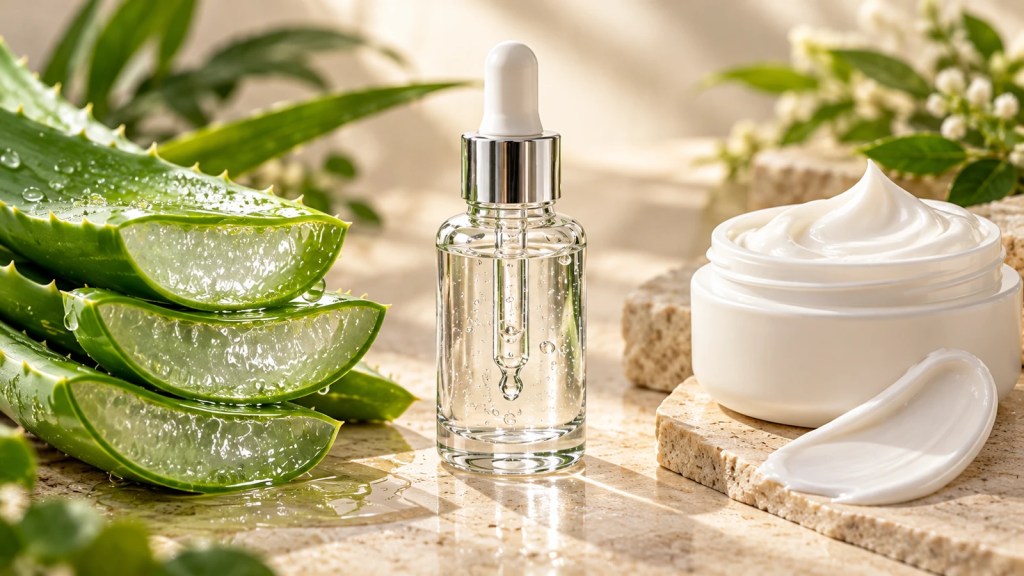
Aloe Vera for Dry Skin – Does It Really Provide Enough Moisture?
Aloe Vera has been used in traditional skincare for generations. Today, it is a popular ingredient in facial gels, lotions, moisturizers and soothing skincare products.
Its lightweight texture and cooling feel make it particularly appealing to people who dislike heavy creams.
What Does Aloe Vera Do for Your Skin?
Aloe Vera comes from the leaves of the Aloe barbadensis plant.
The inner leaf gel contains approximately 99% water, along with small amounts of dissolved compounds, including polysaccharides, sugars, minerals and other substances.
Its water-rich composition explains its lightweight, refreshing feel.
Potential skincare benefits include:
- Providing lightweight hydration.
- Offering a soothing sensation on the skin.
- Helping improve skin comfort after certain environmental exposures.
- Supporting the formulation of lightweight skincare products.
However, its benefits should not be exaggerated. Traditional use and laboratory findings do not establish that Aloe Vera treats every skin condition.
According to DermNet’s review of Aloe Vera and the skin, its dermatological applications are still supported by limited evidence for several claimed uses.
Is Aloe Vera Enough for Very Dry Skin?
This is where many people misunderstand Aloe Vera.
Aloe Vera gel can provide a refreshing, water-rich layer, but applying it alone does not guarantee lasting moisture retention.
Most lightweight aloe gels do not provide the same combination of emollient and occlusive ingredients found in richer moisturizers.
For example, after applying Aloe Vera gel, someone with very dry skin may still experience tightness because the product does not adequately address moisture loss.
A more complete approach is to use an Aloe Vera-based product followed by a suitable moisturizer.
The formulation matters more than the presence of Aloe Vera alone. A cream containing Aloe Vera alongside glycerin and emollients performs a different job from a simple water-based aloe gel.
Our Jan Aushadhi moisturizer cream review is an example of how Aloe Vera can be included in a formulated moisturizer rather than used as a standalone ingredient.
Are There Any Side Effects?
Aloe Vera is generally well tolerated by many people, but topical reactions can occur.
Possible problems include:
- Allergic contact dermatitis.
- Redness or itching.
- Burning or stinging sensations.
People with known Aloe Vera allergies should avoid it. Stop using the product if irritation develops.
Glycerin for Dry Skin – The Ingredient That Helps Retain Moisture
If your skin frequently feels tight, rough or dehydrated, glycerin deserves serious attention.
Unlike Aloe Vera, which is commonly used in water-rich gels and soothing formulations, glycerin has a well-established role as a humectant in dermatological moisturizers.
How Does Glycerin Work on Your Skin?
Glycerin, also called glycerol, is a naturally occurring compound that attracts and binds water.
It is also part of the skin’s natural moisturizing factor, which helps maintain hydration in the stratum corneum.
When included in a moisturizer, glycerin helps increase water content in the outer skin layer.
Research published in dermatology literature has documented its role in improving skin hydration and supporting normal barrier function.
This makes glycerin particularly useful when skin feels tight because of insufficient hydration.
Benefits of Glycerin for Dry Skin
Regular use of a well-formulated glycerin moisturizer can provide several benefits.
1. Improves skin hydration
Glycerin helps bind water in the outer skin layer, making skin feel softer and more comfortable.
2. Helps reduce tightness
Improved hydration can reduce the uncomfortable feeling associated with dry and dehydrated skin.
3. Supports normal skin barrier function
Glycerin contributes to the skin’s hydration balance and has been studied for its role in epidermal barrier function.
4. Works with other moisturizing ingredients
Glycerin is frequently combined with petrolatum, fatty alcohols, oils and other moisturizing components to create more complete formulations.
A 2025 review of clinical studies on basic emollients highlighted the value of formulations combining ingredients with complementary properties, such as glycerol for hydration and petrolatum for reducing water loss.
Can You Apply Glycerin Directly to Your Face?
Glycerin is a common skincare ingredient, but using concentrated glycerin directly is not the same as using a formulated moisturizer.
Pure glycerin can feel sticky and uncomfortable. High concentrations can also irritate some skin types.
For everyday skincare, choose a properly formulated product containing glycerin.
Apply it according to the product instructions, preferably as part of a moisturizer on slightly damp skin.
You do not need to mix pure glycerin with water or other ingredients at home to obtain its moisturizing benefits.
Ceramides for Dry Skin – Are They Better for Skin Barrier Support?
Glycerin helps improve hydration, but persistent dryness is not always solved by adding more water.
Your skin also needs a properly functioning protective barrier. This is where ceramides become important.
What Are Ceramides?
Ceramides are naturally occurring lipids found in the outermost layer of human skin.
They work alongside cholesterol and free fatty acids to create an organized lipid structure between skin cells.
This structure helps maintain barrier integrity and reduces excessive water loss.
When the skin barrier becomes compromised, the balance and organization of these lipids can be affected.
Ceramide-containing moisturizers are designed to support this protective structure.
Benefits of Ceramides for Dry Skin
1. Support skin barrier function
Ceramides help maintain the lipid structure that protects your skin from external irritants and excessive moisture loss.
2. Help reduce persistent dryness
A healthy barrier retains moisture more effectively, improving overall skin comfort.
3. Support sensitive and compromised skin
Ceramide-containing moisturizers are commonly used in skincare formulations designed for dry and sensitive skin.
4. Work alongside other moisturizing ingredients
Ceramides are frequently combined with cholesterol, fatty acids, glycerin and other emollients.
A 2024 scientific review published in the International Journal of Molecular Sciences explains how ceramides work alongside cholesterol and fatty acids in the skin’s protective lipid structure. It also highlights why the formulation of topical ceramides matters.
Which Ceramides Should You Look for in a Moisturizer?
You may see different ceramide names on skincare labels.
Common examples include:
- Ceramide NP
- Ceramide AP
- Ceramide EOP
- Ceramide NS
These represent different ceramide types used in skincare formulations.
However, a product containing one or more ceramides is not automatically the best choice. The complete formulation, ingredient compatibility and product quality also matter.
For example, our Dr Sheth’s Ceramide Vitamin C Sunscreen ingredient review examines a formulation containing multiple ceramides, cholesterol and glycerin.
The important lesson is to evaluate the complete ingredient combination rather than choosing a product simply because its front label highlights ceramides.
Aloe Vera vs Glycerin vs Ceramides – Which Is Best for Dry Skin?
Now comes the question that matters most.
All three ingredients have a role in moisturizing skincare, but they address different needs.
| Comparison | Aloe Vera | Glycerin | Ceramides |
|---|---|---|---|
| Main role | Soothing, water-rich gel ingredient | Humectant | Barrier-supporting lipids |
| Hydration support | Lightweight | Strong water-binding function | Indirectly supports moisture retention |
| Skin barrier support | Limited direct evidence | Supports normal barrier function | Important structural role |
| Best suited for | Lightweight hydration and soothing | Dry and dehydrated skin needing hydration | Dry skin needing barrier support |
| Texture in products | Gel or lightweight cream | Used in gels, lotions and creams | Common in creams and lotions |
| Main limitation | May not be sufficient alone for very dry skin | Works best in a balanced formulation | Effectiveness depends on product formulation |
The biggest difference is their function, not simply their moisturizing strength.

Which Ingredient Provides the Best Hydration?
Glycerin has the clearest advantage when the primary goal is increasing water content in the outer skin layer.
Its humectant properties make it particularly useful in moisturizing formulations for dry and dehydrated skin.
Aloe Vera also provides lightweight, water-rich hydration, but it is not a direct replacement for a well-formulated glycerin moisturizer.
Ceramides serve a different purpose. They support the lipid barrier that helps retain moisture.
Which Is Best for Extremely Dry Skin?
For very dry, flaky or rough skin, a rich moisturizer containing ceramides, glycerin and suitable emollient or occlusive ingredients is often a more complete choice.
Glycerin helps attract and bind water, ceramides support the skin barrier, and occlusive ingredients help reduce moisture loss.
This combination addresses more than one cause of dryness.
Which Is Better for Dry and Sensitive Skin?
Fragrance-free moisturizers containing glycerin and ceramides are a sensible starting point for people with dry, sensitive skin.
Aloe Vera can also be included when well tolerated, but natural ingredients are not automatically irritation-free.
For reactive skin, a simple formulation with fewer potential irritants is often preferable.
Can You Use Aloe Vera, Glycerin and Ceramides Together?
Yes. These ingredients can be used together in a skincare routine because they have complementary functions.
You do not need to choose only one.
A product containing glycerin and ceramides can address hydration and barrier support. An Aloe Vera-containing gel or cream can provide an additional soothing, lightweight skincare step if your skin tolerates it.
Which Ingredient Should You Apply First?
When using separate products, follow their texture and formulation rather than assuming every ingredient needs a separate layer.
A simple approach is:
- Cleanse your face with a gentle cleanser.
- Apply an Aloe Vera-based gel or a glycerin-containing hydrating product, if needed.
- Follow with a suitable moisturizer containing ceramides and emollients.
- In areas with severe dryness, use an appropriate occlusive product if needed.
Applying moisturizer while the skin is slightly damp helps trap water and improve hydration.
You do not need three separate products if one well-formulated moisturizer already contains the ingredients your skin needs.
How to Build a Simple Skincare Routine for Dry Skin
The best skincare routine is one you can follow consistently without irritating your skin.
Morning Skincare Routine
Step 1 – Gentle cleansing
Use a mild cleanser that does not leave your skin feeling stripped or tight.
Step 2 – Hydration
Use a glycerin-based hydrating product or a lightweight Aloe Vera formulation if your skin needs it.
Step 3 – Moisturizing
Apply a cream containing suitable emollients and barrier-supporting ingredients such as ceramides.
Step 4 – Sun protection
Finish with a broad-spectrum sunscreen with SPF 30 or higher.
Daily sun protection remains important even when your skin is dry. The type and texture of sunscreen should also suit your skin. Our complete sunscreen guide covering SPF, benefits and side effects explains how to select and apply sunscreen correctly.
Night Skincare Routine
Your night routine can focus on cleansing and moisture retention.
- Cleanse gently to remove sunscreen, dirt and makeup.
- Apply a hydrating product if needed.
- Use a richer moisturizer containing glycerin and ceramides.
- Apply a suitable occlusive product to particularly dry areas when necessary.
Consistency matters more than adding multiple serums and creams.
Common Mistakes That Can Make Dry Skin Worse
Even good skincare ingredients cannot compensate for habits that repeatedly damage the skin barrier.
Avoid these common mistakes:
1. Using only lightweight aloe gel
Aloe Vera gel alone may not provide enough moisture retention for very dry skin.
2. Applying harsh cleansers
Strong soaps and cleansers can strip natural skin lipids and increase dryness.
3. Taking excessively hot showers
Hot water and prolonged bathing can worsen dry skin.
4. Over-exfoliating
Frequent use of exfoliating acids and irritating products can increase sensitivity and discomfort.
5. Ignoring moisturizer formulation
Choosing a product based only on one highlighted ingredient overlooks the importance of its complete formulation.
The American Academy of Dermatology recommends gentle, fragrance-free skincare and applying a suitable cream or ointment while the skin is still damp. Its dermatologists’ tips for relieving dry skin also emphasize regular moisturizing and avoiding harsh products.
When Should You See a Dermatologist?
Occasional dryness is common, but persistent symptoms deserve attention.
Consult a dermatologist if you experience:
- Severe or persistent itching.
- Deep cracks or bleeding skin.
- Painful redness or inflammation.
- Repeated rashes or burning sensations.
- Dryness that does not improve with appropriate skincare.
Conditions such as eczema, psoriasis and other skin disorders can cause persistent dryness and require specific treatment.
Do not keep changing moisturizers indefinitely when the underlying problem needs medical attention.
Frequently Asked Questions About Aloe Vera, Glycerin and Ceramides
1. Is Aloe Vera or Glycerin better for dry skin?
Glycerin has stronger established evidence as a humectant for increasing skin hydration. Aloe Vera offers lightweight, water-rich hydration and soothing properties. For persistent dryness, a complete moisturizer is more useful than relying on either ingredient alone.
2. Are Ceramides better than Glycerin for dry skin?
Neither is universally better. Glycerin attracts and binds water, while ceramides support the skin’s protective lipid barrier. A moisturizer containing both can address these complementary needs.
3. Can Aloe Vera make dry skin worse?
Aloe Vera does not automatically worsen dry skin, but a lightweight gel may not provide enough moisture retention when used alone. Some people also experience irritation or allergic reactions to Aloe Vera.
4. Can I use Glycerin every day on my face?
Yes. Properly formulated glycerin-containing moisturizers are suitable for regular use by most people. Follow the product instructions and discontinue use if irritation develops.
5. Can I use Aloe Vera and Ceramides together?
Yes. Aloe Vera can provide lightweight hydration and a soothing feel, while ceramides support the skin barrier. They can be included in the same product or used in separate compatible products.
6. Do Ceramides repair a damaged skin barrier?
Ceramides help support the lipid structure of the skin barrier. Ceramide-containing moisturizers can improve barrier function, but results depend on the complete formulation and the condition of your skin.
7. Is Glycerin better than Hyaluronic Acid for dry skin?
Both are humectants that support skin hydration. Glycerin has a long history of use in dermatological moisturizers and established research supporting its role in skin hydration. The better choice depends on the overall formulation and how your skin responds.
8. Should I apply moisturizer after Aloe Vera gel?
Yes, when Aloe Vera gel alone does not provide sufficient moisture retention. Applying a suitable moisturizer afterward helps provide emollient and barrier-supporting ingredients.
9. Which ingredient is best for flaky and rough skin?
A moisturizer combining humectants, emollients and occlusives is a good starting point. Ceramides and glycerin can be particularly useful when barrier support and hydration are both needed.
10. Can I use all three ingredients in one moisturizer?
Yes. Aloe Vera, glycerin and ceramides can appear together in a skincare formulation. Each contributes differently, and the overall formulation determines how well the product performs.
Final Verdict – Which Ingredient Should You Choose?
The answer is not simply Aloe Vera, Glycerin or Ceramides. It depends on what your skin actually needs.
Choose Aloe Vera when you want a lightweight, water-rich product with a soothing feel.
Choose Glycerin when your main concern is hydration and persistent tightness associated with dehydrated skin.
Choose Ceramides when you want to support your skin’s protective barrier and improve moisture retention.
For very dry skin, the most practical choice is often a well-formulated moisturizer that combines glycerin, ceramides, emollients and suitable occlusive ingredients.
Remember, healthy skin is not about collecting more skincare products. It is about understanding what your skin needs and choosing the right formulation consistently.
Stop chasing individual ingredients. Start choosing skincare that actually supports your skin barrier.
Disclaimer
This article is intended for general educational and informational purposes only. It does not replace professional dermatological advice, diagnosis or treatment. Individual skin types respond differently to skincare ingredients and formulations. Always check product ingredients, perform a patch test when introducing a new product, and consult a qualified dermatologist if you experience persistent dryness, irritation, eczema or other skin concerns.


