
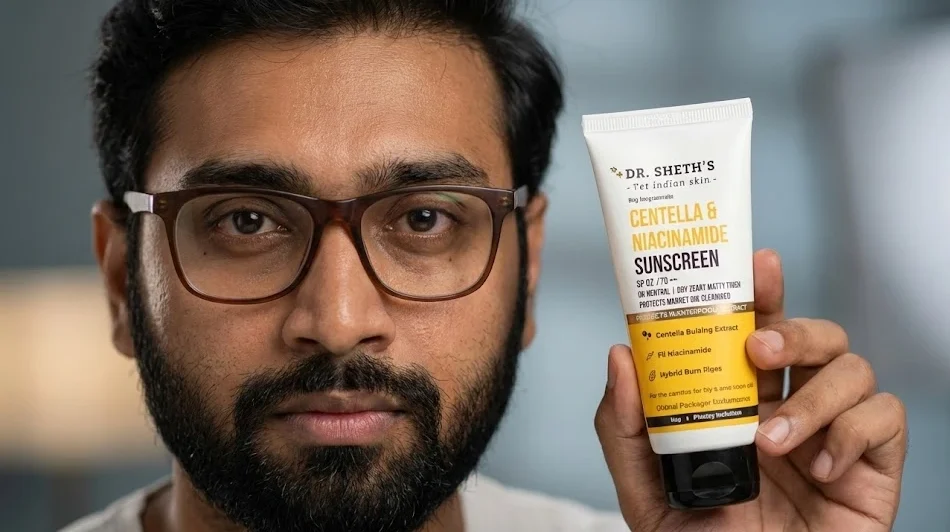
I am personally using Dr Sheth’s Ceramide Vitamin C Sunscreen and instead of doing a normal “good texture, nice finish” type review, I decided to go deep. Most people in India never read ingredient lists, and even if they read, they don’t understand what those long chemical names actually mean. Some ingredients are safe, some are controversial, and some are even banned in certain countries.
So in this article, I am sharing my real experience + complete ingredient decoding + safety and danger level of Dr Sheth’s Ceramide Vitamin C Sunscreen, especially from an Indian skin and Indian weather point of view.
This is not a sponsored article. This is a genuine, personal review.
Why I Chose Dr Sheth’s Ceramide Vitamin C Sunscreen
I picked Dr Sheth’s Ceramide Vitamin C Sunscreen mainly because:
- It claims to be made for Indian skin
- It has ceramides for barrier repair
- It has vitamin C for brightness
- And it offers SPF 50+ PA++++ protection
On paper, it looked like a good combination of protection + skincare benefits. But I still wanted to know what is actually inside.
First Important Truth – What Type of Sunscreen Is This?
Dr Sheth’s Ceramide Vitamin C Sunscreen is a hybrid sunscreen.
That means it contains:
- Chemical UV filters
- Mineral UV filter (Zinc Oxide)
So this is not a 100% mineral sunscreen and not a 100% chemical sunscreen. It is a mix.
This is not wrong, but people should be aware of it.
Before buying any sunscreen, make sure you understand how sunscreen actually works. You can read my complete Sunscreen Guide to learn about SPF, ingredients, benefits and side effects in detail.
Dr Sheth’s Ceramide Vitamin C Sunscreen – Full Ingredient List with Safety & Danger Levels
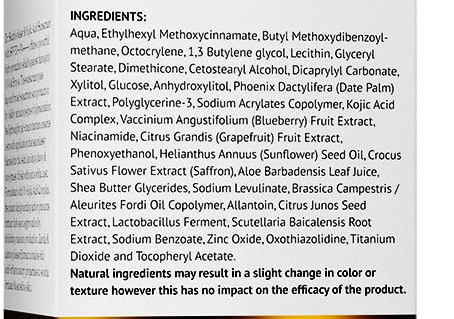
Complete Ingredient Table (Serious Decode)
| No. | Ingredient | Purpose | Safety Level | Danger Level | Reality Check |
|---|---|---|---|---|---|
| 1 | Aqua (Water) | Base | Safe | Low | Normal carrier |
| 2 | Propylene Glycol | Solvent, hydration | Moderate | Medium | Can irritate sensitive skin |
| 3 | Terephthalylidene Dicamphor Sulfonic Acid (Mexoryl SX) | UVA filter | Safe | Low | Very good UV filter |
| 4 | Butyl Methoxydibenzoylmethane (Avobenzone) | UVA filter | Moderate | Medium | Can sting sensitive skin |
| 5 | Isododecane | Texture | Safe | Low | Cosmetic filler |
| 6 | Glycerin | Moisturizer | Very Safe | Low | Excellent hydrator |
| 7 | Phenylbenzimidazole Sulfonic Acid | UVB filter | Moderate | Medium | Chemical filter |
| 8 | Ethyl Ascorbic Acid | Vitamin C | Safe | Low | Stable vitamin C |
| 9 | Tapioca Starch | Oil control | Safe | Low | Natural absorbent |
| 10 | Triethanolamine | pH adjuster | Moderate | Medium | Can irritate in high dose |
| 11 | Cyclopentasiloxane | Silicone | Moderate | Medium | Not eco-friendly |
| 12 | Ethylhexyl Methoxycinnamate (Octinoxate) | UVB filter | Controversial | High | BANNED in Hawaii/Palau |
| 13 | Caprylic/Capric Triglyceride | Emollient | Safe | Low | Coconut derived |
| 14 | Ammonium Acryloyldimethyltaurate/VP Copolymer | Thickener | Safe | Low | Texture agent |
| 15 | Terminalia Ferdinandiana (Kakadu Plum) Extract | Antioxidant | Safe | Low | Natural vitamin C |
| 16 | Hyaluronic Acid | Hydration | Very Safe | Low | Excellent for skin |
| 17 | Laminaria Digitata Extract | Seaweed | Safe | Low | Mineral rich |
| 18 | Lecithin Hydrogenated | Emulsifier | Safe | Low | Skin friendly |
| 19 | Cetyl-PG Hydroxyethyl Palmitamide | Skin barrier | Safe | Low | Ceramide booster |
| 20 | Ceramide EOP | Barrier repair | Very Safe | Low | Excellent |
| 21 | Ceramide NG | Barrier repair | Very Safe | Low | Excellent |
| 22 | Ceramide NP | Barrier repair | Very Safe | Low | Excellent |
| 23 | Ceramide AS | Barrier repair | Very Safe | Low | Excellent |
| 24 | Ceramide AP | Barrier repair | Very Safe | Low | Excellent |
| 25 | Cholesterol | Skin lipid | Very Safe | Low | Natural skin component |
| 26 | 1,2-Hexanediol | Preservative | Moderate | Medium | Mild irritant |
| 27 | Ethylhexyl Salicylate | UVB filter | Moderate | Medium | Chemical filter |
| 28 | Methylene Bis-Benzotriazolyl Tetramethylbutylphenol (Tinosorb M) | UV filter | Very Safe | Low | One of best filters |
| 29 | Decyl Glucoside | Cleanser | Safe | Low | Plant based |
| 30 | Xanthan Gum | Thickener | Safe | Low | Natural |
| 31 | Dicaprylyl Carbonate | Emollient | Safe | Low | Lightweight oil |
| 32 | Dimethicone | Silicone | Moderate | Medium | Can clog for some |
| 33 | Glyceryl Stearate | Emulsifier | Safe | Low | Common |
| 34 | Cetearyl Olivate | Emulsifier | Safe | Low | Olive based |
| 35 | Sorbitan Olivate | Emulsifier | Safe | Low | Olive based |
| 36 | Cetearyl Alcohol | Fatty alcohol | Safe | Low | Not drying |
| 37 | Ceteareth-20 | Emulsifier | Moderate | Medium | Ethoxylated |
| 38 | Phenoxyethanol | Preservative | Moderate | Medium | Restricted in EU |
| 39 | Ethylhexylglycerin | Preservative | Safe | Low | Mild |
| 40 | Xylitylglucoside | Hydration | Safe | Low | Sugar based |
| 41 | Anhydroxylitol | Hydration | Safe | Low | Sugar based |
| 42 | Xylitol | Hydration | Safe | Low | Sugar based |
| 43 | Panthenol (Vit B5) | Soothing | Very Safe | Low | Excellent |
| 44 | Sodium Polyacrylate | Thickener | Moderate | Medium | Synthetic polymer |
| 45 | Capsicum Annuum Fruit Extract | Circulation | Moderate | Medium | Can tingle |
| 46 | Biosaccharide Gum-4 | Anti-pollution | Safe | Low | Protective |
| 47 | Chamomilla Recutita (Chamomile) Extract | Soothing | Very Safe | Low | Anti-inflammatory |
| 48 | Allantoin | Healing | Very Safe | Low | Skin repair |
| 49 | Sodium Gluconate | Stabilizer | Safe | Low | Chelating agent |
| 50 | Butylated Hydroxytoluene (BHT) | Antioxidant | Controversial | High | Banned in food in some countries |
| 51 | Zinc Oxide | Mineral UV filter | Very Safe | Low | Best sunscreen filter |
Now Let’s Classify – Safe vs Dangerous Reality
🟢 Very Safe / Skin Loving Ingredients (No issue)
- Glycerin
- Hyaluronic Acid
- Ceramides (EOP, NP, AS, AP, NG)
- Cholesterol
- Panthenol
- Allantoin
- Chamomile Extract
- Zinc Oxide
- Tinosorb M
👉 These are excellent and justify why the product feels good.
🟡 Moderate / Sensitive Skin Caution Ingredients
- Propylene Glycol
- Avobenzone
- Triethanolamine
- Phenoxyethanol
- Ceteareth-20
- Dimethicone
- Capsicum Extract
👉 Not dangerous, but problematic for very sensitive skin.
🔴 Controversial / High Alert Ingredients
- Ethylhexyl Methoxycinnamate (Octinoxate)
- BANNED in Hawaii & Palau
- Hormonal disruption concerns
- Reef damage issues
- BHT (Butylated Hydroxytoluene)
- Banned in food in some countries
- Questioned for endocrine effects
“This sunscreen is not bad, but it is also not 100% clean. Some ingredients used here are banned in a few countries. So use it – but use it with awareness.”
My Personal Experience Using Dr Sheth’s Ceramide Vitamin C Sunscreen
Now coming to real usage, not just ingredients.
Texture:
Creamy but light. It spreads easily without much effort.
White Cast:
Very minimal. On my Indian skin tone, it settled nicely.
Sweat & Oil:
In humid weather, I do feel slight sweating after some time.
Irritation:
No burning in eyes, no itching, no redness.
Hydration:
Because of ceramides and hyaluronic acid, skin feels comfortable.
Who Should Use This Sunscreen?
You can consider Dr Sheth’s Ceramide Vitamin C Sunscreen if:
- You have normal to dry skin
- You want hydration + protection
- You are okay with chemical + mineral filters
Who Should Avoid This Sunscreen?
Be careful if:
- You have very sensitive skin
- You avoid Octinoxate and BHT
- You want 100% mineral sunscreen only
My Honest Ratings
- Ingredient Quality: ⭐⭐⭐☆
- Safety: ⭐⭐⭐
- Texture & Feel: ⭐⭐⭐⭐
- Indian Climate Suitability: ⭐⭐⭐⭐
- Value for Money: ⭐⭐⭐⭐
If you want to understand sunscreen types, SPF meaning, UVA/UVB rays, and possible side effects in detail, read our complete sunscreen guide.
FAQs
1. Is Dr Sheth’s Ceramide Vitamin C Sunscreen safe?
Yes, but it contains some controversial ingredients.
2. Is Dr Sheth’s Ceramide Vitamin C Sunscreen a 100% mineral sunscreen?
No, it is a hybrid sunscreen.
3. Is Octinoxate in Dr Sheth’s Ceramide Vitamin C Sunscreen banned in India?
No, but banned in some countries.
4. Is Dr Sheth’s Ceramide Vitamin C Sunscreen it good for sensitive skin?
Not ideal for ultra-sensitive skin.
5. Does Dr Sheth’s Ceramide Vitamin C Sunscreen cause white cast?
Minimal white cast.
Disclaimer
This article is for educational purposes only. Skincare products affect everyone differently. Always do a patch test and consult a dermatologist if you have sensitive skin or medical conditions.
Final Honest Conclusion
Dr Sheth’s Ceramide Vitamin C Sunscreen is not a bad product. It performs well and feels good on skin. But it is also not a 100% clean or toxin-free sunscreen. It contains Octinoxate and BHT, which are controversial globally.
So my advice is simple:
Use it, but use it with awareness.
That is real, honest skincare.
External Sources (For Proof)
- FDA – Sunscreen Filters:
https://www.fda.gov/science-research/fda-science-forum/one-year-physical-stability-study-house-sunscreen-formulations - EU Cosmetics Regulation:
https://single-market-economy.ec.europa.eu/sectors/cosmetics/cosmetic-products-specific-topics/sunscreen-products_en - Hawaii Reef Law (Octinoxate Ban):
https://dlnr.hawaii.gov/blog/2016/09/03/nr16-182/ - EWG Skin Deep Database:
https://www.ewg.org/skindeep/ingredients/704203-OCTINOXATE/ - NIH – BHT Studies:
https://pubchem.ncbi.nlm.nih.gov/compound/31404#section=SMILES


2 thoughts on “Dr Sheth’s Ceramide Vitamin C Sunscreen Review – Honest Ingredient Decode After Personal Use”