

Amul Lassi is one of the most popular ready-to-drink dairy beverages in India. It is widely marketed as a refreshing, calcium-rich drink and is easily available at grocery stores, medical shops, and supermarkets. But the real question is:
Is Amul Lassi good for health, or is it just a sweet dairy drink with added sugar? Many people are curious to know if this popular Amul product supports digestion and nutrition or only satisfies sweet cravings.
In this detailed review, we will analyze Amul Lassi ingredients, nutrition values, sugar content, processing method, and overall health impact based on the actual product label and nutritional data.
This review is written from a health, nutrition, and consumer awareness perspective to help you make an informed decision.
Product Overview – Amul Lassi
- Brand: Amul
- Product Type: Flavoured Dairy Drink (Lassi)
- Pack Size: 200 ml
- MRP: ₹25 (as seen on the pack)
- Processing: Homogenised & Heat Treated
- Category: Ready-to-drink packaged lassi

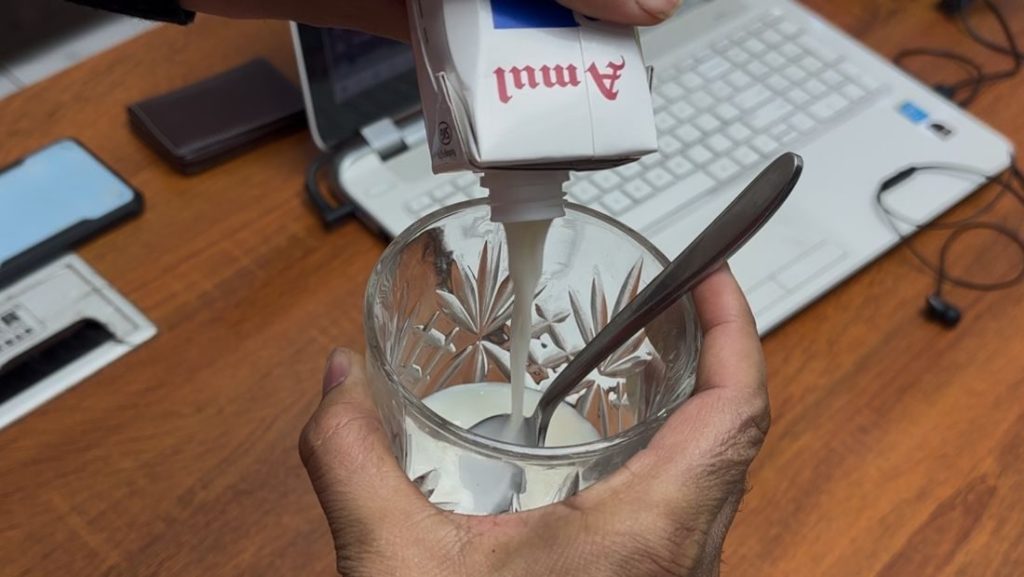
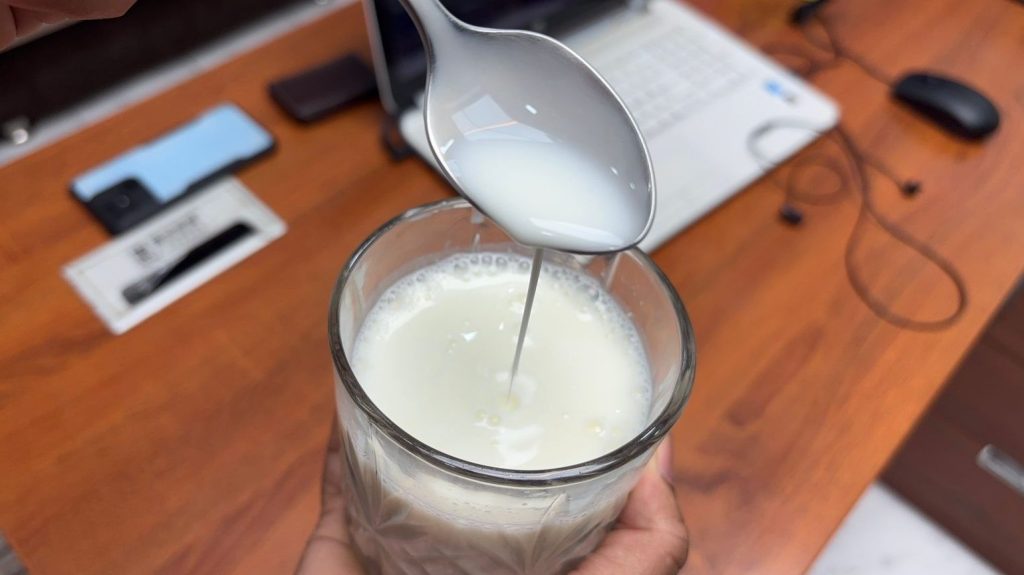
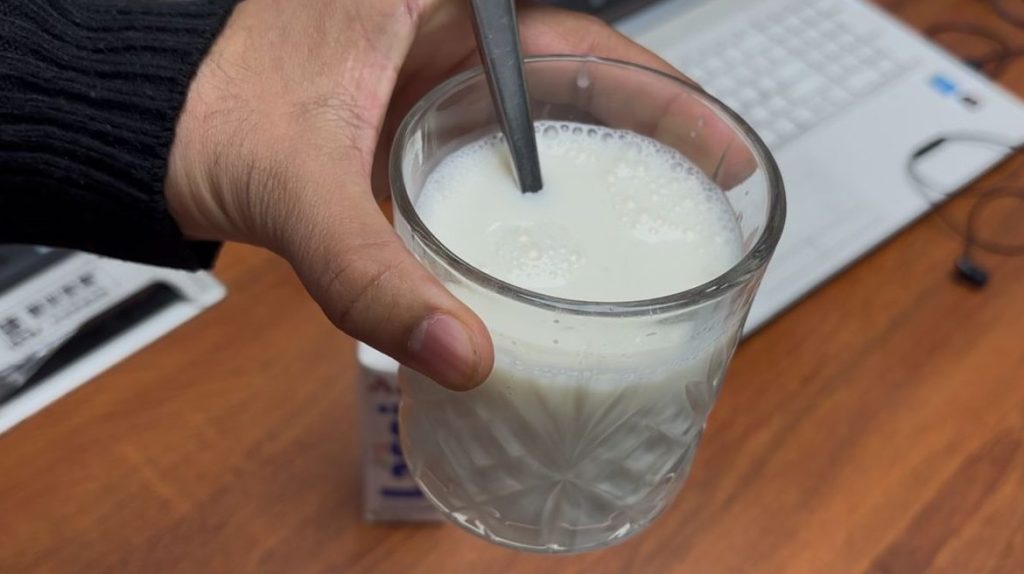
Nutrition Facts – Amul Lassi (Per 100 ml approx.)
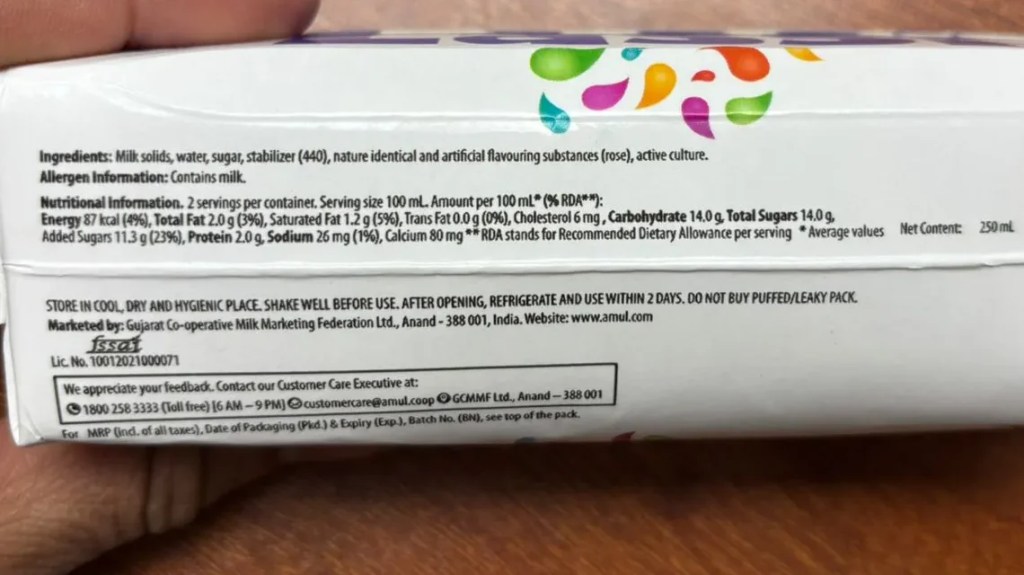
Per Pack (250 ml – Full Pack Value) (100 ml × 2.5)
| Nutrient | Quantity |
|---|---|
| Energy | ~217 kcal |
| Carbohydrates | ~35 g |
| Total Sugar | ~35 g |
| Added Sugar | ~28 g |
| Protein | ~5 g |
| Total Fat | ~5 g |
| Saturated Fat | ~3 g |
| Sodium | ~65 mg |
| Calcium | ~200 mg |
Key Observation:
Amul Lassi is high in sugar. A significant portion of its calories comes from added sugar, not just natural milk sugar.
Ingredients Analysis – Amul Lassi
| Ingredient | Purpose | Health Impact |
|---|---|---|
| Milk Solids | Dairy base | Natural source of protein & calcium |
| Water | Dilution | Neutral |
| Sugar | Sweetness | ⚠️ Increases blood sugar, weight gain risk |
| Stabilizers (E440, etc.) | Texture & thickness | Processed additive |
| Flavouring Substances | Taste enhancement | Nature-identical / artificial |
| Active Lactic Culture | Fermentation | Limited gut benefit due to processing |
Has Amul Flavoured Lassi Passed Any Lab Test?
As of now, no public lab test reports are available that clearly confirm whether Amul’s flavoured lassi has passed or failed independent laboratory testing. At the same time, there have been no consumer complaints, safety warnings, or quality issues reported for this product, which is a positive sign.
From my personal observation and experience, Amul is known for maintaining strong hygiene standards and strict in-house quality checks. Every batch goes through testing, and if any issue is found, the batch is usually rejected. While the recent reports of unhygienic bacteria in some Amul curd samples are a bit concerning, there are no such red flags for Amul flavoured lassi so far.
Is Amul Lassi Real Lassi?
Traditional homemade lassi is made by:
- Fresh curd
- Water
- Sometimes salt or natural sweeteners
- No preservatives
- No stabilizers
- No artificial flavours
Amul Lassi, on the other hand, is a processed dairy beverage.
It is heat-treated, homogenised, sweetened, and stabilized for long shelf life.
👉 Conclusion:
Amul Lassi is not the same as homemade lassi. It is better classified as a sweetened flavoured dairy drink.
Sugar Content – The Biggest Concern
One pack of Amul Lassi contains approximately28 grams of added sugar.
To put this in perspective:
- WHO recommends limiting added sugar to 25 grams per day.
- One pack of Amul Lassi almost reaches that limit.
⚠️ This makes it unsuitable for:
- Diabetics
- People trying to lose weight
- Children consuming it daily
- Anyone with insulin resistance or fatty liver
Is Amul Lassi Good for Weight Loss?
No.
Due to:
- High sugar
- Moderate calories
- Low satiety
- Processed nature
Amul Lassi is not recommended for weight loss.
Is Amul Lassi Good for Kids?
Occasional consumption is fine.
But daily consumption is not advisable because:
- High sugar trains children’s taste towards sweetness
- Increases risk of obesity
- Reduces preference for natural foods
Health Perspective – Honest Opinion
From a nutrition and health awareness point of view:
- ✔️ Provides calcium
- ✔️ Provides some protein
- ❌ High added sugar
- ❌ Processed product
- ❌ Not equivalent to traditional lassi
So, Amul Lassi is better treated as an occasional refreshment, not a health drink.
Better Alternative

If health is your priority, choose:
- Homemade lassi (curd + water + pinch of salt)
- Fresh chaas (buttermilk)
- Unsweetened yogurt drinks
These options are:
- Low in sugar
- High in probiotics
- Natural and digestion-friendly
Final Verdict – Amul Lassi Review
Amul Lassi is not a health drink. It is a sweetened dairy beverage.
You can consume it:
- Occasionally
- As a refreshment
- Not as a daily nutrition source
If your goal is fitness, weight management, or metabolic health, homemade options are far superior.
Frequently Asked Questions (FAQs) – Amul Lassi
1. Is Amul Lassi healthy?
Amul Lassi contains milk solids and calcium, but it is also high in added sugar. It should be consumed occasionally, not as a daily health drink.
2. How much sugar is there in Amul Lassi?
One 200 ml pack of Amul Lassi contains approximately 18–20 grams of added sugar, which is close to the daily recommended limit.
3. Can diabetics drink Amul Lassi?
No, Amul Lassi is not recommended for diabetics due to its high sugar content, which can cause blood sugar spikes.
4. Is Amul Lassi good for weight loss?
No. Due to high sugar and calorie content, Amul Lassi is not suitable for weight loss diets.
5. Is Amul Lassi real lassi?
No. Traditional lassi is made from fresh curd and water. Amul Lassi is a processed, flavoured dairy drink with added sugar and stabilizers.
6. Can children drink Amul Lassi daily?
Occasional consumption is fine, but daily intake is not advised as it can increase sugar dependency and obesity risk in children.
7. Does Amul Lassi contain probiotics?
It contains active lactic cultures, but due to heat treatment and processing, the probiotic benefit is limited compared to fresh curd or homemade lassi.
8. Is Amul Lassi better than soft drinks?
Yes, it is better than carbonated soft drinks because it contains milk and calcium. However, it is still a sugary beverage and not a health drink.
9. Is Amul Lassi safe to consume daily?
From a nutrition and health perspective, daily consumption is not recommended due to high sugar and processed ingredients.
10. What is the healthiest alternative to Amul Lassi?
Homemade lassi (curd + water + pinch of salt) or fresh buttermilk (chaas) are healthier, low-sugar, and more natural options.
Amul Dahi Quality Exposed: Cup vs Pouch Lab Test Report
Rosier A2 Ghee vs Amul Cow Ghee vs Patanjali Cow Ghee: Which One Is Best?
Dr Sheth’s Ceramide Vitamin C Sunscreen Review – Honest Ingredient Decode After Personal Use
Disclaimer
The information provided in this article is for educational and informational purposes only. This Amul Lassi review is based on publicly available product label information and general nutrition knowledge. It is not intended to diagnose, treat, cure, or prevent any disease. Individual nutritional needs may vary. Please consult your doctor, healthcare provider, or a qualified nutrition professional before making any changes to your diet, especially if you have diabetes, medical conditions, or specific health concerns.


One thought on “Is Amul Lassi Real or Artificial? Full Review of Ingredients, Sugar & Health Facts”