
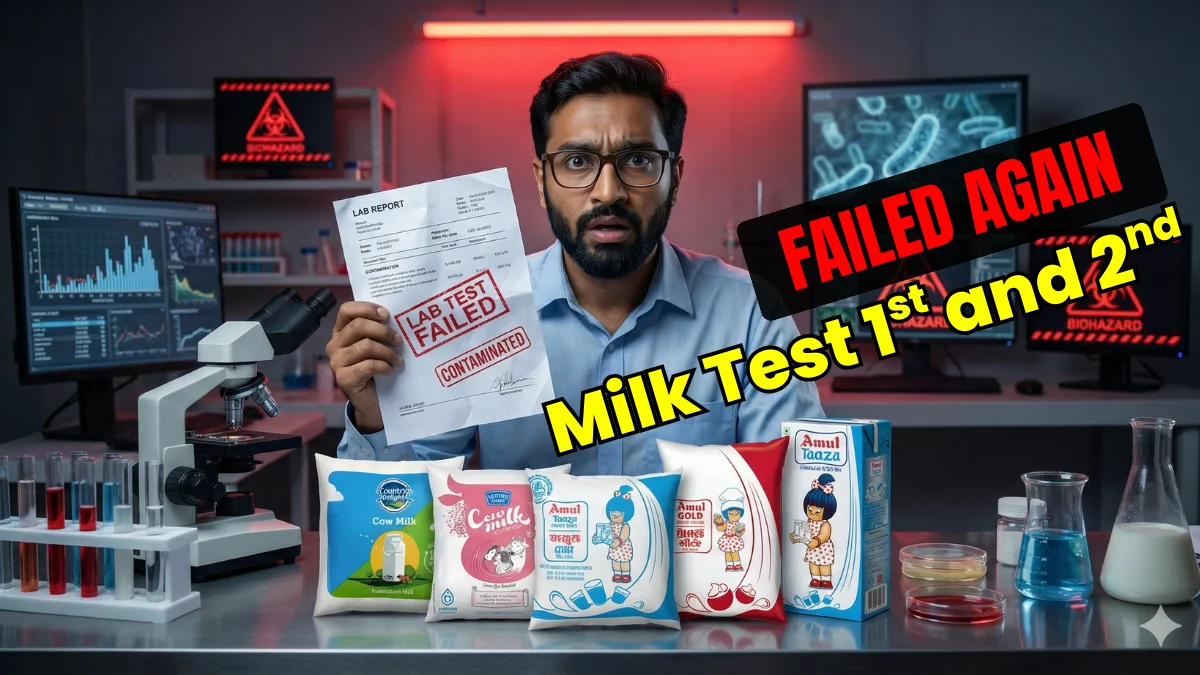
You pour milk into your child’s glass every morning, trusting the brand your family has used for twenty years. But what if that trust is misplaced? What if the milk from Amul, Mother Dairy, and Country Delight—brands sitting in millions of Indian refrigerators right now—just failed laboratory bacteria tests? This isn’t a WhatsApp forward or fear-mongering. This is a blind lab test conducted by Trustified, and the results will make you check your fridge immediately.
The numbers are even more disturbing. Some samples showed bacterial contamination eight times higher than FSSAI’s safe limit. Eight times. That’s not a small margin of error—that’s a public health crisis hiding in plain sight.
If you gave your family milk this morning, keep reading. What you discover in the next five minutes could change how you shop for dairy forever.
🚨 BREAKING UPDATE — 17 February 2026 (2nd Test)
Mother Dairy cow milk has failed an independent lab test AGAIN. After this article was published, Trustified conducted a follow-up blind test on Mother Dairy — sample collected directly from their official booth in Delhi.
Result: Aerobic Plate Count found at 75,000 cfu/ml — that’s 2.5x above FSSAI safe limit (30,000 cfu/ml). Coliforms were 3x higher than permitted.
This marks the second consecutive failure for Mother Dairy in independent testing. Read the full updated Eurofins lab report here →
Milk isn’t the only product raising food safety concerns this festive season. Just ahead of Holi 2026, FSDA officials raided a Haldiram warehouse in Lucknow and seized 112 kg of expired Soan Papdi and Rajbhog — worth ₹56 lakh. The question remains the same: who is actually watching?
The Blind Test That Exposed India’s Dairy Giants
Trustified sent five milk samples to an accredited laboratory for microbiological testing—the gold standard for determining whether milk is safe or dangerous. The samples included Amul Taaza pouch, Amul Gold pouch, Amul Tetra Pack, Mother Dairy Cow Milk, and Country Delight Cow Milk ordered directly through their app.
These aren’t regional brands. These are the names dominating Indian dairy shelves across multiple states. The brands advertised as pure, the ones your parents bought, the ones you’ve never questioned.
Microbiological testing reveals what your eyes can’t see: disease-causing bacteria, contamination from dirty equipment, traces of unsanitary handling. It answers one question that matters more than price or packaging: Will this milk harm my family?
The Amul Mother Dairy milk test failed to meet basic safety standards. So did Country Delight. Out of five samples, only one passed completely.
Brand-by-Brand: The Shocking Results
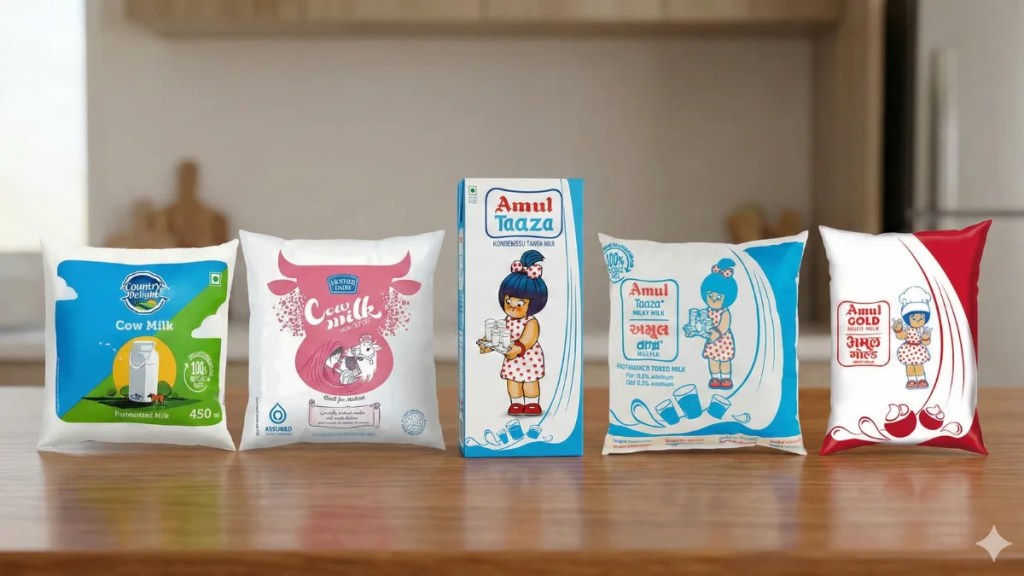
Amul Taaza: India’s Favorite Failed the Test
That familiar blue pouch millions of Indians buy daily? It failed. Lab reports detected coliform bacteria above FSSAI’s safe limit. Coliforms indicate fecal contamination—the kind that happens when hygiene breaks down during milking, processing, or packaging.
Total Plate Count (TPC), which measures overall bacterial load, stayed within limits. But E.coli and yeast & mold were also detected. While FSSAI doesn’t set specific limits for these in milk, their presence screams one word: unhygienic.
This isn’t Amul’s first laboratory failure. Previous testing revealed that Amul Dahi also failed microbiological safety tests, raising serious questions about consistency in their quality control processes across multiple product lines.
Amul Gold: Premium Price, Same Problem
You pay extra for Gold, expecting better quality. The Amul Mother Dairy milk test failed showed otherwise.
Amul Gold’s Total Plate Count was half the FSSAI limit—technically a pass. But coliform bacteria levels exceeded safe limits. E.coli and yeast & mold? Present again. The premium pricing didn’t translate to premium safety.
Mother Dairy: The Worst Offender
Prepare yourself for this one. Mother Dairy Cow Milk recorded a Total Plate Count of 240,000 CFU/ml. FSSAI’s safe limit is 30,000 CFU/ml.
That’s eight times higher than what regulators consider acceptable. Eight times the bacteria your body should never ingest. This wasn’t a marginal failure—this was a catastrophic breach of safety standards.
If you’ve been buying Mother Dairy thinking it’s the “safer” option, this data says otherwise.
Country Delight: Fresh from Farm? Fresh Bacteria Too
Country Delight markets itself as fresher, delivered through an app, straight from farms. Their cow milk showed a Total Plate Count of 60,000 CFU/ml—double FSSAI’s safe limit.
The farm-to-home promise didn’t prevent bacterial contamination. The slick app interface and modern branding couldn’t mask what the lab test revealed: this milk failed safety standards just like the others.
Amul Tetra Pack: The Only Winner
Here’s the twist. Amul Tetra Pack showed zero bacterial contamination. Not a single microorganism detected. Complete pass.
Same brand, different packaging, completely different results. This isn’t random—it’s about how the milk is processed and packed. We’ll explain why in a moment.
The Test Results: See It Yourself
| Brand & Product | Total Plate Count (CFU/ml) | FSSAI Safe Limit | Coliform Status | Result |
|---|---|---|---|---|
| Amul Taaza | Within limit | 30,000 | Above limit | ❌ FAILED |
| Amul Gold | 15,000 (Safe) | 30,000 | Above limit | ❌ FAILED |
| Mother Dairy Cow Milk | 240,000 | 30,000 | Not specified | ❌ FAILED |
| Country Delight Cow Milk | 60,000 | 30,000 | Not specified | ❌ FAILED |
| Amul Tetra Pack | 0 (None detected) | 30,000 | None detected | ✅ PASSED |
The table makes it clear: pouch milk from India’s leading brands couldn’t meet safety standards, while Tetra Pack milk sailed through with zero contamination. There’s a pattern here, and it’s not coincidental.
This Isn’t Just Our Finding—Science Backs It Up
The Amul Mother Dairy milk test failed isn’t an isolated incident. Multiple scientific studies have documented the same problem across India.
Punjab Study: 100% Pouch Milk Failed
A study published in the Indian Journal of Public Health tested 12 pouch-based pasteurized milk samples from different brands and 2 Tetra Pack samples. Every single pouch sample showed Total Plate Count exceeding safe limits. Significant coliform and yeast & mold contamination was detected across all pouch samples.
The Tetra Pack samples? Zero microbiological contamination. Sound familiar?
Haryana Study: 60% Failure Rate
Research in Haryana state found approximately 58-60% of pasteurized pouch milk samples had TPC and coliforms above Indian regulatory safety limits. More than half. This isn’t a quality control slip—it’s a systemic failure.
National Milk Quality Survey: The Bigger Picture
During the National Milk Quality and Adulteration Survey, thousands of milk samples were collected nationwide. The failure rate was alarmingly high. The major reasons identified? Unhygienic handling practices, contaminated water usage, poor sanitation conditions, and gaps in basic infrastructure and hygiene standards.
The Indian Journal of Public Health called contaminated milk a “serious public health concern,” especially for vulnerable groups—infants, growing children, pregnant women, and elderly people. The very people who consume the most milk are the ones most at risk.
Why Does Pouch Milk Keep Failing?
The contamination isn’t random. It’s structural. Multiple failure points exist from cow to cup.
Poor Farm Hygiene
Picture the milking area at a typical dairy farm. Open spaces, flies buzzing around, workers handling udders without proper handwashing. Contamination starts here, before milk even leaves the animal.
Contaminated Water
Milk gets diluted, equipment gets washed, processing uses water. If that water isn’t clean, bacteria enters the milk supply chain. In India, water quality standards at processing units vary wildly.
Transportation Gaps
Milk travels from farms to processing plants in containers exposed to heat, dust, and contamination. Temperature control during transport is inconsistent, allowing bacteria to multiply before processing even begins.
Processing Shortcuts
Pre-pasteurization and post-pasteurization processes both matter. Researchers emphasize that hygiene must be maintained at both stages. But companies prioritize speed and cost-cutting over stringent hygiene protocols in pouch milk processing.
Post-Pasteurization Contamination
Even after heating kills bacteria, milk can get contaminated during cooling, storage, and packaging. Pouch-filling machines, if not properly sterilized, become bacterial breeding grounds.
The study concluded that dairy companies need to drastically improve hygiene standards in milk processing units. Until that happens, bacterial contamination will continue.
“But I Boil My Milk” — The Myth That Won’t Protect You
Every Indian household believes boiling makes milk safe. Your grandmother did it, your mother does it, so you do it. But here’s what the science says: boiling reduces bacteria, it doesn’t eliminate them.
When you boil contaminated milk, some bacteria die. But heat-resistant strains survive. More importantly, toxins already produced by bacteria before boiling remain in the milk. These toxins don’t disappear with heat.
Boiling is better than not boiling. But it’s not a foolproof safety net. You’re reducing risk, not eliminating it. The milk is safer than before, but still not completely safe.
If you’re starting with milk that has 240,000 bacteria per ml—like Mother Dairy’s failed sample—boiling it doesn’t magically transform it into pristine, safe milk. You’re just drinking slightly less contaminated milk.
Why Tetra Pack Milk Passed While Pouches Failed
The Amul Tetra Pack result reveals something crucial: the packaging and processing method changes everything.
UHT Treatment vs. Pasteurization
Tetra Pack milk undergoes Ultra-High Temperature (UHT) treatment—heating milk to much higher temperatures than regular pasteurization. This kills virtually all microorganisms, including heat-resistant bacteria that survive standard pasteurization.
Pouch milk only gets pasteurized at lower temperatures. It’s enough to kill most bacteria, but not all. The survivors multiply during storage and transportation.
Sterile Packaging Environment
Tetra Pack milk is filled in completely sterile chambers. The packaging material itself is sterilized before milk touches it. The entire filling process happens in an air-tight, contamination-proof environment.
Pouch milk gets filled in regular processing environments where airborne bacteria, equipment contamination, and human handling introduce microorganisms.
The Business Logic
Tetra Pack milk has a shelf life of six months. Companies know that if even one bacterium survives in that sealed package, the milk will spoil, the pack will bloat, and they’ll face massive losses and reputation damage.
So they follow strict hygiene protocols for Tetra Pack. It’s expensive, but necessary.
Pouch milk has a shelf life of just 3-4 days. Companies assume people will boil it anyway. The hygiene discipline for pouches isn’t as stringent because the financial risk of failure is lower. They can afford to be less careful.
That’s the brutal truth: your health takes a backseat to their profit margins.
Who’s At Highest Risk From Contaminated Milk
Not everyone faces the same danger from bacterial contamination. Certain groups are extremely vulnerable.
Infants and Toddlers (0-5 Years)
Young children have developing immune systems. Bacteria that an adult’s body might fight off can cause serious illness in a toddler. Diarrhea, stomach infections, and food poisoning hit children harder and faster.
School-Going Children (6-15 Years)
Growing kids consume more milk than adults. More consumption means higher exposure to bacteria. Their bodies are still building immunity, making them more susceptible to contamination-related illnesses.
Pregnant and Breastfeeding Women
Pregnant women have suppressed immune systems to prevent their bodies from rejecting the fetus. This makes them vulnerable to bacterial infections. Contaminated milk can cause infections that affect both mother and baby.
Elderly People (60+ Years)
Aging reduces immune response. Seniors have weaker defenses against bacteria. What might cause mild discomfort in a young adult can lead to severe illness in an elderly person.
People with Compromised Immunity
Anyone recovering from illness, undergoing treatment, or living with chronic conditions has weakened immunity. For them, contaminated milk isn’t just unsafe—it’s dangerous.
If anyone in your home falls into these categories, the Amul Mother Dairy milk test failed should be a wake-up call.
What You Should Actually Buy
Before we discuss solutions, it’s worth noting that not all Amul products fail safety tests. Our comprehensive testing of Amul Lassi showed it met quality standards, proving the company can maintain hygiene when proper protocols are followed. The question is: why isn’t the same rigor applied to their pouch milk?
The data points to one clear solution: switch to UHT-treated Tetra Pack milk.
Yes, it’s more expensive. Tetra Pack milk costs ₹70-80 per liter versus ₹50-60 for pouch milk. But consider the alternative: hospital bills from food poisoning, days of work lost, a child suffering from stomach infections.
If You Can Afford It
Switch your entire household to Tetra Pack milk immediately. The peace of mind is worth the extra ₹500-600 per month for a family of four.
If Budget Is Tight
Use a priority system. Buy Tetra Pack milk for:
- Children (all ages)
- Pregnant or breastfeeding women
- Elderly family members
- Anyone with health issues
For healthy adults, continue with pouch milk but boil it thoroughly before consumption. This isn’t perfect, but it’s the best compromise between safety and affordability.
Skip the “Premium” Pouch Myth
Don’t waste money on premium pouch variants like Amul Gold expecting better safety. The test results showed they fail just like regular pouches. Premium pricing doesn’t guarantee premium hygiene.
The Bigger Question: Why Are We Okay With This?
India is the world’s largest milk producer. We have the infrastructure, the technology, and the regulatory framework. Yet the Amul Mother Dairy milk test failed alongside Country Delight shows that even leading brands can’t maintain basic safety standards in their pouch milk lines.
FSSAI sets limits. Companies know those limits. Labs can test for compliance. So why does contaminated milk still reach millions of homes?
Because enforcement is weak. Because penalties are negligible. Because consumer awareness is low. Because companies know most people will boil the milk anyway, so why invest in better hygiene for pouches when Tetra Pack already serves the premium segment?
Until consumers demand accountability, until regulators enforce standards strictly, until companies face real consequences for selling contaminated products, this pattern will continue.
We deserve better. Our children deserve better.
Conclusion: Your Family’s Health Isn’t Negotiable
The Amul Mother Dairy milk test failed along with Country Delight’s failure should end the debate: pouch milk from India’s leading brands has a serious bacterial contamination problem. This isn’t an isolated case—it’s backed by multiple scientific studies and nationwide surveys.
Mother Dairy’s sample showed bacteria levels eight times above safe limits. Amul Taaza and Amul Gold both failed coliform tests. Country Delight doubled the acceptable bacterial count. Only Amul Tetra Pack passed with zero contamination detected.
The solution is clear. Switch to UHT-treated Tetra Pack milk if you can afford it. If budget is a constraint, at least protect your vulnerable family members—children, pregnant women, elderly—with safer milk options.
Boiling helps, but it’s not a complete safeguard. Bacteria-produced toxins remain even after heating. You’re reducing risk, not eliminating it.
Stop trusting brand names blindly. Start reading lab reports, asking questions, demanding accountability. Your family’s health is worth more than the ₹20 you save buying cheaper pouch milk.
The milk you choose tomorrow morning matters. Choose wisely. Choose safe.
Frequently Asked Questions
Did independent tests find bacteria in some packaged milk samples?
Some independent testing discussions suggested higher bacterial levels in certain pouch milk samples.
Is UHT tetra pack milk safer than pouch milk?
UHT processing and sterile packaging may help reduce microbial contamination risk.
Does boiling milk make it completely safe?
Boiling can reduce bacteria but may not remove all toxins formed earlier.
Can milk contamination vary by batch or storage conditions?
Yes, milk safety can vary based on handling, storage temperature and supply chain hygiene.
Which type of milk generally has lower contamination risk?
Properly processed and packaged UHT milk usually shows lower contamination risk compared to mishandled supply chains.
Disclaimer: This article is based on independent laboratory testing conducted by Trustified and published scientific studies. Results may vary with different batches. Consumers are encouraged to make informed decisions based on available data and consult healthcare professionals for specific health concerns. This article does not claim that all products from mentioned brands are unsafe, only that specific tested samples failed to meet FSSAI microbiological safety standards.


3 thoughts on “Amul Mother Dairy Milk Test Failed — Is Your Daily Milk Safe?”
Comments are closed.