

Hair fall does not start suddenly.
It progresses silently, month after month, until thinning, recession, or visible scalp becomes impossible to ignore.
At the center of this process is one hormone—DHT—and understanding how a DHT blocker works is the first real step toward controlling hair loss instead of reacting to it.
Most people blame shampoo, water, or stress.
Those factors matter, but they are not the root cause of pattern hair loss.
DHT is.
This guide explains how DHT damages hair, what a DHT blocker actually does, and how natural prevention works long-term—without hype or fear-based claims.
TL;DR – Quick Summary
- DHT is the primary trigger behind pattern hair loss, and early control is more effective than chasing regrowth later.
- A DHT blocker works by limiting DHT activity at the scalp level, not by removing hormones from the body.
- Natural DHT blockers regulate hormone impact rather than suppressing it, making them safer for long-term use.
- Consistent use over months—not days—determines whether a DHT blocker delivers visible results.
- Hair loss control improves significantly when DHT blockers are combined with proper nutrition, sleep, and stress management.
Audio version of this article: Learn how DHT blocker strategies work at the hormonal level, how DHT affects hair follicles, and how natural DHT blockers help control hair loss in this complete audio explanation.
This guide is part of our main Hair Fall Treatment Guide that breaks down DHT, hormones, and real prevention methods.
Understanding the Role of DHT in Hair Loss
DHT (dihydrotestosterone) is formed when testosterone is converted by the 5-alpha reductase enzyme.
This hormone is powerful.
And power without regulation becomes destructive.
In genetically sensitive individuals, DHT targets scalp hair follicles and slowly alters how they function.
Not overnight.
Not dramatically.
But progressively.
Hair becomes thinner.
Growth cycles shorten.
Recovery weakens.
This is why surface treatments fail.
The problem is hormonal, not cosmetic.
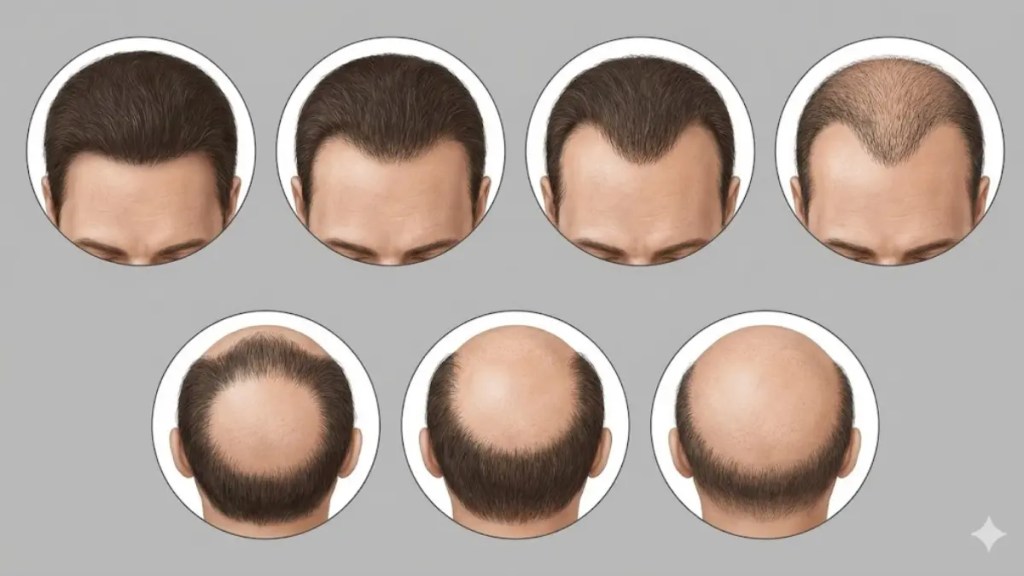
How DHT Damages Hair Follicles at the Root Level
DHT binds directly to androgen receptors inside scalp follicles.
Once attached, it triggers a chain reaction:
- Hair follicles shrink in size
- Growth phase shortens
- Resting phase extends
- New hair grows weaker and finer
Over time, follicles lose the ability to produce visible hair.
This process is gradual, which is why early intervention with a DHT blocker matters more than aggressive treatment later.
clinical research on DHT and hair loss
What a DHT Blocker Actually Does
A DHT blocker does not remove hormones from the body.
It controls conversion and activity.
The goal is simple:
Reduce how much DHT reaches scalp follicles and how strongly it binds.
There are two ways this happens:
- Inhibiting the 5-alpha reductase enzyme
- Blocking DHT from attaching to follicle receptors
Natural approaches work slowly but consistently.
Medical options work faster but come with systemic risks.
Long-term hair protection depends on balance, not force.
research published in NCBI on androgenic alopecia
Natural DHT Blockers and Why They Work
Natural DHT blockers do not shock the system.
They regulate it.
This makes them suitable for long-term use and prevention-focused strategies.
Saw Palmetto
One of the most researched natural DHT blockers.
It suppresses 5-alpha reductase activity and reduces scalp-level DHT exposure.
Used orally or topically, it supports density and slows shedding when used consistently.
Pumpkin Seed Oil
Rich in phytosterols that interfere with DHT binding.
Clinical evidence shows improved hair count with daily intake over several months.
It supports hormonal balance without suppressing testosterone.
Green Tea (EGCG)
EGCG limits DHT formation and improves scalp circulation.
It also supports follicle metabolism, helping dormant follicles re-enter growth phase.
Onion Extract
Sulfur-rich compounds support follicle strength and circulation.
It does not block DHT directly but reduces damage sensitivity, making follicles more resilient.
Why Lifestyle Matters in DHT Control
A DHT blocker alone is not enough.
Hormones respond to environment.
Poor sleep, chronic stress, nutrient deficiencies, and inflammation all amplify DHT activity.
Support systems matter:
- Zinc and iron balance
- Protein sufficiency
- Scalp blood flow
- Stress regulation
Ignoring lifestyle weakens every treatment.
Natural vs Medical DHT Blockers (Reality Check)
| Factor | Medical DHT Blockers | Natural DHT Blockers |
|---|---|---|
| Speed | Fast | Gradual |
| Hormonal Impact | System-wide | Localized & mild |
| Side Effects | Possible | Rare |
| Long-term Use | Limited | Sustainable |
| Prevention | Weak | Strong |
Key insight:
Medical options suppress.
Natural DHT blockers regulate.
Regulation wins long-term.
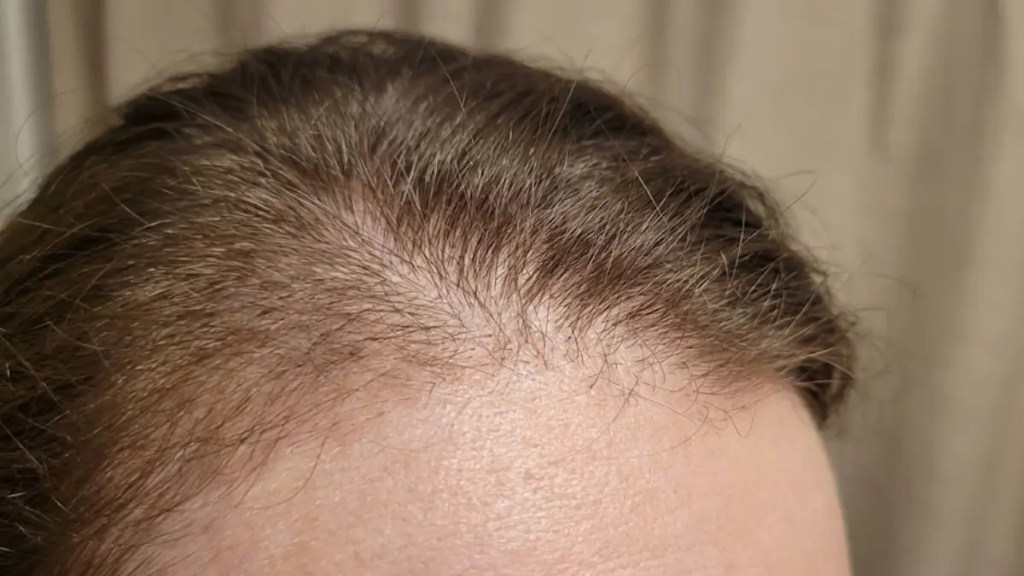
How Long Does a DHT Blocker Take to Work?
Hair biology runs on cycles, not days.
A DHT blocker shows visible change only when follicles complete a full growth cycle.
Expect:
- Reduced shedding: 6–8 weeks
- Texture improvement: 3 months
- Density stabilization: 4–6 months
Consistency beats intensity.
Why Most People Fail With DHT Blockers
They quit early.
They expect instant results.
They stack random supplements.
A DHT blocker is not a quick fix.
It is a control system.
Those who treat it like prevention win.
Those who chase reversal lose.
NIH overview on androgen-related biological processes
Frequently Asked Questions (FAQs)
Is a DHT blocker enough to stop hair loss completely?
A DHT blocker is one of the most important tools for controlling pattern hair loss, but it should not be seen as a standalone solution. While it significantly slows follicle miniaturization and reduces shedding, long-term hair stability depends on combining DHT control with proper nutrition, sleep quality, scalp circulation, and stress regulation.
Can natural DHT blockers replace medical treatments like Finasteride?
Natural DHT blockers work differently from medical drugs. They regulate DHT activity instead of aggressively suppressing hormone production. For early-stage hair loss and long-term prevention, natural DHT blockers can be highly effective. However, in advanced androgenetic alopecia, medical treatments may show faster visible results but come with higher systemic risk.
Do DHT blockers affect testosterone levels?
Natural DHT blockers do not significantly reduce testosterone levels. They mainly limit how much testosterone converts into DHT or how strongly DHT binds to scalp receptors. This makes them safer for long-term use without negatively impacting overall hormonal health, energy levels, or libido.
How long should a DHT blocker be used to see real results?
A DHT blocker must be used consistently for at least 3 to 6 months to evaluate real effectiveness. Hair growth follows biological cycles, and visible improvements in density, texture, and reduced shedding only appear after follicles complete a full growth phase under controlled DHT conditions.
Can DHT blockers regrow lost hair or only prevent further loss?
DHT blockers are primarily designed to prevent further follicle damage and stabilize existing hair. In some cases, partial regrowth may occur if follicles are still alive but miniaturized. However, completely dead follicles cannot be revived. This is why early DHT control always produces better outcomes than late intervention.
Final Thoughts: Control DHT Before It Controls You
Hair loss is not sudden.
And it is not random.
DHT follows rules.
And rules can be managed.
A well-chosen DHT blocker, combined with lifestyle alignment, does not promise miracles—but it delivers stability, control, and long-term protection.
That is how real hair retention works.
Disclaimer
This article is for educational purposes only.
It does not replace medical advice, diagnosis, or treatment.
Always consult a qualified healthcare professional before starting any supplement or treatment protocol.


18 thoughts on “DHT Blocker: The Complete Guide to DHT, Hair Loss & Natural Prevention Methods”