

Hair loss treatments often create confusion because results vary widely and promises rarely match reality.
Is DHT reduction the only way to slow androgenetic alopecia, or is the real issue how hair follicles respond to hormones?
Breezula for Hair Loss has gained attention because it targets androgen signaling at the scalp itself, offering a different scientific approach from traditional therapies.
For anyone evaluating long-term options, understanding how a treatment works, what clinical trials actually show, and where uncertainty remains is essential.
This article explains Breezula for Hair Loss using verified clinical concepts, phase-wise trial insights, and a balanced safety perspective—without exaggeration.
TL;DR – Quick Summary
- Breezula for Hair Loss is a topical anti-androgen treatment concept based on clascoterone that targets androgen receptors directly at the scalp.
- Instead of lowering overall DHT levels, it works by reducing how DHT activates hair follicles, which is a different mechanism from oral treatments.
- Phase I trials established local safety, while Phase II studies showed measurable improvements in hair parameters compared to placebo in some participants.
- Phase III trials are designed to confirm long-term effectiveness, consistency, and safety across larger populations.
- Current evidence supports cautious optimism, but results vary by individual, and long-term outcomes are still being evaluated.
What Is Breezula?
Breezula for Hair Loss is the developmental name for a topical formulation containing clascoterone, a non-steroidal anti-androgen molecule.
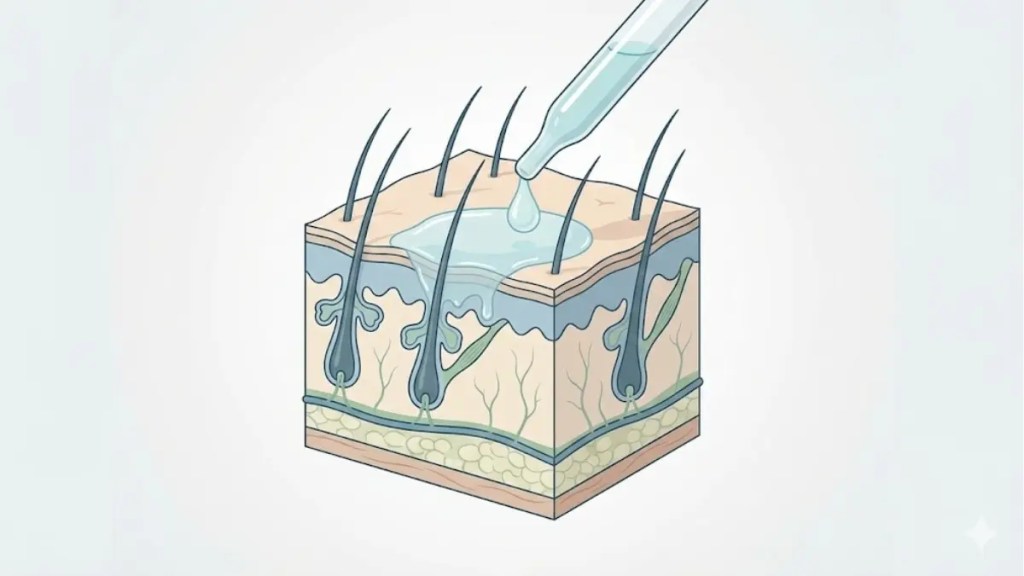
It is designed to be applied directly to the scalp, where androgen activity contributes to follicle miniaturization in androgenetic alopecia.
Clascoterone itself is a well-studied compound in dermatology.
Its prior evaluation in hormone-related skin conditions provided the biological and safety foundation for investigating its role in scalp hair loss.
Unlike cosmetic hair products, Breezula for Hair Loss is being studied as a pharmacological treatment intended to modify hormone signaling locally at the hair follicle.
This article is part of our complete Hair Fall Treatment Guide, where we cover medical and natural solutions for long-term hair regrowth.
How Breezula for Hair Loss Works
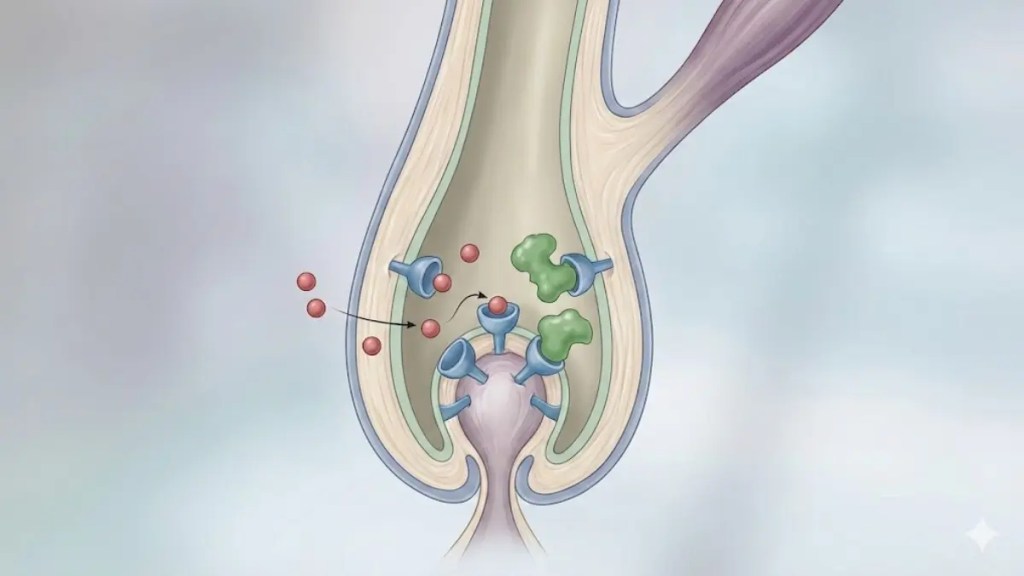
Androgenetic alopecia develops when hair follicles are genetically sensitive to androgens, particularly dihydrotestosterone (DHT).
The critical event is not simply the presence of DHT, but its binding to androgen receptors inside the follicle.
This receptor activation triggers progressive follicle miniaturization, shorter growth cycles, and thinner hair shafts.
Over time, visible scalp hair loss occurs.
Breezula for Hair Loss works by blocking androgen receptors locally in the scalp.
Rather than lowering circulating DHT levels throughout the body, clascoterone reduces the ability of DHT to activate hair-damaging signals where the medication is applied.
This receptor-level action is what differentiates Breezula for Hair Loss from systemic anti-androgen therapies.
Clinical Trial Evidence for Breezula for Hair Loss
Phase I Trials: Safety and Systemic Exposure
Phase I clinical evaluation focused on local tolerability and systemic hormone exposure.
These early studies were designed to confirm that topical clascoterone does not meaningfully suppress systemic androgen levels.
Across initial testing, topical application demonstrated:
- Minimal systemic absorption
- No clinically significant hormonal suppression
- Predominantly mild, localized skin reactions
This phase established that clascoterone could be safely applied to hormone-sensitive tissue, allowing further efficacy-focused trials.
Phase II Trials: Effectiveness Signals and Dose Response
Phase II trials were conducted to explore whether Breezula for Hair Loss produces measurable improvements and how results vary by concentration.
Key characteristics of Phase II evaluation included:
- A study duration extending up to 12 months
- Approximately 400 participants
- Participants with mild to moderate androgenetic alopecia
- Controlled comparison against placebo groups
- Evaluation across multiple topical concentrations
Results reported by the study sponsor indicated that:
- Male participants using higher-concentration formulations (notably 7.5%) showed increases in target-area hair count and hair shaft thickness
- Female participants, particularly younger individuals using moderate concentrations (around 5%), also demonstrated measurable improvements
- Placebo groups generally experienced continued hair thinning over the same period
It is important to note that Phase II trials are designed to identify signals of efficacy, not to establish final success rates.
These outcomes suggested biological activity at the follicle level and justified progression to larger trials.
Phase III Trials: Large-Scale Confirmation
Phase III trials are structured to confirm whether earlier findings remain consistent across larger and more diverse populations.
These trials evaluate long-term effectiveness, reproducibility, and safety under real-world conditions.
Advanced Phase III evaluation for Breezula for Hair Loss has involved:
- Multiple geographic regions, including North America and Europe
- Diverse participant demographics
- Continued comparison against placebo
- Longer observation periods to assess durability of response
Until Phase III data is fully analyzed and published, precise success percentages cannot be responsibly stated.
This phase determines whether observed benefits are statistically significant, repeatable, and clinically meaningful at scale.
How Effective Is Breezula for Hair Loss?
Based on Phase II data trends and ongoing Phase III evaluation, Breezula for Hair Loss has shown:
- Improvements in hair density and thickness in a meaningful subset of participants
- Better outcomes at higher topical concentrations
- Clear separation from placebo groups in controlled settings
Rather than universal regrowth, results suggest slowing of follicle miniaturization and improvement in hair quality among responsive individuals.
As with all androgenetic alopecia treatments, effectiveness varies based on genetics, hormone sensitivity, and stage of hair loss.
Comparison With Other Hair Loss Treatments
| Aspect | Breezula for Hair Loss | Finasteride | Minoxidil |
|---|---|---|---|
| Primary mechanism | Androgen receptor inhibition | DHT production suppression | Follicle stimulation |
| Application | Topical | Oral | Topical |
| Hormonal impact | Localized | Systemic | Non-hormonal |
| Core role | Reduce androgen signaling | Lower circulating DHT | Extend growth phase |
This comparison shows that Breezula for Hair Loss targets a different biological step in the hair loss pathway.
Mechanism-based differences explain why response and tolerability vary across treatments.
Safety Profile and Side Effects
Reported side effects associated with topical clascoterone have generally been mild and localized, including:
- Scalp irritation
- Redness
- Itching at the application site
Because Breezula for Hair Loss acts locally, systemic hormonal effects appear limited based on current evidence.
However, long-term scalp-specific safety continues to be evaluated through ongoing trials.
Medical supervision remains important for any therapy influencing hormone signaling.
Who May Conceptually Consider This Approach
Breezula for Hair Loss may be relevant for individuals with androgenetic alopecia who:
- Are sensitive to androgen signaling at the follicle level
- Prefer topical approaches over systemic hormone suppression
- Are exploring mechanism-based treatment options
Individual suitability depends on medical history, scalp condition, and hair loss progression.
FAQ:
What is Breezula for Hair Loss?
Breezula for Hair Loss is a topical treatment concept based on clascoterone, a non-steroidal anti-androgen designed to reduce androgen receptor activity at the scalp level in androgenetic alopecia.
How does Breezula for Hair Loss work differently from finasteride?
Breezula for Hair Loss works by blocking androgen receptors locally in the scalp, whereas finasteride reduces overall DHT production systemically. This difference means Breezula targets hormone signaling at the follicle rather than lowering hormone levels throughout the body.
What do clinical trials suggest about Breezula for Hair Loss?
Clinical trials have shown measurable improvements in hair-related parameters such as density and thickness in a portion of participants compared to placebo, particularly at higher topical concentrations. Long-term effectiveness continues to be evaluated.
Are there known side effects of Breezula for Hair Loss?
Reported side effects so far have generally been mild and localized, including scalp irritation or redness. Because the treatment is topical, systemic hormonal effects appear limited based on current evidence.
Who may conceptually consider Breezula for Hair Loss?
Breezula for Hair Loss may be conceptually relevant for individuals with androgenetic alopecia who are sensitive to androgen signaling and prefer a localized, topical approach. Suitability should always be assessed on an individual basis.
Resources
- Clascoterone for acne. (2024). Australian Prescriber, 47(5), 160–161. https://doi.org/10.18773/austprescr.2024.040
- Han, S. H., Byun, J. W., Lee, W. S., Kang, H., Kye, Y. C., Kim, K. H., & Kim, M. B. (2021). Clascoterone: First Approval. Annals of Dermatology, 33(1), 10–15. https://pubmed.ncbi.nlm.nih.gov/33030710/
- Siah, T. W., & Sinclair, R. (2023). Androgenetic Alopecia: Therapy Update. BMJ, 380, e072732. https://pmc.ncbi.nlm.nih.gov/articles/PMC10173235/
Conclusion
Breezula for Hair Loss represents a scientifically distinct strategy by blocking androgen receptors directly at the scalp.
Phase I trials established safety, Phase II trials demonstrated measurable biological activity in hundreds of participants, and Phase III trials aim to confirm long-term effectiveness across diverse populations.
While current evidence supports cautious optimism, Breezula for Hair Loss should be viewed as an evolving clinical treatment, not a guaranteed solution.
In hair loss management, understanding trial data, mechanisms, and limitations matters more than marketing promises.
This content is for educational purposes only and does not replace professional medical advice.


3 thoughts on “Breezula for Hair Loss: Mechanism, Clinical Trial Evidence, Effectiveness, and Safety”