
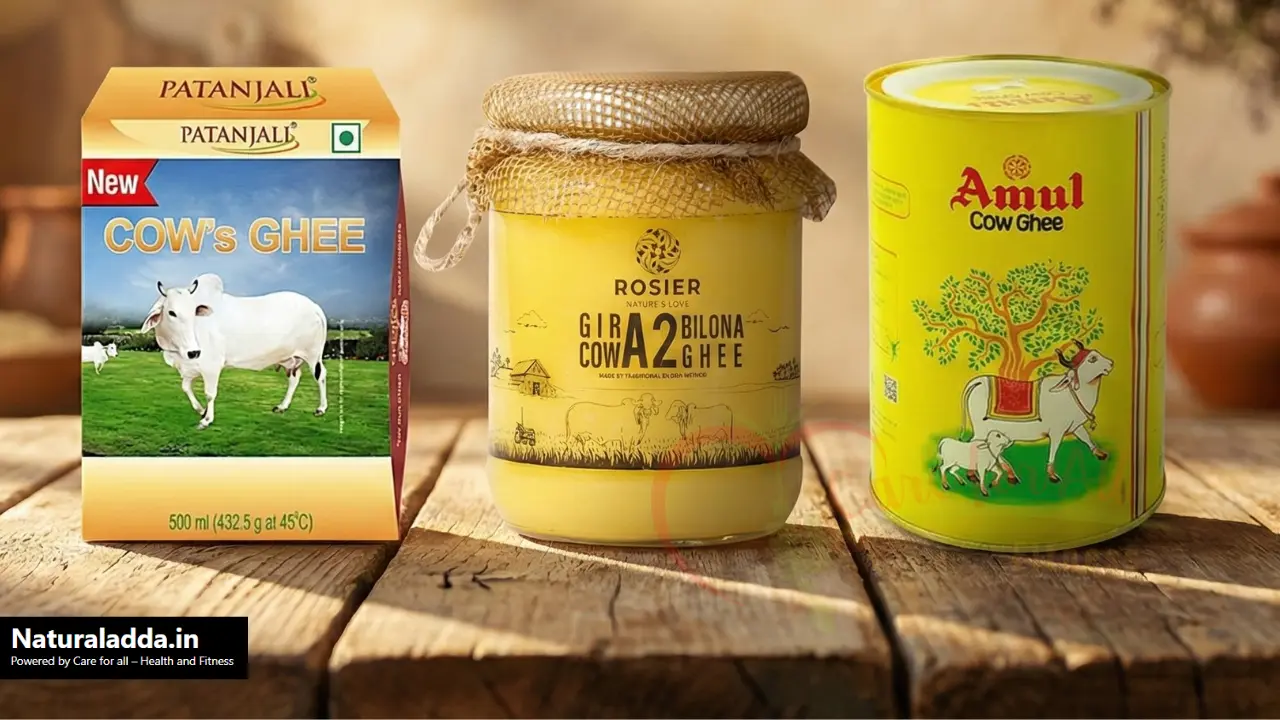
In today’s world, A2 cow ghee, especially from indigenous (desi) cows, has gained a lot of popularity. That’s one reason why brands like Rosier, which claim to produce ghee using traditional methods and A2 milk, are trending. Meanwhile, Amul has been a long-standing player in the market, and Patanjali also gained a lot of traction, especially with Baba Ramdev emphasizing the importance and benefits of cow ghee.
In this article, we’ll compare these three:Rosier’s A2 ghee, Amul’s cow ghee, andPatanjali’s cow ghee. We’ll find out if the buzz around A2 ghee really makes the others seem lacking, or if all three have their own merits.
Understanding A2 Ghee and the Traditional Bilona Method
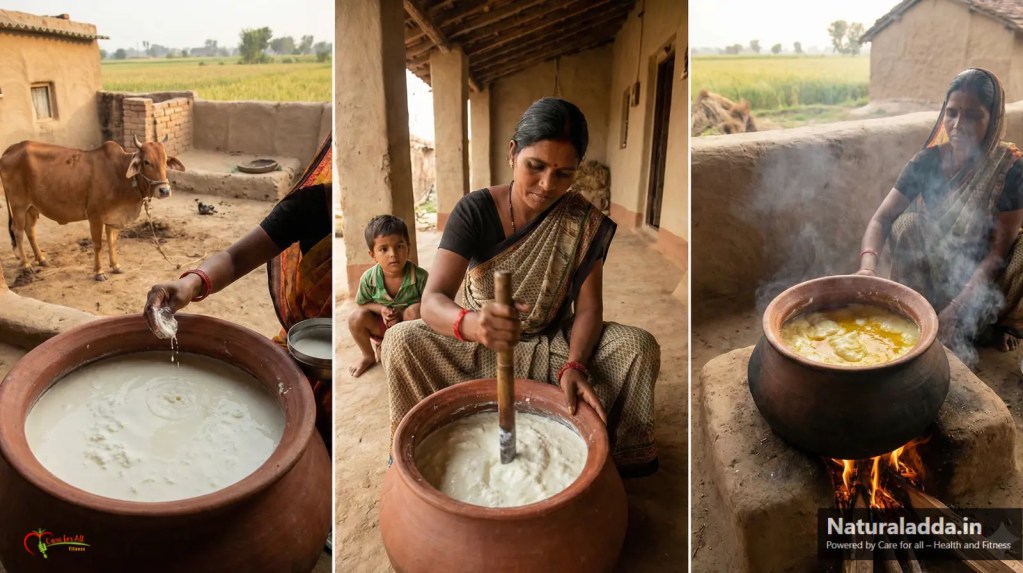
A2 ghee is derived from the milk of indigenous (desi) cows that produce the A2 beta-casein protein. This type of ghee has gained attention for its perceived health benefits and richer nutritional profile compared to regular ghee. The traditional bilona method, often highlighted by brands like Rosier, involves curdling the milk, hand-churning it to extract butter, and then slowly heating that butter to obtain ghee.
This artisanal process is labor-intensive and yields a product that many consider purer and more nutritious. That’s one reason why A2 ghee, especially from brands like Rosier, tends to be more expensive. It’s not just about the ingredient but the time-honored method and the quality of the milk itself.
How Industrial Brands Like Patanjali and Amul Produce Cow Ghee

In contrast to the traditional bilona method, larger brands like Patanjali and Amul typically produce cow ghee on an industrial scale using modern machinery. In these processes, cream is usually separated from milk through automated methods, and then the cream is heated to produce ghee. This mechanized approach allows for mass production, ensuring a consistent product at a lower cost.
While this method is efficient and makes ghee more affordable, it doesn’t involve the same level of manual care or traditional craftsmanship as the bilona method. Instead, it focuses on scale and consistency. Thus, Patanjali, Amul, and other industrial brands use more automated and large-scale methods to meet the demand and keep prices competitive.
COMPARISON TABLE (Rosier vs Amul vs Patanjali)
Per 100g / 100ml values as per label
| Nutrients | Rosier A2 Ghee | Amul Cow Ghee | Patanjali Cow Ghee |
|---|---|---|---|
| Energy | 898 kcal | 814 kcal | 897.3 kcal |
| Total Fat | 99.82 g | 90.5 g | 99.7 g |
| Saturated Fat | Not specified | 58 g | 78.46 g |
| MUFA | 31.90 g | Not specified | Not specified |
| PUFA | 3.48 g | Not specified | Not specified |
| Omega 6 | 2524.5 mg | Not specified | Not specified |
| Trans Fat | < 0.1 g | Not specified | 3 g |
| Cholesterol | 225.95 mg | 190 mg | 249 mg |
| Carbs | < 0.1 g | 0 g | 0 g |
| Protein | 0 g | 0 g | 0 g |
| Vitamin A | Not stated | 600 mcg | 944 mcg |
Comparison Summary: Rosier A2 Desi Ghee vs. Amul and Patanjali
In summary, the key difference lies in the method and the type of ghee. Rosier’s A2 desi ghee is crafted using the traditional bilona method, which is more labor-intensive and focused on purity, often resulting in a richer nutritional profile and a higher price.
On the other hand, Amul and Patanjali ghee are produced on an industrial scale, making them more affordable and widely available, though they might lack the artisanal touch of bilona ghee. Nutritionally, each has its own strengths, but if you’re looking for the most traditional and possibly nutrient-rich option, the Rosier A2 ghee stands out.
However, for everyday use and budget-friendly choices, Amul and Patanjali are reliable options.
Is A2 Ghee Essential, or Is Normal Ghee Enough?
In essence, while A2 ghee from desi cows, like Rosier’s, is often considered more traditional and may have a slight nutritional edge, it’s not a necessity for everyone. Desi cows are fewer in number, and their ghee is costlier because of limited supply. That doesn’t mean that industrially produced ghee from brands like Amul or Patanjali is inferior or unhealthy.
In reality, the difference is minor, and your overall health depends much more on your lifestyle, diet, and exercise than on just switching ghee. If you prefer or can afford A2 ghee, that’s great. But for everyday use, normal ghee from Amul or Patanjali is absolutely fine. There’s no drastic nutritional miracle in A2 ghee alone. It’s more about overall balance and personal choice.
A Note on Marketing and Misconceptions
In recent times, many smaller brands that produce A2 ghee, like Rosier, are often available mainly online through platforms like Amazon. They tend to emphasize that only A2 ghee is the best because it’s made traditionally and is superior.
While there is value in traditional methods, it’s important to understand that this marketing can sometimes create misconceptions. A2 ghee is good, but it’s not the only healthy option, and standard ghee from reputable brands is also perfectly fine for everyday use.
Pricing and Availability
When it comes to pricing, A2 ghee like Rosier’s is significantly more expensive, often around ₹2000 per kilogram, primarily because of the limited supply of desi cow milk and the labor-intensive process.
In contrast, ghee from brands likeAmul or Patanjali is more affordable, usually around ₹600 per kilogram, and is widely available both online and offline throughout India.
So, while A2 ghee has its niche, regular ghee is far more accessible and budget-friendly for most people.
Final Conclusion
In conclusion, choosing between A2 ghee and regular ghee ultimately depends on your personal preference, budget, and availability. While A2 ghee has its own traditional charm and nutritional nuances, regular ghee from trusted brands like Amul and Patanjali is equally good for everyday use. Remember, your overall health depends on a balanced lifestyle, not just the type of ghee you consume.
Where to Buy

Join Our WhatsApp Health Community
Daily natural health tips, fitness guidance & Ayurvedic remedies — directly on WhatsApp.
💬 Join on WhatsAppAuthor Note
This article is written by Abhishek Chouhan, a health and fitness content creator with over 10 years of experience in blogging, wellness education, and nutrition awareness. His goal is to provide clear, honest, and practical information that helps readers make better lifestyle choices.
Disclaimer
The information provided in this article is for educational purposes only. It is not intended to be a substitute for professional medical or nutritional advice. Please consult your doctor, healthcare provider, or certified nutrition expert before making any changes to your diet or lifestyle.
Top 10 FAQs About Ghee
1. Is A2 ghee healthier than regular ghee?
A2 ghee has a slight traditional edge, but nutritionally the difference is very minor. Both are healthy when consumed in moderation.
2. Why is A2 ghee so expensive?
Because desi cows produce very little milk, supply is low and cost of production is high. That’s why A2 ghee is around ₹1500–₹2000 per kg.
3. Is regular cow ghee (Amul, Patanjali) safe?
Yes, absolutely. Regular cow ghee from trusted brands is perfectly safe and suitable for daily use.
4. Does A2 ghee boost health more than normal ghee?
No. Health improvements depend on your full lifestyle—diet, sleep, exercise—not just ghee type.
5. Can children eat A2 or regular ghee?
Yes, both are fine for kids above 1 year, but always consult your pediatrician for quantity.
6. Is bilona ghee better than machine-made ghee?
Bilona ghee is more traditional and handcrafted. Machine-made ghee is mass-produced but still healthy and nutritious.
7. Does A2 ghee help in weight loss?
No single food causes weight loss. Proper lifestyle + calorie balance matters more.
8. Which ghee is best for cooking?
All three—A2, Amul, Patanjali—have high smoke points and are suitable for cooking.
9. Why do brands promote “only A2 ghee is best”?
Marketing. A2 ghee is a niche product, so brands push it heavily to justify its high price.
10. Should I switch to A2 ghee permanently?
Not necessary. If you like it and can afford it, great. Otherwise, regular ghee is equally good.
Patanjali Whey Protein Review: My Experience with a Truly Zero-Added-Sugar and Natural Supplement


4 thoughts on “Rosier A2 Ghee vs Amul Cow Ghee vs Patanjali Cow Ghee: Which One Is Best?”