

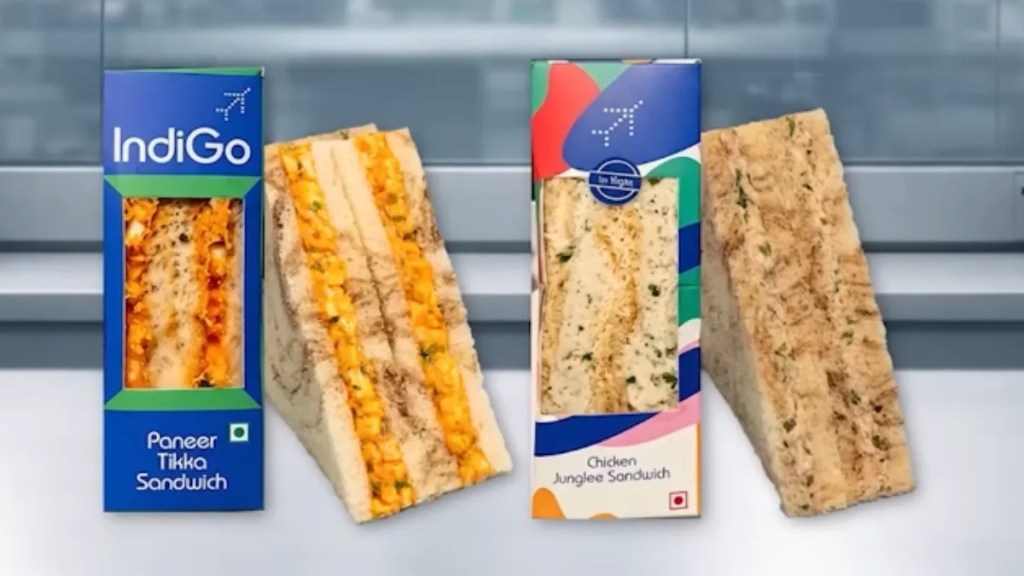
Every time you board an IndiGo flight hungry, you reach for that familiar packaged sandwich and trust that it’s safe. That trust just got a serious reality check. Trustified sent two of IndiGo’s most popular in-flight sandwiches to an accredited lab — and what came back in the report is something every frequent flyer in India needs to read right now.
IndiGo Controls Your Sky — But Who Controls the Food?
IndiGo flight food safety is a question millions of passengers never think to ask. They should.
IndiGo commands over 60% of India’s domestic aviation market. On any given day, millions of passengers are in the air — and a large number of them are eating. Sandwiches are the most popular choice: quick, pre-packaged, convenient. The Paneer Tikka Sandwich and Chicken Junglee Sandwich are IndiGo’s signature options under its 6E Eats menu, priced at ₹400–₹500.
But documented incidents tell a troubling story. A live worm found in a veg sandwich on a Delhi–Mumbai flight. Cockroach infestations discovered at an IndiGo food supplier in Hyderabad. FSSAI issuing show cause notices. These are not rumours — they are publicly reported events.
Yet the sandwiches kept selling. And passengers kept eating.
Trustified decided to stop guessing and start testing.
How Trustified Actually Got These Sandwiches to a Lab
This wasn’t a simple process, and that matters.
You cannot buy IndiGo’s in-flight sandwiches anywhere except on the flight itself. So one of our team members booked a ticket, pre-ordered both sandwiches through the 6E Eats system, and boarded the flight carrying an insulated box with dry ice — maintaining the required temperature throughout the journey.
The moment the flight landed, an authorized lab personnel with a certified sample collection kit was already waiting at the arrival gate. The samples were handed over immediately — chain of custody intact, temperature maintained, no compromise.
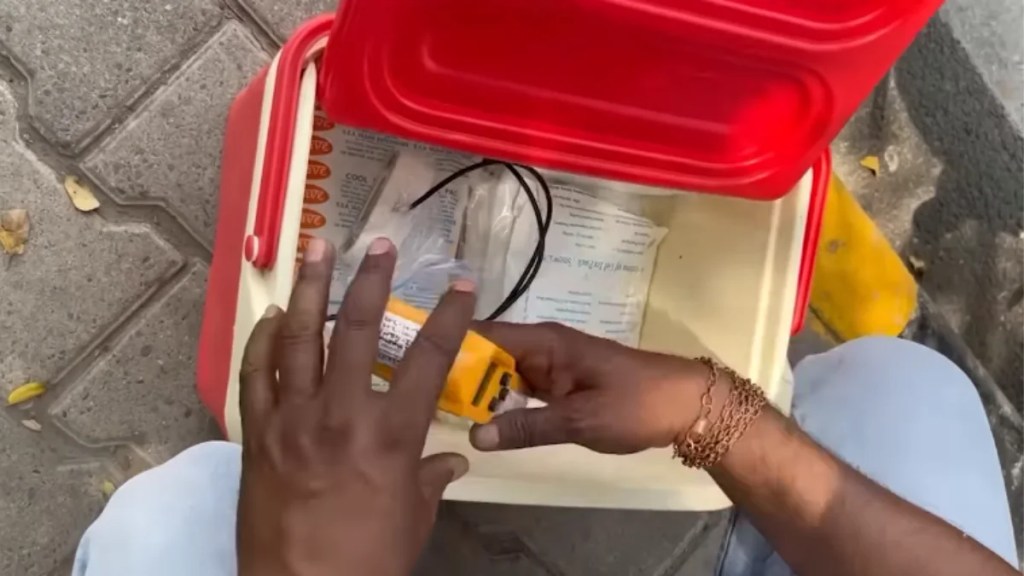
This level of process discipline is non-negotiable for any credible airline food safety test. A single temperature break and the microbiological results become useless.
Step One — Do the Nutrition Labels Tell the Truth?
Before Lab talk bacteria, let’s talk labels. IndiGo discloses nutritional values per 200 grams on its packaging. Lab converted everything to per 100 grams for a clean, comparable reading.
Paneer Tikka Sandwich — Claimed vs. Found
| Nutrient | IndiGo Label (per 100g) | Lab Result (per 100g) |
|---|---|---|
| Protein | 9.6g | 9.82g |
| Carbohydrates | 33.3g | 33.38g |
| Fats | 10.9g | 11.10g |
Chicken Junglee Sandwich — Claimed vs. Found
| Nutrient | IndiGo Label (per 100g) | Lab Result (per 100g) |
|---|---|---|
| Protein | 11.9g | 12.12g |
| Carbohydrates | 25.95g | 26.06g |
| Fats | 7.4g | 7.59g |
Both sandwiches cleared the nutrition accuracy test. The numbers on the label match the lab results closely. IndiGo is not misleading you on macros — and that’s a clear positive.
But nutrition accuracy is only half the picture. The more important question is: what’s living inside that sandwich that isn’t printed on the label?
Step Two — The Microbiological Report (This Is Where It Gets Real)
This is the core of IndiGo flight food safety — and the part most people never get to see.
A sandwich can look completely normal. Smell fine. Taste acceptable. And still carry bacteria at levels that tell a very different story about how it was made and stored. That’s precisely why microbiological testing is the most critical quality check for any ready-to-eat food.
The lab tested for Aerobic Plate Count (APC), Enterobacteriaceae, and a full panel of dangerous pathogens — Salmonella, E. coli, Listeria monocytogenes, Bacillus cereus, Clostridium perfringens, Staphylococcus aureus, and Vibrio parahaemolyticus.
IndiGo Paneer Tikka Sandwich — Microbiological Findings
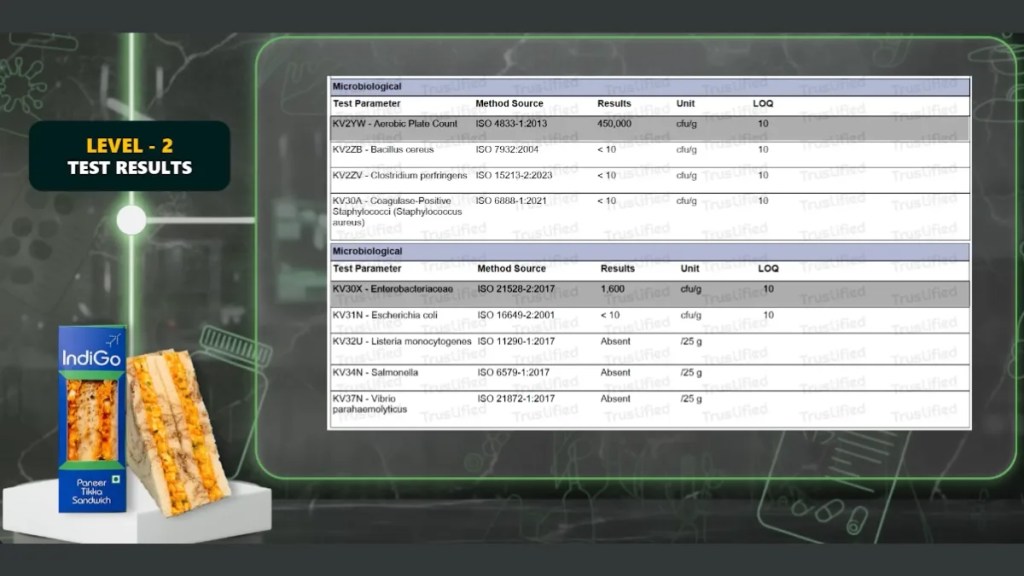
Key results from the Paneer Tikka Sandwich:
- Aerobic Plate Count: 4,50,000 CFU/g ⚠️
- Enterobacteriaceae: 1,600 CFU/g ⚠️
- E. coli: Below LOQ ✅
- Salmonella: Absent ✅
- Listeria monocytogenes: Absent ✅
- Bacillus cereus, Clostridium perfringens, Staphylococcus aureus: All below LOQ ✅
IndiGo Chicken Junglee Sandwich — Microbiological Findings

Key results from the Chicken Junglee Sandwich:
- Aerobic Plate Count: 2,80,000 CFU/g ⚠️
- Enterobacteriaceae: 1,800 CFU/g ⚠️
- E. coli: Below LOQ ✅
- Salmonella: Absent ✅
- Listeria monocytogenes: Absent ✅
- Bacillus cereus, Clostridium perfringens, Staphylococcus aureus: All below LOQ ✅
The dangerous pathogens are absent in both sandwiches. That’s the definitive good news. But the APC and Enterobacteriaceae numbers point to a hygiene and handling story that cannot be ignored.
What APC and Enterobacteriaceae Actually Tell You
Most people encounter these terms and move on. Don’t. These two parameters are the real measure of packaged food hygiene in India — and understanding them changes how you read any food lab report.
Aerobic Plate Count (APC) measures the total bacterial load in food. It doesn’t identify whether the bacteria are harmful — it tells you how clean the entire production process was. High APC means more bacteria overall, which directly raises the probability that harmful organisms could be present in the next batch, even if they weren’t detected in this one.
Enterobacteriaceae is a bacterial family that includes E. coli, Salmonella, Klebsiella, and others. Detecting Enterobacteriaceae in food is a clear signal: somewhere in the chain — preparation, storage, handling, or transport — basic hygiene protocols were not followed properly. Cross-contamination. Inadequate temperature control. Insufficient sanitization.
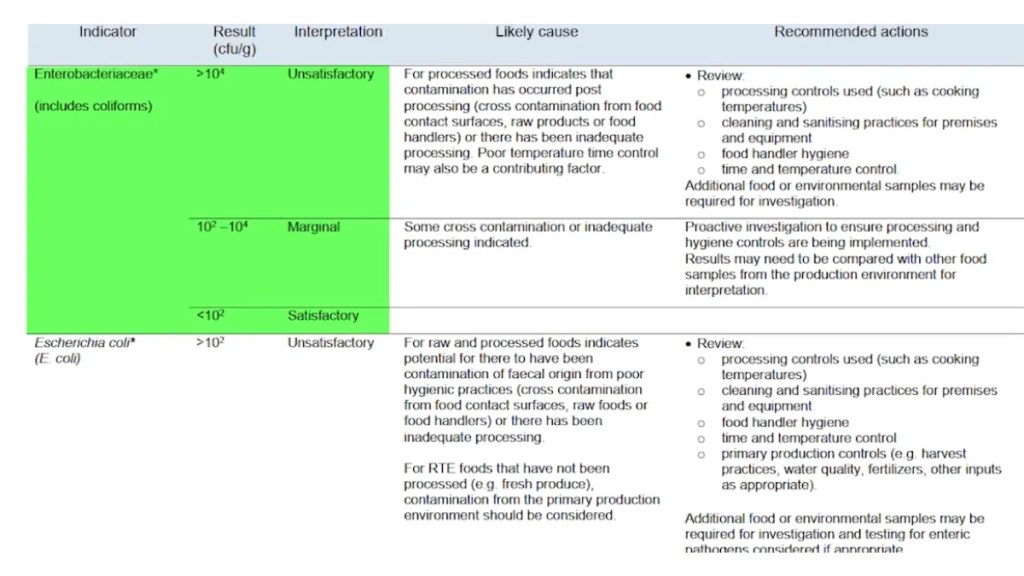
Both IndiGo sandwiches land squarely in the Marginal category for Enterobacteriaceae — between 10² and 10⁴ CFU/g.
Judged by the Only Standard That Exists — Australia & New Zealand Compendium
Here is the part of IndiGo flight food safety that exposes a massive regulatory blind spot.
FSSAI — India’s food safety regulator — has zero defined microbiological limits for ready-to-eat packaged foods like sandwiches. The category exists. The standards do not. This means there is no Indian benchmark against which these sandwiches can be officially passed or failed on microbiological grounds.
The only credible international framework for this product type is the Australia and New Zealand Food Safety Compendium. Under that framework, sandwiches are classified as Category 4 — foods containing components that have not been fully cooked.
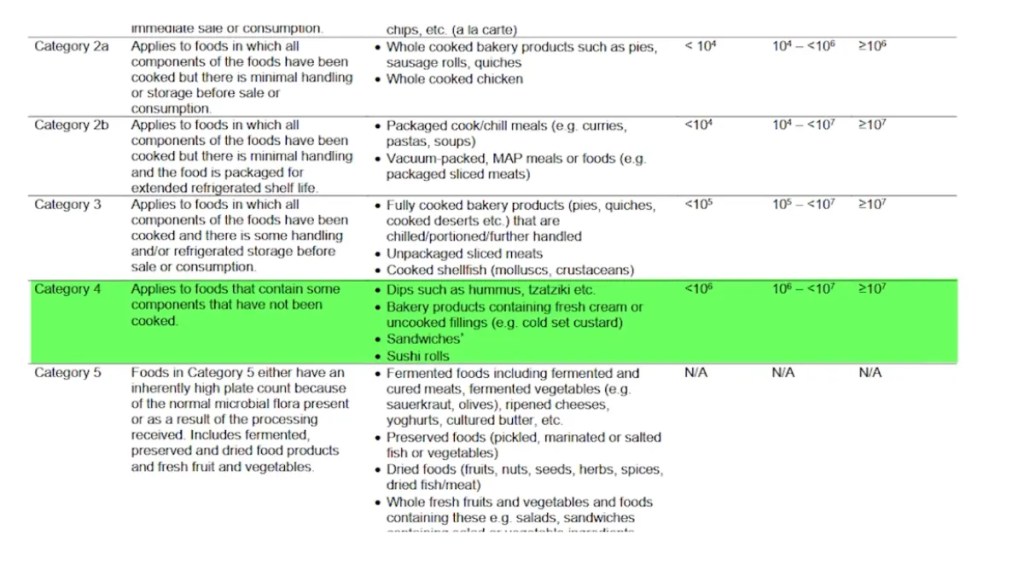
Final Verdict — Both Sandwiches Assessed Against International Standards
| Parameter | Paneer Tikka | Chicken Junglee | Category 4 Limit | Verdict |
|---|---|---|---|---|
| APC (CFU/g) | 4,50,000 | 2,80,000 | <10,00,000 | ✅ Satisfactory |
| Enterobacteriaceae (CFU/g) | 1,600 | 1,800 | <10,000 | ⚠️ Marginal |
| Salmonella | Absent | Absent | Absent | ✅ Pass |
| Listeria monocytogenes | Absent | Absent | Absent | ✅ Pass |
| E. coli | <10 | <10 | <100 | ✅ Pass |
| Nutrition Label Accuracy | ✅ Accurate | ✅ Accurate | — | ✅ Pass |
| Overall Rating | ⚠️ Marginal | ⚠️ Marginal | — | ⚠️ Borderline |
Marginal is not unsafe. But marginal is not acceptable either. It is a yellow flag — and on a product consumed by millions of passengers, yellow flags demand attention.
The FSSAI Regulation Gap That Nobody Talks About
India’s food regulator has the authority to set standards for every edible product sold in this country. Yet for the entire ready-to-eat packaged food category — which includes every sandwich on every airline — there are no published microbiological limits.
This isn’t an oversight. It’s a gap that has existed for years and actively protects brands from accountability. IndiGo’s sandwiches cannot legally “fail” an Indian food safety test on microbiology — because no such test standard exists in Indian regulation yet.
Trustified seen this pattern before. When Mother Dairy cow milk showed bacterial counts exceeding FSSAI limits in an independent Eurofins lab test, the regulatory response was slow and inadequate. Brands operating at the margins of food safety keep getting the benefit of the doubt — not because the food is clean, but because the rules haven’t caught up.
FSSAI needs to close this gap. Until it does, millions of passengers eating in-flight packaged sandwiches in India are consuming food assessed against no mandatory Indian standard whatsoever.
So Should You Eat IndiGo’s In-Flight Sandwich?
The straight answer: These sandwiches are not dangerous by the numbers available today. Salmonella, Listeria, and E. coli — the pathogens that send people to hospitals — are absent. A healthy adult eating one of these sandwiches on a single flight is not in immediate danger.
But the Enterobacteriaceae count in the marginal zone tells you something real about how these sandwiches are being made, stored, and handled. That story matters — especially for children, elderly passengers, pregnant women, and anyone with a compromised immune system.
It also matters because this is not an isolated finding. Amul Dahi pouch failed hygiene parameters in an independent re-test in 2026 — another trusted, popular, everyday product that looked fine on the outside and told a different story in the lab. Marginal hygiene in branded, packaged food sold to millions is a systemic issue, not a one-off incident.
The Verdict — Yellow Flag at 30,000 Feet
IndiGo’s Paneer Tikka Sandwich and Chicken Junglee Sandwich clear two critical tests: nutrition label accuracy and dangerous pathogen screening. But on microbiological hygiene — the measure of how cleanly food is prepared and handled — both sandwiches sit in the marginal zone by the only international standard that applies to their category.
Not unsafe. Not clean. Borderline — and borderline at scale, served to millions of passengers who have every right to know what they’re eating.
IndiGo should be doing better. FSSAI should be demanding better. And you, as a paying passenger, should be expecting better.
You’re spending ₹400–₹500 on a sandwich at 30,000 feet. You deserve food that clears more than the minimum bar. Demand it.
Disclaimer: This article is based on independent lab test results conducted by Trustified, an independent consumer testing organisation. The sandwich samples were purchased through IndiGo’s official 6E Eats service in 2026 and tested at an accredited laboratory following standard ISO protocols. The author of this article has no affiliation with Trustified and has solely reported findings based on information available in the public domain, including social media, public lab reports, and publicly accessible sources. Results reflect the specific batch tested and may not represent all batches or routes. This content is intended for consumer awareness and informational purposes only. It does not constitute medical advice. Readers with underlying health conditions are advised to consult a medical professional regarding dietary choices during travel. The findings have been reported accurately and transparently as per the data made available through public sources.


