
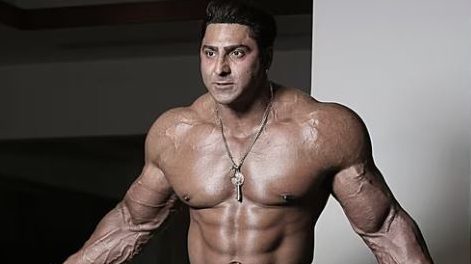
Varinder Singh Ghuman’s sudden death at 42 shocked India. Discover the real health lessons behind heart attacks in young, fit bodybuilders.
When the world lost a man who seemed to embody peak fitness, disbelief took over. How could someone so strong, disciplined, and visibly healthy succumb to a heart attack? On 9 October 2025, Varinder Singh Ghuman, the celebrated bodybuilder and actor, passed away in Amritsar after what was supposed to be a minor medical procedure. His death rattled fans, fitness enthusiasts, and doctors alike.
This article is more than a biography or a sensational report. It is a reflection — on how the external muscles we see may mask internal vulnerabilities, on how our assumptions about “health” can mislead us, and on what lessons we might carry forward so that strength does not end prematurely.
A Life of Strength: Varinder’s Journey
Early life & rise
Varinder Singh Ghuman was born in 1983, in Punjab. He hailed from the Gurdaspur region, but later settled in Jalandhar, where he also ran a gym.
In 2009, he won the Mr. India title, and later became runner-up at Mr. Asia.
His achievements earned him recognition not just in India, but internationally. In fact, he became known as India’s “Arnold” — selected by Arnold Schwarzenegger to promote fitness products in Asia.
Vegetarian bodybuilding & public image
What set Varinder apart was his staunch commitment to a vegetarian lifestyle in a sport often dominated by meat-rich diets. He was widely regarded as the world’s first professional vegetarian bodybuilder.
That narrative made him more than a bodybuilder — a symbol, especially for fitness lovers who want to avoid animal protein.
He used social media to share workouts, diet routines, motivational posts, and fitness tips — building a following and inspiring many.
Foray into acting
Varinder also ventured into films:
- Punjabi film Kabaddi Once Again (2012)
- Hindi film Roar: Tigers of the Sundarbans (2014)
- Marjaavaan (2019)
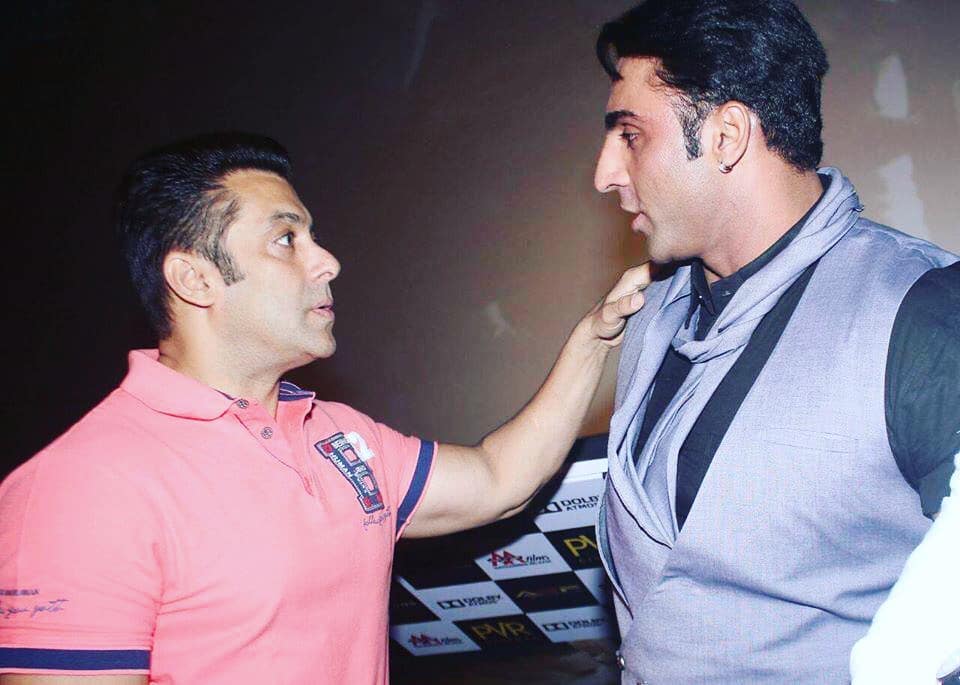
- Tiger 3 (2023) in which he played “Shakeel” alongside Salman Khan
In short, Varinder’s public identity was that of a man who had conquered strength, physique, and now, the silver screen.
3. That Fateful Day: What Public Reports Say
Because no full medical report has been published (as of writing), we must piece together the known facts and conflicting reports.
- Varinder traveled to Amritsar’s Fortis Hospital for a minor procedure — reportedly for a shoulder / bicep injury.
- The procedure was expected to be routine, and he was supposed to return home later that day.
- Reports say the surgery or procedure went well, but afterwards he suddenly suffered a cardiac arrest / heart attack. Efforts were made to revive him, but they failed.
- He reportedly died at around 5:30 PM on 9 October 2025.
- His family, via his nephew Amanjot Singh Ghuman, confirmed “heart attack” as the cause of death.
- Some reports mention that before heading to the hospital, Varinder had complained of shoulder pain, which some doctors now recognize can be a warning sign of heart trouble.
Despite these reports, no detailed autopsy or medical records have been released publicly. That means we do not know conclusively whether his coronary arteries had blockages, whether his heart muscle was thickened, or whether there was an undetected electrical issue.
4. How Can a Fit Person Have a Heart Attack? Medical Insights
Before applying possibilities to Varinder’s case, it helps to understand how cardiac catastrophes can happen to seemingly healthy individuals.
a) Sudden Cardiac Arrest (SCA) vs. Heart Attack
Often confused, these two events are different but sometimes interlinked:
- Heart Attack (Myocardial Infarction): A blockage in a coronary artery (due to a clot or plaque) cuts off blood supply to part of the heart muscle, causing tissue damage.
- Sudden Cardiac Arrest: The heart’s electrical signaling goes haywire (ventricular fibrillation, tachycardia), and the heart suddenly stops pumping effectively. Even without a classic “heart attack,” SCA can strike.
In younger, athletic people, SCA due to arrhythmia (electrical failure) is more common than a classic heart attack, especially when coronary disease is not severe.
b) Underlying Structural or Genetic Heart Disease
Many fatal cases trace back to hidden conditions:
- Hypertrophic Cardiomyopathy (HCM): The heart muscle becomes abnormally thick, impairing flow and electrical signals under stress. Some never show symptoms until catastrophe strikes.
- Dilated / Restrictive Cardiomyopathies: The heart may be weak or stiff, making it vulnerable.
- Coronary Artery Anomalies: Congenital anomalies in how arteries arise or loop may predispose to ischemia (lack of blood) under exertion.
- Inherited Ion Channel Disorders: Long QT, Brugada syndrome, etc. — these affect how heart cells handle electrical impulses.
Such conditions may remain silent until challenged by extreme stress, surgery, or arrhythmia triggers.
c) Stress of Surgery / Medical Procedures
Even “minor” procedures impose physical stress:
- Anesthesia, fluctuations in blood pressure, electrolytes, oxygen, inflammation, and the body’s stress response (adrenaline, cortisol) all strain cardiac function.
- If even a portion of the heart is vulnerable, this stress may be enough to trigger electrical chaos.
In short, surgery can act as the “last straw” for a fragile system.
d) Intense Training & “Remodeling”
Years of heavy training, high weights, extreme routines may push the heart to adapt — sometimes maladaptively:
- The heart muscle may develop micro-scars (fibrosis) or changes that disturb electrical conduction.
- Repeated spikes of adrenaline, cortisol, and pressure act like tiny injuries over time.
- Overtraining, insufficient recovery, sleep deprivation, and nutrition mismatch further weaken resilience.
Thus, what seems like “strong” outward form might mask internal wear.
e) Use of Performance-Enhancing Substances
In bodybuilding, some may (though we don’t have proof in this case) use:
- Anabolic steroids / growth hormone / testosterone
- Stimulants, preworkouts, stimulatory supplements
- Other hormone modulators
These can:
- Raise blood pressure
- Worsen cholesterol / lipid profiles
- Accelerate plaque formation
- Disrupt electrical stability
- Cause fluid / electrolyte shifts
If any undisclosed substance entered the picture, it could be a relevant factor.
f) Electrolyte Imbalance, Dehydration, Microthrombi
Rigorous dieting, water manipulation, stimulant use, and sweating can lead to:
- Low potassium, magnesium, sodium — all critical for heart rhythm
- Thickened blood, microclots forming in small vessels
- Even a minor microthrombus in a small coronary branch might spark an arrhythmia
g) Myocarditis / Viral Inflammation
Viral or inflammatory damage to the heart (myocarditis) can destabilize it electrically:
- Sometimes a person suffers a mild “flu-like” illness and recovers, but the heart muscle remained inflamed.
- Under stress, that vulnerable heart may fail.
5. Possible Scenarios in Ghuman’s Case
Now, with medical insight plus the known facts, here are plausible scenarios that could explain what happened to Varinder:
- Preexisting, Undetected Condition
He might have carried a silent predisposition — HCM, ion channel defect, or coronary anomaly — never diagnosed. Under the stress of surgery, that weakness manifested catastrophically. - Surgical Stress as a Trigger
Though the shoulder/bicep procedure may have been “minor,” the process of anesthesia, fluid shifts, inflammation, and stress response could push the heart beyond its tipping point. - Silent Coronary Disease / Plaque Rupture
Even in someone physically fit, mild atherosclerosis might not show symptoms until a plaque ruptures and causes a clot, leading to a “classic” heart attack. - Acute Arrhythmia
The most likely mechanism is a sudden arrhythmia (ventricular fibrillation or equivalent) — an electrical storm — triggered by one or more of the above factors. - Electrolyte Disturbance or Micro-clots
Being in a surgical setting, fluid balance, electrolytes, and clotting factors shift rapidly. A slight drop in potassium or magnesium could provoke fatal rhythm disturbance. - Contribution of Substances (If Any)
If performance enhancers were in use (publicly unreported), they could have weakened his cardiac resilience, making any stressor more deadly. - Underlying Myocarditis / Inflammation
If he had a recent infection or undetected viral inflammation in heart tissue, the already stressed heart may have been less resilient.
Which scenario is closest to truth? Without postmortem data, we cannot say. But the convergence of procedure-stress + possible silent predisposition + arrhythmia is a strong candidate.
6. What Other Cases and Research Show
- In cardiology research, sudden cardiac death in young athletes is a known, sobering phenomenon. Many cases are autopsy-negative, meaning no clear blockages are found — implying electrical failure or subtle structural causes.
- Several reports in recent years note fatalities in bodybuilders and athletes during intense workouts, competitions, or after medical procedures.
- Experts stress that muscle bulk is not heart invincibility. Internal work — testing, rhythm monitoring, vessel imaging — matters.
- It’s common for warning signs (palpitations, chest discomfort, episodes of dizziness) to be ignored, especially by those accustomed to pushing pain and fatigue.
In short, Varinder’s case — tragic as it is — resonates with patterns known in sports cardiology.
7. Lessons for Fitness Enthusiasts & General Readers
From this tragedy, we extract principles — not fearmongering, but vigilance.
1. Don’t skip heart screening
Even if you feel strong, periodic ECGs, echocardiograms, stress tests, and cardiac evaluation (especially before intensive phases) are wise.
2. Heed warning signs
Odd chest tightness, shoulder pain, palpitations, dizziness, breathlessness — all are valid reasons to pause and consult a cardiologist.
3. Train smart, recover smarter
Muscles grow in rest. Overtraining, sleep deprivation, nutritional deficits can erode resilience.
4. Substance use or supplementation should be medical-guided
Never self-experiment with steroids, stimulants, or high-dose supplements. These may carry hidden cardiac risk.
5. Pre-operative cardiac evaluation is essential
If you are to undergo surgery — even minor — a preoperative cardiac check (EKG, echoes, blood tests) may catch vulnerabilities.
6. Stay hydrated and maintain electrolyte balance
Especially when training hard or dieting, monitor salt, potassium, magnesium levels. Avoid extreme dehydration or fluid shifts.
7. Balance ambition and caution
Pushing boundaries is human, but respect for internal fragility is humility.
8. Conclusion & Call to Awareness
Varinder Singh Ghuman’s passing is not just news — it’s a warning bell. A life that looked full of vitality and strength was silenced by an invisible cramp in the machinery.
Let us not reduce him to “a bodybuilder who died.” Let us remember him as a person — with dreams, routines, challenges, and vulnerabilities. His legacy need not be tragedy alone but a prompt: to look beneath the surface.
If you are in the fitness world (or simply health-conscious), take this as a reminder: strength is not just in how you look — it’s in how your heart beats, unseen, each moment. Let that truth guide your routines, your screenings, your respect for the internal system.
May Varinder Singh Ghuman rest in peace. May his story awaken vigilance in others. And may we all strive for a strength that endures — inside and out.
— NaturalAdda.in
News / Media Sources
- Bodybuilder Ghuman passes away due to heart attack — Times of India
- Varinder Singh Ghuman was experiencing this kind of pain before heart attack, had also sought treatment: Manager — Times of India Health & Fitness section
- Punjabi Actor And Bodybuilder Varinder Singh Ghuman Dies Of Heart Attack — NDTV
Medical / Scientific / Review Articles
- Sudden Cardiac Death in Athletes — JACC (Journal of the American College of Cardiology) review article
- Sudden Cardiac Death in Athletes: Facts and Fallacies — PMC / NIH (a free-access review)
- Aetiology and incidence of sudden cardiac arrest and death (SCA/D) in US competitive athletes — BMJ / British Journal of Sports Medicine article
- Risk of sudden cardiac death and preventive measures in athletes — IJCA (International Journal of Cardiovascular Arena) article
Internal Links For health
- Immunity-Boosting top 10 Superfoods for October
- Women’s Health Guide – Fitness, Nutrition & Wellness Tips
- What Is Acidity? Causes, Natural & Ayurvedic Treatments, and Why It Worsens in Summer
- Harmful Effects of SLS and Parabens in Shampoo: Why You Should Switch to Safer Alternatives
Frequently Asked Questions (FAQ)
Q1. Who was Varinder Singh Ghuman?
Varinder Singh Ghuman was India’s first vegetarian professional bodybuilder and an actor featured in Tiger 3 and Roar. He was celebrated for promoting natural fitness and strength through discipline.
Q2. What was the cause of Varinder Singh Ghuman’s death?
He reportedly suffered a sudden cardiac arrest after a minor medical procedure in Amritsar. Despite medical efforts, he passed away at the age of 42.
Q3. How can a healthy bodybuilder suffer a heart attack?
Hidden cardiac issues, dehydration, overtraining, stress, or supplement misuse can cause electrical disturbances or heart strain even in fit individuals.
Q4. What lessons can we learn from his death?
Fitness should focus on holistic health — regular check-ups, hydration, balanced rest, and heart care are as important as muscle growth.
Q5. How to prevent heart problems during workouts?
Maintain hydration, avoid overexertion, check electrolyte levels, and get medical clearance before high-intensity routines or competitions.


