
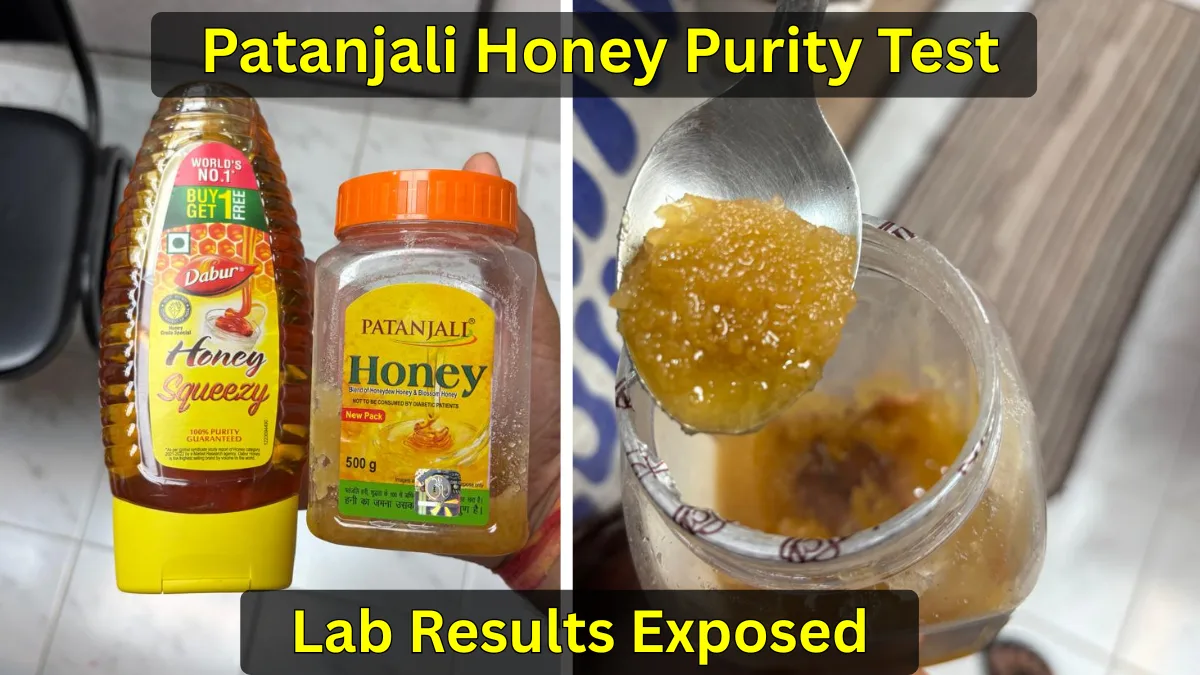
That golden jar sitting in your kitchen might be hiding a bitter truth. While Baba Ramdev promises pure Himalayan honey, independent lab reports tell a completely different story. This patanjali honey purity test reveals what FSSAI won’t tell you—backed by real NMR data, not marketing claims.
Every Indian household trusts Patanjali Ayurved for affordable, “natural” products. From protein supplements to traditional remedies, their massive product range targets health-conscious consumers. But when it comes to honey purity, trust alone isn’t enough. Recent patanjali honey lab test results from certified laboratories have raised serious questions: is patanjali honey pure or just clever packaging?
In this detailed review, we’ll examine scientific test reports, expose industry loopholes, and share real user experiences. No bias, no fluff—just facts that every consumer deserves to know before spending ₹200+ on a jar labeled “100% Pure Honey.
What Makes Honey Pure? Understanding the Basics
Before judging any brand, understand what honey purity actually means. Pure honey contains natural sugars (fructose, glucose), enzymes, minerals, and zero additives. But here’s the problem: adulterated honey can pass basic FSSAI tests while still containing sugar syrups.
FSSAI’s Standard Tests:
- Moisture content check
- HMF (Hydroxymethylfurfural) levels
- Basic sugar profile
The Missing Link: These tests don’t catch modern adulteration methods. Baba Ramdev himself claims Patanjali honey crystallizes in winter—a traditional purity sign. But does it? And more importantly, do FSSAI-approved tests guarantee food safety?
The answer lies in advanced testing—specifically NMR (Nuclear Magnetic Resonance) profiling, which Indian authorities avoid due to cost concerns.
The Patanjali Honey Lab Test Results That Shocked Everyone
Trustified NMR Report (2024-2025)
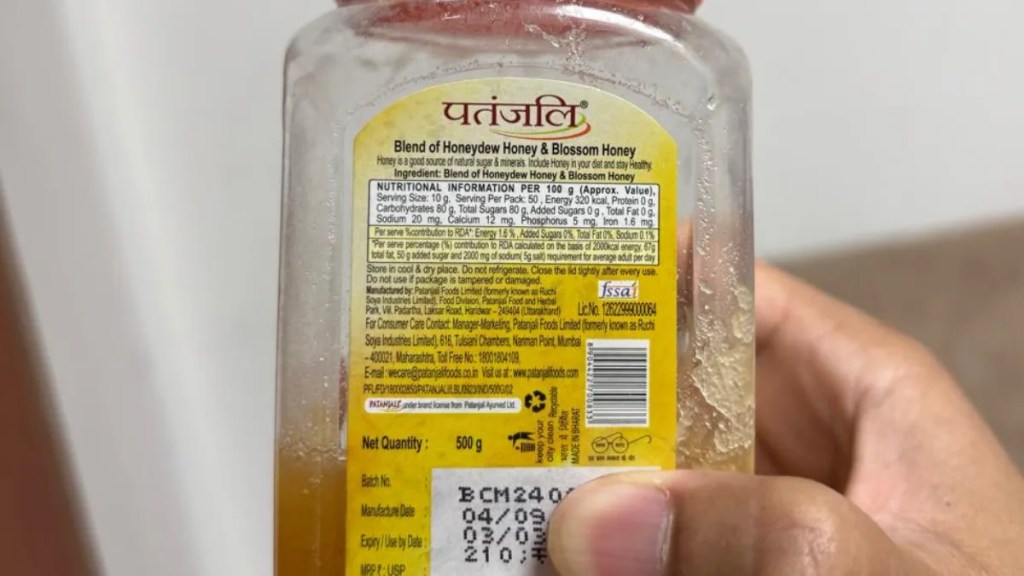
Patanjali Ayurved’s latest batch (BCM2400071, manufactured November 2024) underwent rigorous NMR testing by Eurofins laboratory. The verdict? Failed.
The report explicitly states: “The NMR profiling test shows an untypical spectrum and points to an addition of exogenous sugar.”
Translation: Sugar syrups detected.
CSE Investigation (2020)
This isn’t new. The Centre for Science and Environment (CSE) tested 13 major honey brands in 2020. Patanjali honey lab test results showed failure in C4 sugar tests alongside Dabur, Himalaya, and others. Only 3 brands passed all tests.
Why FSSAI Doesn’t Mandate NMR Testing
Here’s what nobody discusses: FSSAI avoids making NMR testing mandatory because it’s expensive. A single NMR test costs ₹15,000-25,000, versus ₹2,000-3,000 for basic tests. With thousands of honey brands in India, implementing nationwide NMR testing would require massive budgets.
Result? Outdated tests remain the standard while adulteration technology evolves.
Test Comparison
| Test Type | What It Detects | Patanjali Result | Cost per Test |
|---|---|---|---|
| FSSAI Basic Tests | Moisture, HMF, basic sugars | ✅ Pass | ₹2,000-3,000 |
| C3/C4 Isotope Test | Traditional sugar syrups | ❌ Fail (2020) | ₹5,000-8,000 |
| NMR Profiling | Modified/Chinese sugar syrups | ❌ Fail (2024) | ₹15,000-25,000 |
As the data shows, the gap between FSSAI approval and actual honey purity is alarming.
Real User Experience: I Tested Patanjali Honey at Home

I’ve used Patanjali honey in my household for months. Baba Ramdev repeatedly claims it crystallizes in winter—proof of purity. But here’s my reality check:
The Crystallization Confusion
My jar sits through scorching Indian summers without melting properly. In winters, instead of natural crystallization, it shows uneven, syrup-like consistency. Real honey crystallizes uniformly at specific temperatures. This behavior? Suspicious.
Comparison with Dabur

I tested Dabur honey alongside. Despite identical storage, Dabur showed no crystallization even in winters. This isn’t my first Patanjali vs Dabur comparison—I previously analyzed their Chyawanprash products, and the quality gap was similarly concerning.
The Hidden Industry Secret FSSAI Won’t Discuss
Here’s the scandal: China exports modified sugar syrups that bypass C3 and C4 carbon isotope tests—the very tests FSSAI relies on. These syrups flood Indian markets in massive quantities.
Why would brands use expensive ayurvedic products ingredients when cheap alternatives pass FSSAI tests? This isn’t limited to honey—Patanjali’s ghee faced similar adulteration allegations, exposing a pattern across their product line.
The Real Cost:
- Pure honey: ₹400-600/kg wholesale
- Chinese modified syrup: ₹80-120/kg
- Profit margin: 400-500%
Why would brands use expensive ayurvedic products ingredients when cheap alternatives pass FSSAI tests? This loophole makes it impossible to label any honey as definitively “pure” or “adulterated” without NMR verification.
Brand Performance Comparison
| Brand | FSSAI Status | NMR Status (Available Tests) | Price/500g |
|---|---|---|---|
| Patanjali | ✅ Pass | ❌ Fail (2024 Trustified) | ₹185-210 |
| Dabur | ✅ Pass | Not Publicly Tested | ₹225-250 |
| Himalaya | ✅ Pass | ❌ Fail (2020 CSE) | ₹240-265 |
| Zandu | ✅ Pass | ❌ Fail (2020 CSE) | ₹200-230 |
Note: Only brands with public NMR test reports included
Patanjali isn’t alone in facing scrutiny over food quality. In a fresh case, Haldiram’s storage facility in Lucknow was raided by FSDA just before Holi — exposing expired sweets that were still sitting in the supply chain. India’s food safety crisis is clearly bigger than one brand.
Should You Buy Patanjali Honey?
Based on available patanjali honey purity test data, our rating is 6/10—passable but concerning.
The Facts:
- FSSAI-approved ✅
- NMR-failed ❌
- Affordable pricing ✅
- Inconsistent crystallization ❌
If You Still Want to Try: 👉 Buy Patanjali Honey on Amazon (Affiliate link – we earn small commission at no extra cost to you)
Better Alternatives:
- Look for brands with transparent third-party NMR certificates. We compared Patanjali ghee with other brands using the same rigorous testing standards—the results might surprise you.
- Buy directly from beekeepers (verify source)
- Check for Trustified or similar independent certifications
Reality Check: Until NMR becomes mandatory for food safety in India, no mass-market brand can be called 100% trustworthy.
Conclusion: The Bitter Truth About Sweet Marketing
Is patanjali honey pure? Lab reports say no. FSSAI approval means nothing when tests themselves are inadequate. NMR profiling exposes sugar adulteration that cheaper tests miss completely.

Can we truly judge any brand as ‘pass’ or ‘fail’ when gold-standard testing isn’t mandatory? Baba Ramdev’s crystallization claims don’t match real-world experience. Chinese sugar syrups bypass detection. And consumers remain trapped between marketing and reality.
Your health deserves better than clever packaging. Demand NMR certification. Question every “pure” label. Because in India’s honey industry, trust has become the biggest adulterant.
Disclaimer: This review is based on publicly available lab reports (Trustified, CSE), independent research, and personal testing. Results may vary by batch. Always verify product quality from multiple sources before purchase. This is not legal or medical advice. As an Amazon Associate, we earn from qualifying purchases.


One thought on “The Truth About Patanjali Honey: Adulteration Tests and Purity Report”
Comments are closed.