
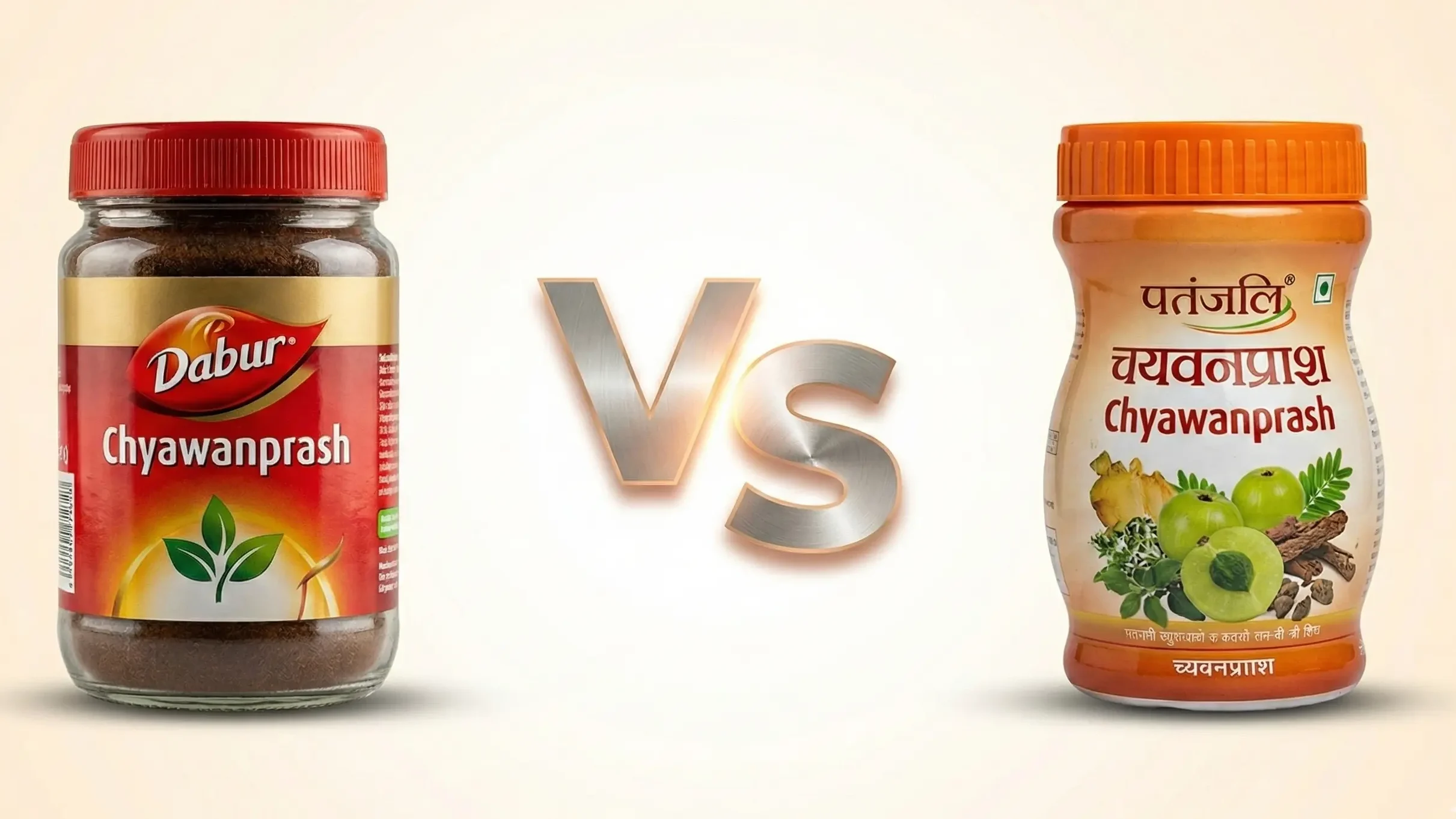
Chyawanprash is one of the most widely consumed Ayurvedic supplements in India, especially during the winter season. Among dozens of brands available in the market, Dabur Chyawanprash and Patanjali Chyawanprash are the two most commonly used and debated.
Most comparisons you see on YouTube, Instagram, or blogs repeat the same surface-level points. This article goes deeper. It explains the real differences based on ingredients, sugar content, preservatives, taste, Ayurvedic principles, and long-term health impact—without brand bias or marketing hype.
If you consume Chyawanprash regularly or are planning to start, this detailed comparison will help you make an informed decision.
Why Chyawanprash Is Traditionally Consumed in Winter
Although many brands claim that Chyawanprash can be consumed all year round, classical Ayurveda recommends winter consumption.
Ayurvedic reason:
- Chyawanprash contains many herbs with a “hot potency” (Ushna Taseer)
- In winter, the body can tolerate and balance these herbs
- In summer, excess intake may cause acidity, nosebleeds, or digestive discomfort in some individuals
That is why Chyawanprash works best when taken for 2–3 months during cold weather, not as a quick medicine but as a slow immunity builder.
Ingredient Comparison: Dabur vs Patanjali
1. Number of Herbs
| Brand | Total Herbs Used |
|---|---|
| Dabur Chyawanprash | ~41 herbs |
| Patanjali Chyawanprash | ~54 herbs |
👉 From a pure Ayurvedic formulation perspective, Patanjali uses a wider range of herbs.
2. Sugar Content (per 100g approx.)
| Brand | Sugar Content |
|---|---|
| Dabur | ~67 g |
| Patanjali | ~55 g |
Patanjali contains around 10–12 grams less sugar, which can matter for people who are sugar-conscious (but not diabetic).
Important clarification on sugar (science-based):
- WHO recommends up to 10% of daily calories from sugar
- For a 2000 kcal diet → 25–50 g sugar/day
- 1 teaspoon sugar ≈ 4 g
Sugar from jaggery, fruits, honey, or white sugar ultimately converts to glucose in the body. The real factor is:
overall lifestyle, activity level, and insulin sensitivity, not just the source of sugar.
3. Amla (Indian Gooseberry) Content
| Brand | Amla Quantity |
|---|---|
| Dabur | ~90 g |
| Patanjali | ~42 g |
- Dabur’s regular variant is Amla-dominant
- Patanjali’s Kesar Yukta variant focuses more on multiple herbs, not just Amla
Both approaches are valid:
- More Amla → higher Vitamin C & antioxidants
- More herbs → broader Ayurvedic action
4. Ghee (Clarified Butter)
- Patanjali: clearly mentions ~5 g cow ghee
- Dabur: ghee quantity not clearly specified
Ghee supports:
- immunity
- stamina
- hormone balance
- nutrient absorption
5. Preservatives: Are They Harmful?
- Dabur uses Sodium Benzoate (clearly mentioned)
- Patanjali does not use a synthetic preservative
Important fact:
- Sodium benzoate is food-grade and safe within limits
- Sugar, honey, ghee, and amla themselves act as natural preservatives
👉 This does not make Dabur “bad” or “unsafe”
👉 If someone wants a completely natural formulation, Patanjali has a slight edge
Taste & Texture: Practical Experience
Based on long-term personal use of both brands:
- Dabur
- Smoother, paste-like consistency
- Slightly sour (higher Amla)
- Mild herbal fiber feel
- Patanjali
- Thicker, slightly grainy texture
- More noticeable herbal fibers
- Stronger traditional Ayurvedic taste
Taste Score (subjective):
- Dabur: 9/10
- Patanjali: 10/10
(Taste preference may vary from person to person.)
Health Benefits of Chyawanprash (Evidence + Ayurveda)
Chyawanprash is not a medicine. It works slowly by improving overall physiology.
Key benefits:
- Immunity booster – Amla, Giloy, Pippali
- Respiratory health – cough, cold, recurrent infections
- Powerful antioxidants – skin, hair, aging support
- Digestive health – constipation, poor appetite
- Brain & memory support – Brahmi, Shankhpushpi
- Energy & stamina – ghee, honey, herbs
- Blood purification – supports liver & kidneys
- Heart health – cholesterol balance
- Reproductive health – testosterone & estrogen balance
- Overall strength tonic (Rasayana)
Chyawanprash builds immunity gradually over 2–3 months, not overnight.
How and When to Consume Chyawanprash
- Dose: 1 teaspoon daily
- Best time: Morning (avoid evening)
- With: warm milk, tea, or water
- Duration: winter season (2–3 months)
Who Should Avoid or Be Careful?
- ❌ Children below 2 years
- ⚠️ Severe diabetes (consult doctor)
- ⚠️ People on heavy medication (doctor advice needed)
Normal BP, mild diabetes, or general lifestyle conditions → usually safe in moderation.
Sugar-Free & Jaggery Versions: The Truth
- Sugar-free versions are useful only for diabetics
- Jaggery vs sugar is mostly marketing
- Final impact depends on:
- exercise
- diet
- body activity
- stress levels
👉 Changing Chyawanprash alone will not fix health
👉 Lifestyle matters more than brand or sugar type
Final Verdict: Which One Is Better?
| Goal | Better Choice |
|---|---|
| More herbs & natural approach | Patanjali |
| Higher Amla & smoother taste | Dabur |
| Lower sugar | Patanjali |
| Proven legacy & consistency | Dabur |
Both are good. Neither is harmful.
Choose based on taste, availability, and personal belief—not social media fear.
FAQ
Which is better: Dabur or Patanjali Chyawanprash?
Both Dabur and Patanjali Chyawanprash are effective in their own ways. Dabur focuses more on high amla content and consistency, while Patanjali includes a wider range of herbs with relatively lower sugar content. The better choice depends on individual health goals and taste preference.
Is Chyawanprash safe to consume daily?
Yes, Chyawanprash is generally safe for daily use when taken in moderate quantity (1 teaspoon once a day). It is especially beneficial during winter or seasonal changes when immunity needs extra support.
Can people with diabetes eat Chyawanprash?
People with diabetes should be cautious because traditional Chyawanprash contains sugar. It is advisable to choose sugar-free variants and consult a doctor before adding it to the daily routine to avoid blood sugar fluctuations.
Does Chyawanprash boost immunity immediately?
No, Chyawanprash does not work overnight. It supports immunity gradually over a few weeks by nourishing the body and improving resistance. Regular and consistent use is key for visible benefits.
Is Chyawanprash suitable for children?
Yes, Chyawanprash is generally safe for children above 2 years of age. However, it should be given in smaller quantities and preferably under parental guidance, especially if the child has allergies or digestion issues.
Author Note
Abhishek Chouhan
Health & Fitness Educator | Certified Nutritionist
With over 10+ years of experience in health, fitness, and Ayurvedic lifestyle education, I focus on evidence-based natural health awareness, not fear-driven trends or marketing claims.
Disclaimer
This article is for educational and informational purposes only.
It does not substitute medical advice, diagnosis, or treatment.
Always consult a qualified healthcare professional before making dietary or supplement changes, especially if you have medical conditions.
Coriander Water: A Natural Remedy that Can Transform Your Health in 7–60 Days
Patanjali Whey Protein Review: My Experience with a Truly Zero-Added-Sugar and Natural Supplement
Hatjod Benefits: A Complete Guide to This Powerful Bone-Healing Herb (My Personal Experience)


3 thoughts on “Dabur vs Patanjali Chyawanprash: The Real Ayurvedic Difference Most People Miss”