

Paneer is one of the most loved foods in India—gym lovers eat it for protein, families cook it daily, and restaurants use it in almost every popular dish.
But here’s the shocking part:
👉 More than 40% of Indians unknowingly consume adulterated or fake paneer.
And no, the simple “iodine test” that you see on Instagram Reels is not enough to identify fake paneer.
Many fake paneer blocks do NOT turn black, yet they are completely adulterated and harmful.
In this friendly, yet research-backed guide, I will decode:
- The 4 types of paneer commonly sold in India
- What goes inside fake paneer
- Why branded paneer like Amul is safer
- Whether Amul actually provides 20g protein per 100g
- Which paneer is safest for your family’s health
Let’s break everything down clearly.
4 Types of Paneer Consumed in India
Paneer in India mostly falls into four categories:
- Blue Drum Paneer (Highly adulterated – 40%+ Indians eat this)
- Local Dairy Paneer
- Industrial/Branded Paneer (Amul, Britannia, Sanchi)
- Homemade Paneer
Let’s understand the truth behind each category.
1. Blue Drum Paneer – The Most Dangerous & Widely Consumed
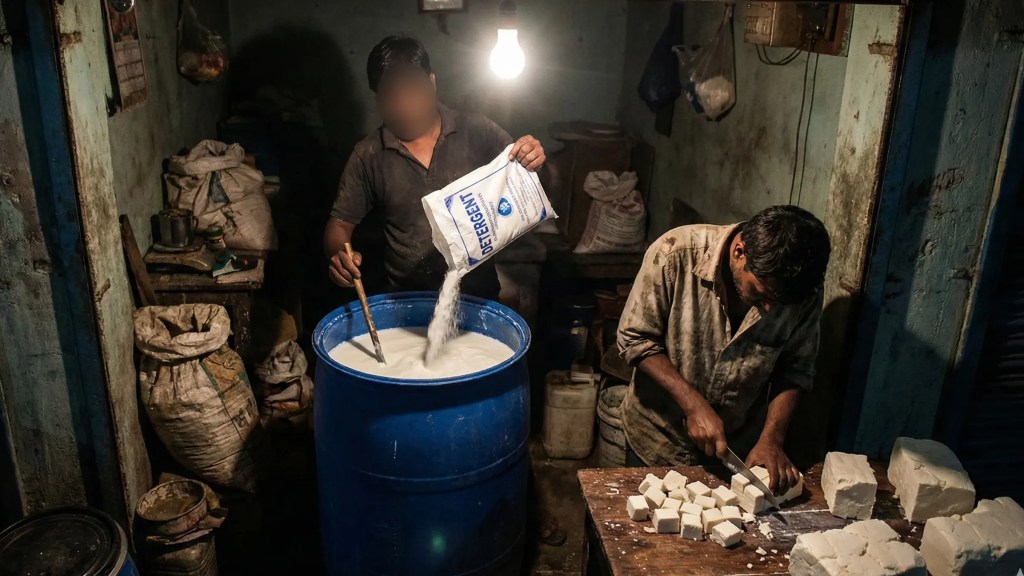
This is the paneer you often see being made in viral videos—
dirty surroundings, blue drums, no hygiene.
This paneer is usually made of 4 harmful components:
1. Synthetic Milk Powder (fake milk)
- Extremely cheap: ₹35–₹40/kg
- Looks like milk but full of chemicals
- Contains almost no nutrition
2. Melamine
- Added to increase “fake protein levels” in lab tests
- Causes kidney damage, hormonal imbalance
- Banned in many countries
3. Starch
- Increases paneer quantity artificially
- 1 liter milk should give 150–200g paneer
- With starch: 250–300g paneer
→ More quantity, less nutrition
4. Detergent
- Adds whiteness and firm texture
- Extremely harmful for the body
Where is this paneer commonly used?
✔ Roadside stalls
✔ Street vendors
✔ Cheap paneer tikka / sandwich counters
✔ Caterers
✔ Weddings
✔ Small restaurants
And yes—
Fake paneer does not always turn black with iodine.
Only starch reacts.
Melamine, detergent, and synthetic milk do NOT.
That’s why millions of people are fooled daily.
2. Local Dairy Paneer – Trusted by People, But Not Always Pure
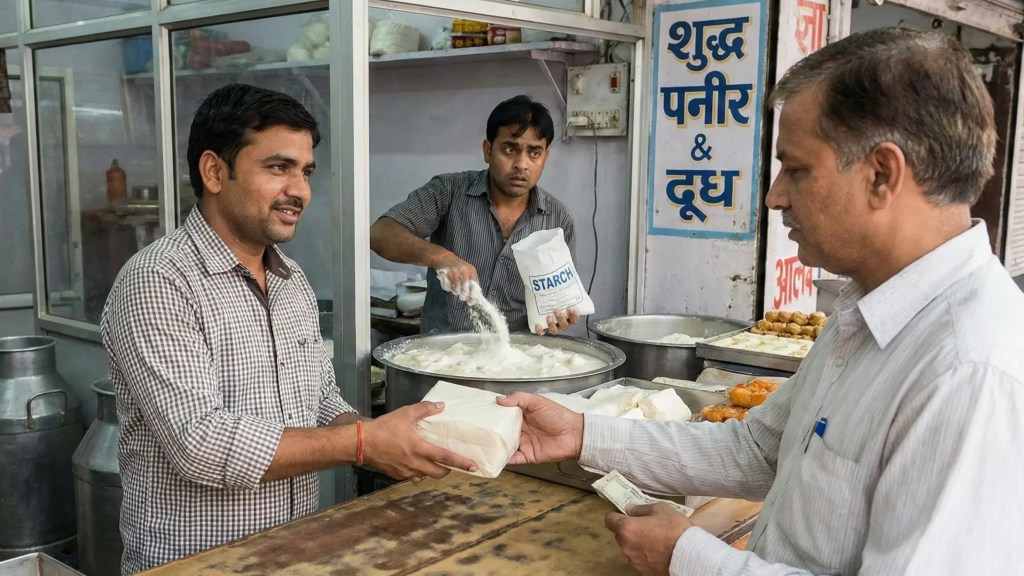
Most people think local dairy paneer is pure,
but in reality, many dairies secretly mix these:
• Melamine
To artificially increase protein levels.
• Starch
To increase paneer weight from 200g to 300g.
This paneer is often supplied to:
✔ Restaurants
✔ Dhabas
✔ Caterers
✔ Local food joints
When paneer is available at ₹220–₹250/kg,
but milk is expensive,
you must ask yourself:
How is it so cheap?
Simple answer: Adulteration.
3. Industrial/Branded Paneer – Amul, Britannia, Sanchi

This is the safest category.
These brands use:
✔ Real milk
✔ Citric acid (lemon substitute, naturally safe)
✔ No synthetic milk
✔ No melamine
✔ No starch
✔ No detergent
Production happens in hygienic factories with strict quality control.
If a product mentions “high protein paneer,”
they may add whey protein,
which is also naturally derived from milk and completely safe.
Only 10% of Indians consume this paneer
because it is slightly expensive.
But nutritionally, this is the best choice for health.
4. Homemade Paneer – 100% Pure & Safe

Homemade paneer is the most authentic paneer you can eat.
Ingredients?
- Milk
- Lemon juice or vinegar
That’s it.
It may not form a perfect square block,
but it is 100% pure,
with no starch, no chemicals, no adulterants.
If health matters to you,
this paneer should be your first preference.
The Truth About Amul Paneer: Is It Really 20g Protein per 100g?

Yes—Amul’s claim is correct.
Here is the approximate nutritional value per 100g:
| Nutrient | Amount |
|---|---|
| Protein | 20g |
| Energy | 312 kcal |
| Fat | 24g |
| Saturated fat | 14g |
| Trans fat | 0 |
| Sugar | 4g (natural milk sugar) |
| Added sugar | 0 |
| Sodium | 24 mg |
| Calcium | 480 mg |
Key Benefits of branded paneer like Amul:
✔ 20g high-quality protein
✔ Excellent calcium source
✔ Safe, pure, and hygienic
✔ Zero adulterants
✔ Perfect for gym-goers, kids, women, families
If someone wants real protein—not fake paneer—
buying Amul or other branded paneer is the best choice.
Health Risks of Fake or Adulterated Paneer
Regular consumption of fake paneer can cause:
- Hormonal imbalance
- Kidney damage
- Reproductive system disorders
- Fertility issues
- Digestive problems
- Long-term toxic effects
Women are especially vulnerable due to melamine toxicity.
This fake paneer acts as slow poison.
Which Paneer Should You Choose?
✔ If budget allows → Buy Amul/Britannia/Sanchi
✔ If you want purity → Make paneer at home
✔ Avoid → Cheap paneer from dhabas, weddings, local stalls
✔ Be cautious → Local dairy paneer
Health should always come before taste.
Final Words
I hope this detailed breakdown gives you the clarity you needed about paneer quality in India. If you regularly consume paneer for protein, please choose safe options. Share this information with friends, gym lovers, and family members who eat paneer daily.
FAQ
1. How can I identify fake paneer at home?
Fake paneer often contains starch or synthetic milk. If iodine turns paneer black, it indicates starch—but many fake paneers do NOT turn black, so this test is incomplete.
2. Is Amul paneer really high in protein?
Yes. Amul paneer provides around 20g protein per 100g, making it one of the safest and most nutritious options.
3. Is local dairy paneer safe?
Not always. Many local dairies secretly mix starch and melamine to increase paneer weight and protein levels artificially.
4. Which paneer is the safest for health?
The safest options are branded paneer (Amul/Britannia/Sanchi) or homemade paneer.
5. Why is fake paneer harmful?
Fake paneer contains synthetic milk, detergents, melamine and industrial starch which can harm kidneys, hormones, digestive system, and fertility.
6. Why is paneer at weddings and street stalls unsafe?
Most cheap food vendors buy extremely low-cost adulterated paneer to maximize profit, compromising quality and safety.
7. Does homemade paneer turn black with iodine?
No. Homemade paneer contains only milk and lemon, so it never reacts with iodine.
Author Note
Written by Abhishek Chouhan,
Certified Nutritionist with 15+ years of experience in the health and fitness industry.
Founder of NaturalAdda.in, passionate about sharing authentic, science-based, and practical health knowledge to help people live healthier lives.
Disclaimer
This article is for educational purposes only.
It does not replace medical advice, diagnosis, or professional treatment.
Always consult your healthcare provider or nutritionist for personalized guidance..
Join Our WhatsApp Health Community
Daily natural health tips, fitness guidance & Ayurvedic remedies — directly on WhatsApp.
💬 Join on WhatsAppRosier A2 Ghee vs Amul Cow Ghee vs Patanjali Cow Ghee: Which One Is Best?
How I Naturally Stopped Minoxidil: A Complete Guide to Hair Growth Without Chemicals
Pradhan Mantri Biotin Tablet vs Leeford Tinfal Forte – Which Is Better for Hair, Skin, and Nails?


One thought on “The Shocking Truth About Paneer in India: Real vs Fake Paneer Explained”