

Why Diabetes Feels So Heavy
Diabetes is not just a medical condition.
For many people, it feels like a silent burden that stays with them every single day.
I often explain it like this:
Some problems come and go, but diabetes tends to sit on your shoulder, quietly affecting your energy, mood, and overall health.
In the beginning, things may seem manageable. Medicines work. Sugar levels come down. But when blood sugar keeps fluctuating, it starts affecting both the body and the mind. That’s when people realize how serious this condition really is.
So let’s understand diabetes properly and practically — without fear, without complex medical language, and without false promises.
What Is Sugar — and Why Everyone Has It
First, an important truth:
Everyone has sugar in their body.
Sugar is not poison. Sugar is energy.
Whenever we eat food like rice, bread, roti, pasta, grains, noodles, or any carbohydrate, our digestive system breaks it down into glucose. This glucose enters the bloodstream and supplies energy to every part of the body.
No glucose means no movement, no thinking, no survival.
So the problem is not sugar itself.
The real problem starts when sugar cannot enter the body’s cells.
How Sugar Reaches the Cells (Insulin Made Simple)
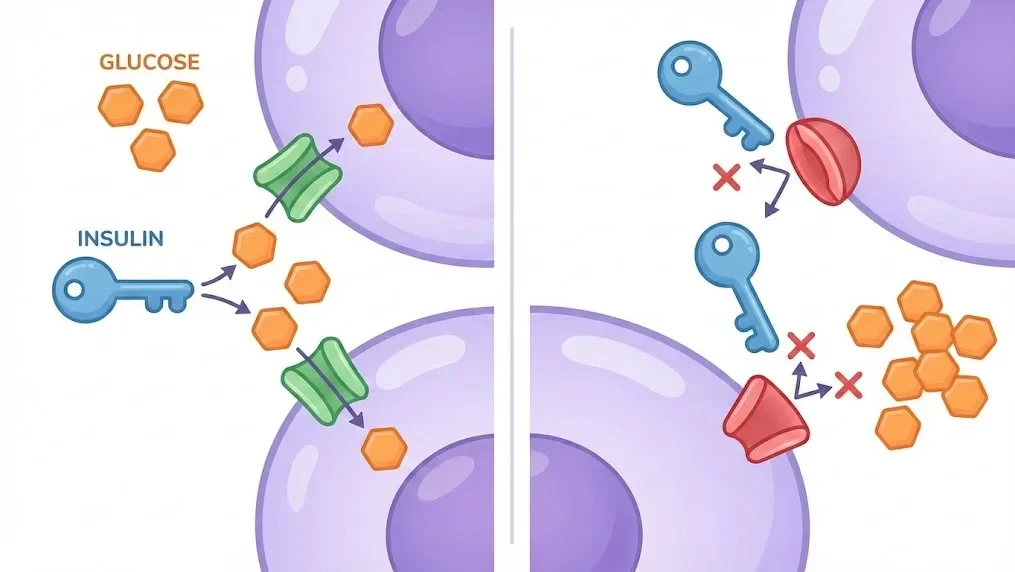
Think of glucose as fuel and insulin as the driver.
Your body is made of billions of cells — muscle cells, nerve cells, skin cells, brain cells. All of them need glucose to function. But glucose cannot enter these cells on its own.
It needs insulin.
Insulin is a hormone released by the pancreas, located behind the stomach. Its job is simple:
- Pick up glucose from the blood
- Deliver it safely into the cells
When this process works properly, blood sugar remains normal.
Why Blood Sugar Starts Increasing
Problems begin when there is a lifestyle imbalance.
Today, many people:
- Eat more than they burn
- Move less
- Sit for long hours
- Rely heavily on refined carbohydrates
When excess glucose keeps entering the bloodstream but the body doesn’t need that much energy, the cells respond by saying:
“We don’t need more fuel.”
This condition is called insulin resistance.
Insulin is present.
Glucose is present.
But the cell blocks the entry.
As a result, sugar remains in the blood — and blood sugar levels rise.
How Diabetes Develops: Simple Breakdown
| Factor | What Happens in the Body |
|---|---|
| High Carb Intake | More glucose enters the bloodstream |
| Low Physical Activity | Cells don’t require extra energy |
| Insulin Resistance | Cells block insulin action |
| Rising Blood Sugar | Glucose stays in the blood |
| Long-Term Impact | Diabetes and organ stress |
When Does It Become Diabetes?
Diabetes is diagnosed when blood sugar stays high for a long time.
One of the most reliable tests is HbA1c, which shows your average blood sugar over the last 3–4 months.
- Below 5.7% → Non-diabetic
- 5.7% and above → Pre-diabetic or diabetic
The strength of HbA1c is that it is not affected much by what you ate the previous day.
Early Warning Signs You Should Notice
Diabetes often develops silently, but common warning signs include:
- Excessive thirst
- Frequent urination
- Increased hunger
- Fatigue and weakness
- Slow wound healing
- Dehydration
When sugar stays in the blood, the body tries to remove it through urine, which leads to dehydration and weakness.
Who Is at the Highest Risk of Diabetes?
Some people have a much higher risk:
- No physical activity
No walking, no exercise, no movement. - Poor eating habits
High carbohydrate intake, overeating, frequent snacking. - Chronic stress and poor sleep
Stress disrupts hormones — insulin is also a hormone. - Overweight and obesity
Excess fat increases insulin resistance. - Long-term lifestyle neglect
Years of imbalance eventually show results.
Types of Diabetes (Briefly Explained)
- Pre-diabetes
Sugar is high, but symptoms may not appear. This stage is reversible. - Type 1 Diabetes
The pancreas produces little or no insulin, often due to autoimmune causes. - Type 2 Diabetes
Insulin is produced, but cells resist it. This is the most common type. - Gestational Diabetes
Temporary diabetes during pregnancy due to hormonal changes.
Why Diabetes Is Dangerous If Ignored
Uncontrolled diabetes increases the risk of:
- Heart disease
- Kidney damage
- Nerve damage
- Eye problems
- Poor wound healing
- Overall weakened immunity
That’s why diabetes should never be taken lightly.
Can Diabetes Be Controlled or Improved?
Yes — very much possible.
From real-world experience, the biggest improvements come from:
1. Regular Physical Activity
Walking, gym, cardio, yoga — movement makes cells accept glucose again.
2. Balanced Diet
Reduce refined carbs, control portions, increase protein and healthy fats.
3. Stress Management
Good sleep, calm routine, emotional balance help regulate hormones.
4. Regular Monitoring
Routine blood tests help track progress and adjust lifestyle or medication.
5. Supportive Natural Practices
Certain traditional herbs are commonly used to support metabolic balance when combined with medical guidance.
Important: Never stop prescribed medication suddenly. Lifestyle changes work alongside medical care.
Author Note
This article is written by Abhishek Chouhan, a health and fitness content creator with over 10 years of experience in blogging, wellness education, and nutrition awareness. His goal is to provide clear, honest, and practical information that helps readers make better lifestyle choices.
Disclaimer
The information provided in this article is for educational purposes only. It is not intended to be a substitute for professional medical or nutritional advice. Please consult your doctor, healthcare provider, or certified nutrition expert before making any changes to your diet or lifestyle.
Men Only: The 5-Herb Ayurvedic Mix That Explodes Strength, Testosterone & Power
Nightfall in Your 20s – Natural Ayurvedic Understanding and Remedies


3 thoughts on “Diabetes Explained in Simple Words: Why It Feels Like a Lifelong Companion — and How You Can Control It”