
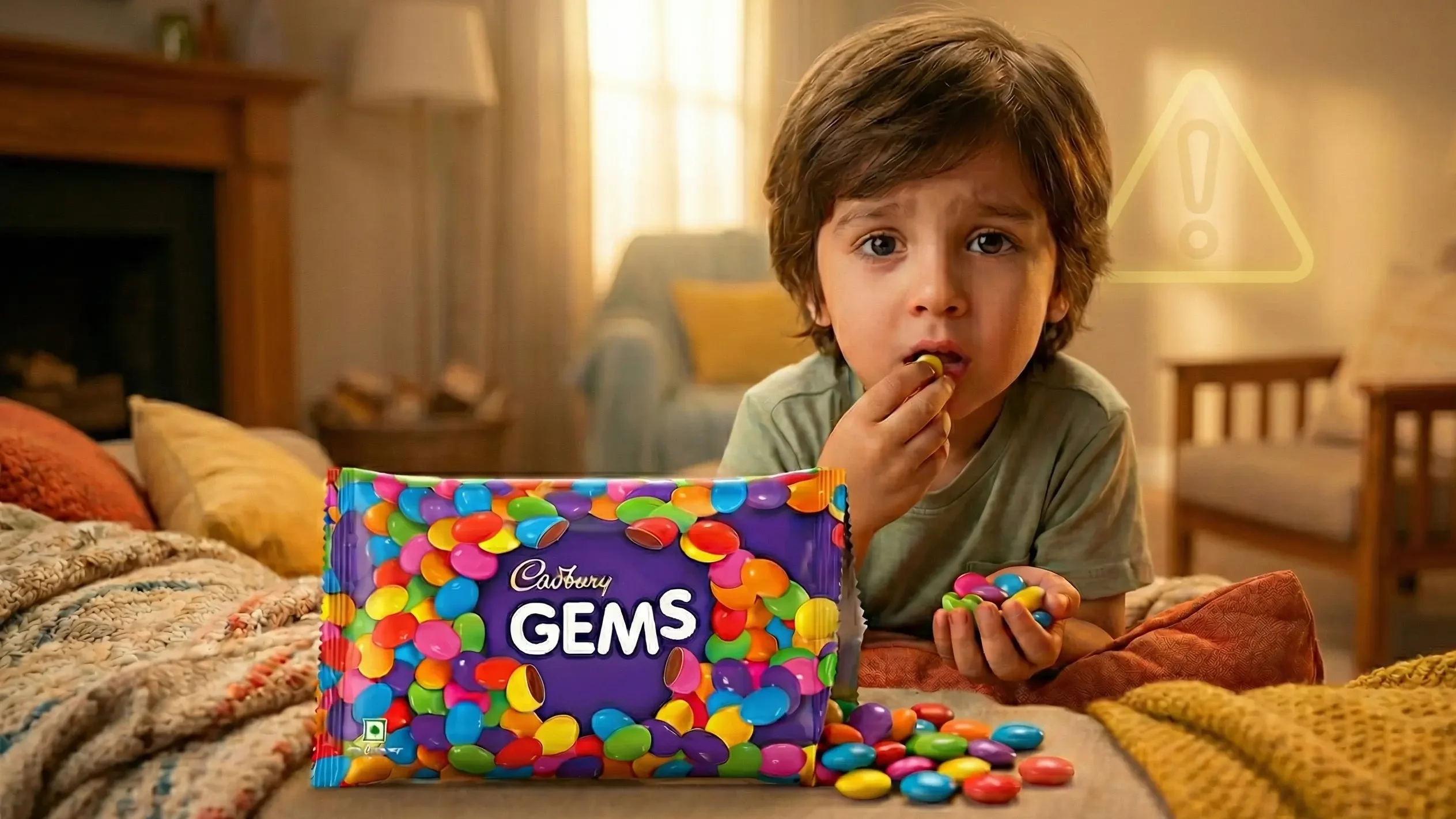
If you grew up in India, you already know this — Cadbury Gems is an emotion.
Every parent, uncle, aunty, or grandparent has lovingly handed these tiny rainbow bullets to a child saying:
“Beta, take this… your mama bought it for you!”
Kids love it, we loved it… and honestly, the taste is unbeatable.
But the ingredients? That’s where the real shock begins.
Recently, when I bought a few packets from my friend’s grocery shop and decided to read the label, my mind seriously went blank.
So today, as a health & fitness blogger, it’s my responsibility to tell you the truth — in the simplest, most honest way.
Let’s Break Down the Ingredients (Friendly, Simple Explanation)
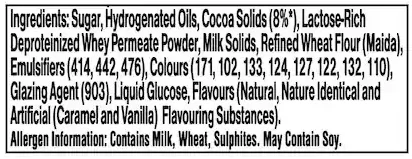
1. Sugar
No problem — it’s candy, so sugar is expected.
2. Hydrogenated Oil (Palm Oil)
Not great, but small quantities occasionally won’t kill anyone.
Still, palm oil is inflammatory and not ideal for kids.
3. Milk Solids & Cocoa Solids
These are fine.
4. Refined Wheat Flour (Maida)
People panic when they hear “maida”, but honestly, Gems has such tiny quantity that it’s not the end of the world.
Still — maida spikes insulin and is not healthy for kids.
5. Emulsifiers (414, 442, 476)
Now here’s where things get interesting.
Emulsifiers help mix things that naturally don’t mix — like oil and water.
They maintain that smooth, creamy texture from first bite to the last.
Not natural… but very common in packaged foods.
Artificial Colours — THE REAL PROBLEM
This is the part that genuinely shocked me.
Cadbury Gems contains multiple food colours:
171, 102, 133, 124, 127, 132, 100… and more.
Let me explain each one in friendly, simple language:
1. Color 171 — Titanium Dioxide (White)
- Banned in the entire European Union
- Linked to DNA damage in children
- DNA damage means long-term risks for future health and generations
This alone is enough to be cautious.
2. Color 102 — Tartrazine (Yellow)
- Banned in Norway & Austria
- Causes:
- Asthmatic symptoms
- Throat swelling
- Hyperacidity
- Digestive issues
Kids are especially sensitive to this.
3. Color 133 — Brilliant Blue (Blue)
- Banned in France, Germany, Sweden & Austria
- Causes allergic reactions
- Not recommended for women and children
Fun Fact (actually not fun):
Many Indian cake shops use this same banned blue color in their “blueberry”, “unicorn”, and “ocean theme” cakes.
4. Colors 124 & 127 (Red Shades)
- Made from coal tar
- Banned in the USA & Norway
- Known to cause asthmatic reactions and hormonal issues
5. Glazing Agent 903
Comes from Brazilian palm trees. Edible, but unnecessary.
6. Artificial Flavors: Caramel & Vanilla
Natural vanilla is very expensive, so companies mostly use artificial versions.
They mix maybe 1–2% natural just so the label looks good.
So What’s the Final Truth?
If we rate the ingredients of Gems:
70–80% of it is either unnecessary, or banned in multiple countries.
Not banned in India = Not safe.
It only means nobody is watching.
Parents often wonder:
“Why is my child always coughing?”
“Why stomach pain again?”
“Why digestion problems?”
And unknowingly… we are the ones feeding them these artificial colors.
Why This is Especially Dangerous for Girls
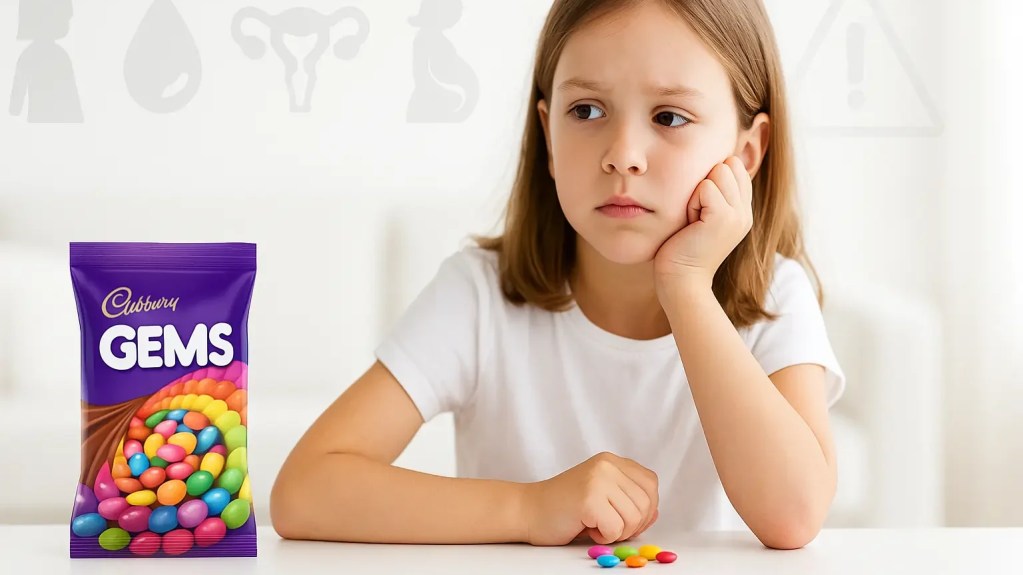
Girls go through lifelong hormonal cycles:
- puberty
- periods
- reproductive health
- pregnancy
- menopause
Artificial food colors can mess with hormonal balance, digestion, immunity — and long-term effects can be serious.
A Small but Important Warning About Cakes in India
Most cake shops use the same banned colors:
- blue
- red velvet
- black forest
- rainbow cakes
Even if the government bans them, small local shops still use cheap third-party colors — no checking, no rules.
If someone eats these colored foods 4 times a month for 10 years, the risk of cancer increases significantly.
I know this sounds harsh… but it’s the truth.
So Should You Completely Stop?
No.
Just don’t make it a habit.
Occasionally → Okay
Weekly or daily → Very risky
Instead give your kids:
- rabri
- homemade sweets
- gulab jamun
- rasgulla
- fresh juice
- milk-based desserts
At least these contain milk, ghee, and real ingredients — not 80% chemicals.
Your child’s life is literally in your hands.
My Personal Choice
I don’t give Gems to my child or any kid in my family.
If someone comes home, I give them sherbet, rabri, or homemade sweets.
Healthy alternatives exist — we just need to choose them.

Join Our WhatsApp Health Community
Daily natural health tips, fitness guidance & Ayurvedic remedies — directly on WhatsApp.
💬 Join on WhatsAppIf you found this article helpful, share it with other parents.
Your small effort can protect someone’s child.
FAQs
1. Is Cadbury Gems safe for kids?
Okay only if eaten rarely.
2. What is the main problem in Gems?
The artificial food colors.
3. Is Color 171 harmful?
Yes, it’s banned in the EU for DNA-damage risk.
4. Do Indian cakes also use banned colors?
Yes, many bakery cakes use the same harmful colors.
5. Can these colors cause allergies?
Yes, they can trigger asthma, rashes, and stomach issues.
6. Are girls more affected?
Yes, because artificial colors can disturb hormones.
7. How often can kids eat Gems?
Once in 1–2 months is safe; weekly is not.
8. Is occasional eating okay?
Yes, very occasionally is fine.
9. What is a healthier alternative?
Rabri, homemade sweets, juice, fruits.
10. Can long-term consumption increase risks?
Yes, frequent colored foods can increase long-term health risks.
Coriander Seeds: The 30-Day Health Booster Nobody Talks About
Protein Deficiency: Early Signs Visible on Nails, Hair and Skin


